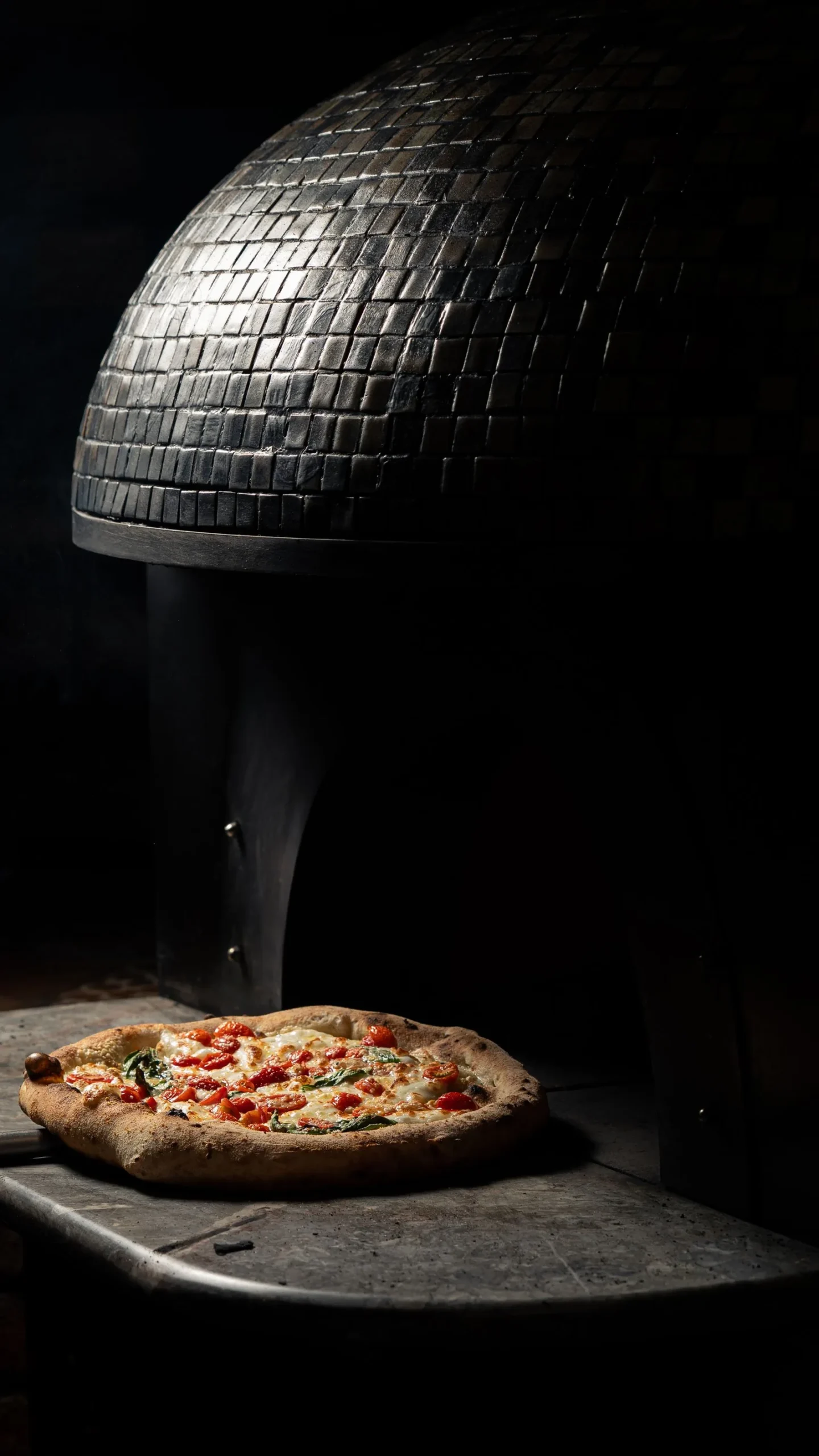
Short answer: buy a pizza steel if you bake thin or New York-style pizza in a home oven that tops out around 500-550°F, because steel pushes heat into the dough far faster than ceramic. Buy a cordierite pizza stone if you want a cheaper, lighter surface for thicker crusts, bread and frozen pizza, or if you bake on a grill. The surprise in the numbers: a 1/4-inch steel and a typical 0.6-inch stone store almost the same amount of heat per square inch. What differs is how fast they hand it over.
We may earn a commission when you buy through links on this page, at no extra cost to you. As an Amazon Associate we earn from qualifying purchases.
How we compared them
We didn’t bake on these. We took each product’s weight, size and thickness from its Amazon listing or the maker’s spec page, added published material data (specific heat and thermal conductivity for carbon steel and cordierite), and worked out how much heat each surface stores per degree and per square inch. Ratings and the owner-review summaries come from the Amazon listings, checked November 19, 2026. Every number below is in the Sources list.
The physics in two numbers
Two properties decide how a baking surface behaves.
Heat capacity is how much energy the slab holds per degree. Carbon steel stores about 0.49 kJ per kg per kelvin (0.117 BTU per lb per °F). Cordierite, the ceramic most pizza stones are made from, stores 0.19-0.20 BTU per lb per °F. Pound for pound the stone holds more, but steel is about three times denser, so a thin steel plate weighs as much as a thick stone.
Thermal conductivity is how fast heat moves through the material into the dough. Textbook values put carbon steel at about 54 W/m·K and dense cordierite at 1.3-1.7 W/m·K, roughly 30-40 times apart at room temperature. Steel makers advertise “18x” (Baking Steel) and “20x” (ThermiChef). Both numbers point the same way: steel dumps heat into the bottom of the crust much faster, so it browns before the top overcooks, even at the 500°F a normal oven can reach.
Stored heat, calculated for five real products
Multiply weight by specific heat and you get the heat stored per degree. Divide by surface area and you can compare a big slab with a small one. This is the table no other comparison we found shows.
| Product | Material, thickness | Size | Weight | Heat stored (BTU per °F) | Per 100 sq in | Max temp (listing) | Amazon rating (Nov 2026) |
|---|---|---|---|---|---|---|---|
| ThermiChef 16×16, 1/4″ | Carbon steel, 1/4″ | 16 x 16 in | 17.6 lb | 2.06 | 0.80 | 1,000°F | 4.7/5, 450 ratings |
| ThermiChef 16×16, 3/8″ | Carbon steel, 3/8″ | 16 x 16 in | 27.5 lb | 3.22 | 1.26 | 1,000°F | 4.7/5, 731 ratings |
| Baking Steel Original | Carbon steel, 1/4″, pre-seasoned | 14 x 16 in | 15 lb | 1.76 | 0.79 | 1,000°F | 4.5/5, 609 ratings |
| Unicook 15×12 stone | Cordierite, 0.6″ | 15 x 12 in | 6.8 lb | 1.29-1.36 | 0.72-0.76 | 1,450°F | 4.5/5, 13,400+ ratings* |
| Unicook 20×13.5 stone | Cordierite, 0.6″ | 20 x 13.5 in | 10.6 lb | 2.01-2.12 | 0.74-0.79 | 1,450°F | 4.5/5, 13,400+ ratings* |
*Amazon shows the same 13,400+ count on both Unicook sizes, so it is pooled across the stone family, not specific to one size.
Read across the “per 100 sq in” column. The 1/4-inch steels and the 0.6-inch stones land between 0.72 and 0.80 BTU per °F. That means the common claim that steel “holds more heat” is mostly wrong at these thicknesses. They hold about the same. The steel wins because it releases that heat 20-40 times faster, which is what gives a thin crust its leopard spots in 6-8 minutes.
The 3/8-inch steel is the one that really stores more: about 60% more per square inch than the 1/4-inch version. That extra reserve is why ThermiChef recommends it for back-to-back pizzas, and why owners complain about the weight.
One caveat on these numbers: they use room-temperature material data. Steel’s conductivity drops as it heats up and its specific heat rises, so treat the figures as a fair side-by-side comparison, not an exact oven reading.
What that means in your oven
Thin crust, 500°F oven: steel. Fast heat transfer makes up for the oven’s low ceiling. Baking Steel says a thin pizza takes about 8 minutes at 500°F after a 60-minute preheat; ThermiChef says under 8 minutes after 45-60 minutes at 500°F.
Thick crust, deep toppings, bread: a stone is gentler. Slower heat transfer gives the inside of a thick dough time to cook before the bottom scorches. Unicook also points to the stone’s porous surface pulling moisture from the dough.
Several pizzas in a row: 3/8-inch steel, or the largest stone you can fit. Both have the most stored heat in the table.
Grill or pizza-oven insert: a cordierite stone. Unicook rates its stones to 1,450°F; the steel listings show 1,000°F. ThermiChef says its steel works on grills too, but the stone has the higher rating.
Clumsy kitchen or frequent temperature shocks: steel. Stones can crack from thermal shock or a drop. Every steel maker in this list points out its plates won’t.
ThermiChef 16×16 Pizza Steel, 1/4″: best all-round steel
Low-carbon steel, CNC laser-cut in Minnesota, 17.6 lb, sized for pizzas up to 15 inches. ThermiChef calls 1/4 inch “the right call” for most people and sells 3/16″ and 3/8″ versions for lighter and heavier use.
Who it’s for: home cooks with a full-size oven who mostly bake thin or NY-style pies, one or two at a time.
Skip it if: your oven is compact or European-size. ThermiChef itself recommends its 14×14 for those, and asks you to measure the oven depth first.
- Pro: 4.7/5 from 450 Amazon ratings, with crust quality and heat retention among the most-mentioned topics in reviews
- Pro: 16 x 16 inches spans two burners, so it doubles as a stovetop griddle for smash burgers
- Pro: made in the USA, no coating to chip
- Con: ships shot-blasted, not seasoned. You wash, oil and bake it at 375°F for an hour before first use
- Con: weight shows up as a mixed topic in owner reviews
ThermiChef 16×16 Pizza Steel, 3/8″: best for pizza parties
Same footprint, 27.5 lb. By our calculation it stores about 3.22 BTU per °F, the most in this comparison. ThermiChef says it “recovers faster between pizzas” and suggests it for hosting, batch cooking and serious bread baking.
Who it’s for: anyone baking four or more pizzas in a session, or loaves that need a big burst of bottom heat.
Skip it if: you plan to take it out of the oven after every bake. Amazon’s review summary says owners find it heavy to move and store.
- Pro: 4.7/5 from 731 Amazon ratings
- Pro: owners in the review summary call it significantly better than a stone for crisp crusts
- Pro: about 60% more stored heat per square inch than the 1/4″ plate
- Con: 27.5 lb, roughly a case of bottled water by ThermiChef’s own comparison
- Con: needs the same first-use seasoning as the 1/4″ model, and about an hour of preheat
Baking Steel Original 14×16: best ready-to-use steel
The product that started the category in 2012, according to the company. 1/4 inch thick, 15 lb, 16 x 14 inches, holds a 13-inch pizza or two loaves. It ships pre-seasoned with flax oil and carries a lifetime warranty against defects.
Who it’s for: people who want to bake the night it arrives, and anyone with an oven too narrow for a 16-inch square.
Skip it if: you want the most surface per dollar. It is the priciest 1/4″ plate here at the time of our check, and smaller than the ThermiChef 16×16.
- Pro: no seasoning step before the first bake
- Pro: lifetime warranty against defects, made in the USA
- Pro: 15 lb is the lightest steel in this comparison
- Con: 4.5/5 from 609 ratings, slightly below the ThermiChef plates
- Con: 224 sq in limits you to a 13-inch pie
Unicook 15×12 Cordierite Pizza Stone: best budget stone
Cordierite, 0.6 inch thick, 6.8 lb, rated to 1,450°F, reversible, with a plastic dough scraper. Unicook says it suits personal pizzas up to 11 inches and asks for 1-2 inches of clearance on all sides in the oven.
Who it’s for: first-time pizza makers, frozen-pizza upgraders, and gas-grill cooks.
Skip it if: you want a 12-inch or larger pie. The maker itself points you to its bigger models.
- Pro: 4.5/5 from 13,400+ ratings (pooled across Unicook stone sizes)
- Pro: owners in the review summary say it works well in gas ovens and on gas grills
- Pro: under 7 lb, easy to lift in and out
- Con: no soap and no oil, ever; stains are permanent and, per Unicook, normal
- Con: the review summary notes some buyers found it disappointing for the price
Unicook 20×13.5 Extra Large Pizza Stone: best stone for big batches
Same cordierite and 0.6-inch thickness, 20 x 13.5 inches, 10.6 lb. At 2.01-2.12 BTU per °F it stores about as much heat as the 1/4″ ThermiChef steel, and it has the largest surface in this comparison: 270 sq in, room for two small pizzas or a baguette.
Who it’s for: bread bakers and families who bake two smaller pies at once.
Skip it if: your oven is narrower than about 22 inches inside. Unicook asks for at least a 1-inch gap around the stone.
- Pro: most surface area of the five products
- Pro: stores nearly as much heat as a 1/4″ steel at a lower price at our check
- Pro: rated to 1,450°F for grills and pizza-oven use
- Con: like every stone, it can crack from thermal shock; let it cool in the oven
- Con: slower heat transfer than steel, so thin crusts at 500°F take longer to brown
Care: the difference after six months
Steel behaves like cast iron. ThermiChef ships bare and asks for a seasoning bake; Baking Steel arrives seasoned. Both makers say the surface builds a darker patina with every use, and the Baking Steel listing says hand wash only.
Stones are the opposite. Unicook warns against soap, detergent and oil because the porous surface absorbs them. Scrape it once it has cooled, rinse with warm water, and accept the dark stains. If you want a clean-looking surface, buy steel.
Quick decision rule
- Oven max 500-550°F and you love thin crust: 1/4″ steel
- Four or more pizzas per session: 3/8″ steel
- Mostly thick crust, bread or frozen pizza, or a tight budget: cordierite stone
- Grill or high-heat pizza oven: cordierite stone (higher rated max temperature)
- Small or European oven: measure first; look at 14-inch steels or the 15×12 stone
Already decided on steel? Our best pizza steels and best baking steel roundups cover more sizes. If you want hotter than any home oven gets, see our home pizza ovens guide, and for a recipe that doesn’t need either surface, try our cheesy pan pizza.
FAQ
Is a pizza steel better than a stone?
For thin crust in a home oven, yes, because steel transfers heat roughly 20-40 times faster than cordierite. For thick crusts, bread and grills, a stone’s slower, gentler heat and higher temperature rating can be the better fit.
Does a pizza steel hold more heat than a stone?
Not at the common thicknesses. By our calculation a 1/4″ steel and a 0.6″ cordierite stone store 0.72-0.80 BTU per °F per 100 square inches. A 3/8″ steel stores about 60% more.
How long should I preheat a pizza steel?
The makers say 45-60 minutes at 500°F (ThermiChef) or 60 minutes (Baking Steel).
Can I use soap on a pizza stone?
No. Unicook says never use soap, detergent or oil on its cordierite stones. Scrape and rinse with warm water once the stone is cool.
Can I put a pizza steel on the grill?
ThermiChef says its steel works on the grill and stovetop. Check your own grill’s lid clearance and the listing’s 1,000°F maximum before using it in very hot setups.
Sources
- Amazon listing ASIN B0BR5ZLMFP (ThermiChef 16×16, 1/4″), Creators API + amazon.com product page: size, weight, seasoning, preheat, 1,000°F, rating 4.7/450, review summary. Checked 2026-11-19
- Amazon listing ASIN B085S8XRRB (ThermiChef 16×16, 3/8″): weight 27.5 lb, rating 4.7/731, review summary on weight. Checked 2026-11-19
- Amazon listing ASIN B00N205G22 (Baking Steel Original): 14×16, rating 4.5/609, 1,000°F. Checked 2026-11-19
- Baking Steel product page, bakingsteel.com/products/the-baking-steel-original: 1/4″, 15 lb, flax-oil pre-seasoning, lifetime warranty. Checked 2026-11-19
- Amazon listing ASIN B06XGV3RS4 (Unicook 15×12): 0.6″, 6.8 lb, 1,450°F, care rules, rating 4.5/13.4K, review summary. Checked 2026-11-19
- Amazon listing ASIN B093BQJZT4 (Unicook 20×13.5): 10.6 lb, 0.6″, clearance note. Checked 2026-11-19
- Engineering ToolBox, specific heat of metals (carbon steel 0.49 kJ/kg·K): engineeringtoolbox.com/specific-heat-metals-d_152.html
- Engineering ToolBox, thermal conductivity of metals (carbon steel 0.5% C, 54 W/m·K): engineeringtoolbox.com/thermal-conductivity-metals-d_858.html
- MakeItFrom, cordierite properties (specific heat 800-850 J/kg·K, conductivity 1.3-1.7 W/m·K): makeitfrom.com/material-properties/Cordierite
- Calculations (ours): heat stored = weight x specific heat; per 100 sq in = heat stored / surface area x 100