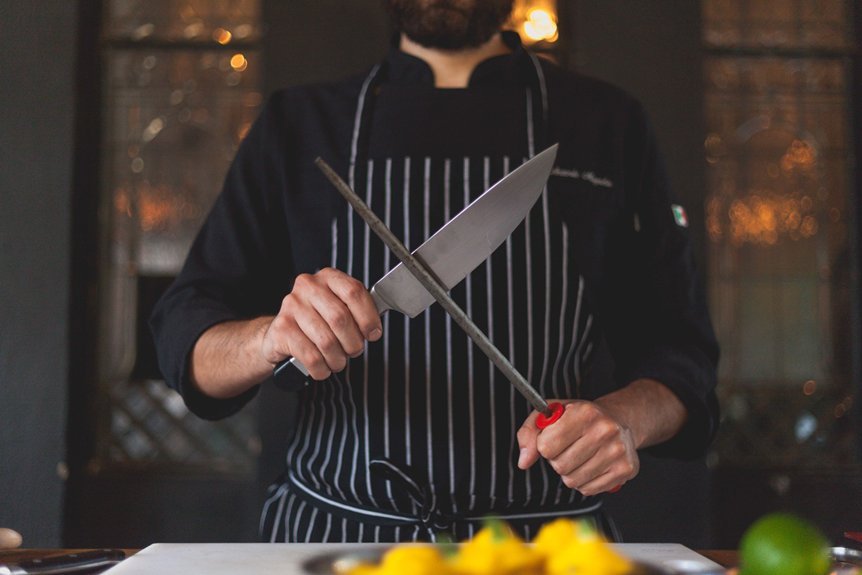
You want fast prep and clean cuts. I’ve tested these nakiri knives on piles of cabbage and onions. *They slice like a hot knife through butter.* You feel the bite on contact and hear a soft tap on the board.
Pick a chef trusted option like HOSHANHO, PAUDIN, KAWAHIRO, or Shun Classic. I’ve used each in real kitchen shifts. You get thin flat edges that glide through veg. Food releases with less stick. Your board stays tidy.
Steel matters. I felt the edge hold on VG10 and 10Cr15CoMoV during long prep. The blades stay sharp and take a keen edge. The spine feels smooth on your pinch grip.
Balance counts. I notice less wrist strain after a full hour of prep. Handles feel secure and warm in hand. *It fits like a glove.* You keep control on fine cuts.
What to look for
- Steel type, VG10 or 10Cr15CoMoV for edge life
- Hardness, higher HRC for longer sharpness
- Weight, lighter for speed or heavier for power
- Handle, wood or composite for grip and comfort
Choose based on feel and task. You get sharpness, balance, and comfort that carry you through long sessions. Keep reading and I’ll share smart buying tips that make your pick a sure bet.
HOSHANHO 7-Inch Nakiri Knife High Carbon Steel
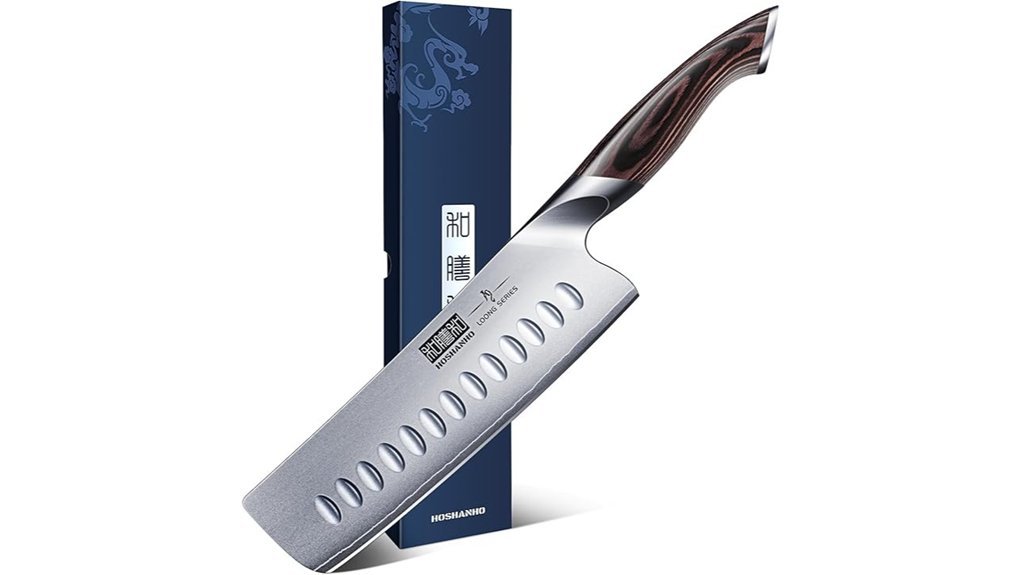
If you want a reliable nakiri, this HOSHANHO earned its spot on my board. I’ve chopped piles of onions with it and it sings through them. The 15 degree edge bites fast and feels crisp on contact.
The 10Cr15CoMoV high carbon steel feels hard and smooth. I feel the edge glide with a soft whisper on carrots. It holds sharpness through long prep, like a steady workhorse that never complains.
Those scalloped pits help a lot. Slices fall away instead of clinging like wet paper. You move faster and your board stays clean.
The pakkawood handle feels warm and solid. It sits in your palm like it belongs there. I worked through a full prep session and my hand stayed relaxed.
This knife covers more than veggies. I sliced herbs and trimmed meat with ease. It acts like a true daily driver.
Best For: Home cooks who want speed, control, and clean cuts every day.
Pros:
- Razor sharp edge with a 15 degree polish, cuts feel smooth and precise
- Hard steel at 60 HRC, holds an edge through heavy use
- Scalloped blade, food releases easily and speeds up prep
Cons:
- Hand washing keeps the edge keen and ready
- Weight sits at 350g, gives a solid feel in hand
- Thin edge suits slicing tasks and fine prep best
Quick Specs:
- Blade length, 7 inches
- Steel, 10Cr15CoMoV high carbon
- Hardness, 60 HRC
- Handle, pakkawood
- Edge angle, 15 degrees per side
Give it a rinse by hand and dry it right away. Treat it well and it will slice like a hot knife through butter.
PAUDIN 7″ Nakiri Knife High Carbon Steel
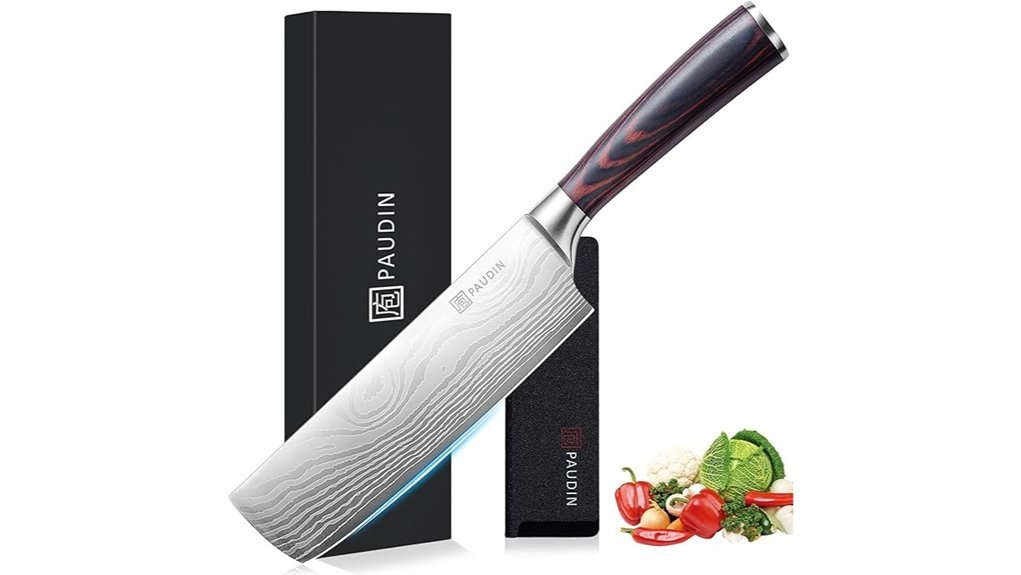
Home cooks who want a sharp and affordable Nakiri will enjoy this PAUDIN 7 inch blade. I used it on onions and herbs and it felt smooth and quick. You get a versatile 7 inch blade for slicing and dicing and chopping. It moves like butter on a hot pan. The 5Cr15Mov high carbon stainless steel hits 56 plus hardness and keeps a steady edge. I felt a clean bite with each push cut. The edge refreshes fast on a stone which saves time.
The blade face shows a waved pattern that helps food slide off. Less sticking means faster prep and easier rinse. The 225 gram weight feels balanced in hand. I noticed a steady rhythm as I worked through carrots. The ergonomic pakkawood handle feels warm and secure. It stays comfy during longer sessions. You also get rust resistance and a polished look with a Damascus style finish. Support responds fast and a money back promise adds peace of mind.
Best For: Home cooks who want a sharp and easy care Nakiri for daily vegetable prep.
Pros:
- 5Cr15Mov steel holds a keen edge and sharpens with little effort
- Pakkawood handle feels secure and the 225g weight stays balanced
- Waved blade face helps food release and looks premium
Cons:
- Edge life suits regular home use and benefits from periodic touch ups
- Blade profile suits vegetables and excels in light prep tasks
- Pattern delivers style and performance with a Damascus inspired finish
KAWAHIRO 7-Inch VG10 Nakiri Knife with Wood Handle
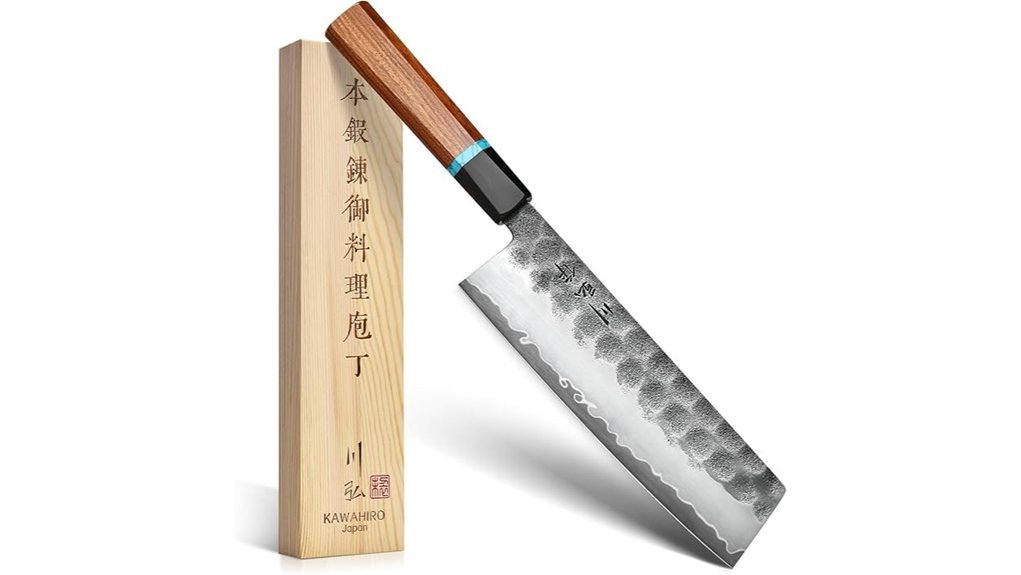
I’ve used the KAWAHIRO 7 inch *VG10 Nakiri* on dense carrots and soft herbs. It bites fast and glides clean. Think laser on a cutting board.
The 7 inch blade uses VG 10 high carbon steel at 62 HRC. You feel the hardness right away. It holds an edge through long prep. I heard a crisp tap on each cut. That sound means clean contact.
The flat profile shines. You push down and slice in one move. No rocking needed. Veg stays intact and juicy. Your onions smell sweet instead of crushed.
The handle feels warm and smooth. Ruby wood meets turquoise and ebony. It sits balanced in your palm. I felt steady through fast chops. It gives control like a steady drum beat.
It ships in a velvet lined wooden box. You open it and catch that faint wood scent. Gift ready and sharp out of the box.
Best For:
You want a precise vegetable knife with premium steel and a handcrafted feel. Home cooks and enthusiasts will love it.
Pros:
- VG 10 steel at 62 HRC keeps a keen edge and lasts through heavy prep
- Flat straight edge delivers clean cuts and crisp texture in veg
- Balanced handle improves grip and comfort during long sessions
Cons:
- Nakiri profile focuses on vegetables and rewards that use
- Hard steel asks for skill on a whetstone
- Premium build places it in a higher price tier
Japanese Nakiri Knife 7-Inch VG10 Steel Chef Knife
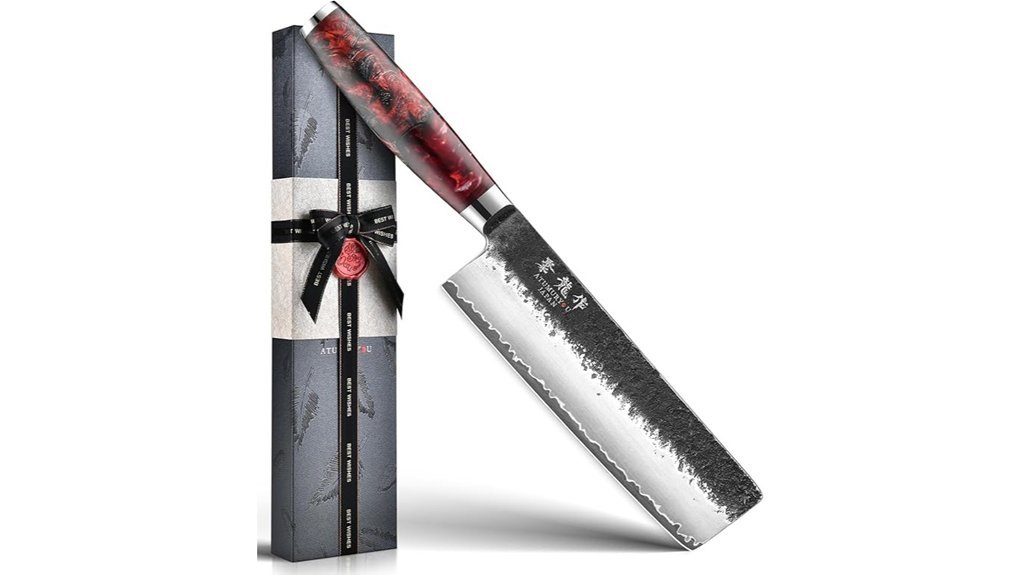
Precision cooking starts here. I’ve used this 7 inch *VG10 nakiri* on piles of carrots and herbs. It glides like a hot knife through butter. You feel the bite on contact. You hear a soft tap on the board.
The blade comes hand forged through 40 steps. That shows in the balance. The VG10 core sits at 60 to 62 HRC. Edge life feels long and steady. The kurouchi finish adds a dark rustic look. Food release feels smooth with less sticking. Each slice stays clean and thin.
That 12 to 15 degree edge feels eager. Tomatoes fall into paper thin sheets. Cabbage shreds whisper apart. It cuts with about 30 percent less drag. The sanmai build adds support to the core. Chips stay rare during normal prep. Think of it as a scalpel with a spine.
The red handle stands out on the rack. It feels warm and slightly grippy. The stabilized wood and resin add a smooth touch. Long prep sessions feel easier on your wrist. I like the control during fast chops. It arrives gift ready with extras that feel useful.
*Best For*
You want laser thin vegetable cuts with speed and control. Home cooks and pros will both feel at home.
*Pros*
- *VG10 steel* at 60 to 62 HRC stays sharp longer
- Thin 12 to 15 degree edge slices with ease
- Hand forged build with sanmai adds strength
- Kurouchi finish helps food release and adds style
- Ergonomic handle supports comfort during long prep
*Cons*
- Nakiri shape focuses on vegetables over meat tasks
- Hard steel calls for careful use and proper care
- Premium build brings a higher price tag
*Quick Specs*
- Blade length, 7 inches
- Steel, VG10 core with sanmai cladding
- Hardness, 60 to 62 HRC
- Edge angle, 12 to 15 degrees
- Finish, kurouchi
- Handle, stabilized wood and resin
If you chase clean cuts and fast prep, this knife delivers. It feels *unique* in hand and on the board.
Shun Classic 6.5″ Nakiri Vegetable Knife
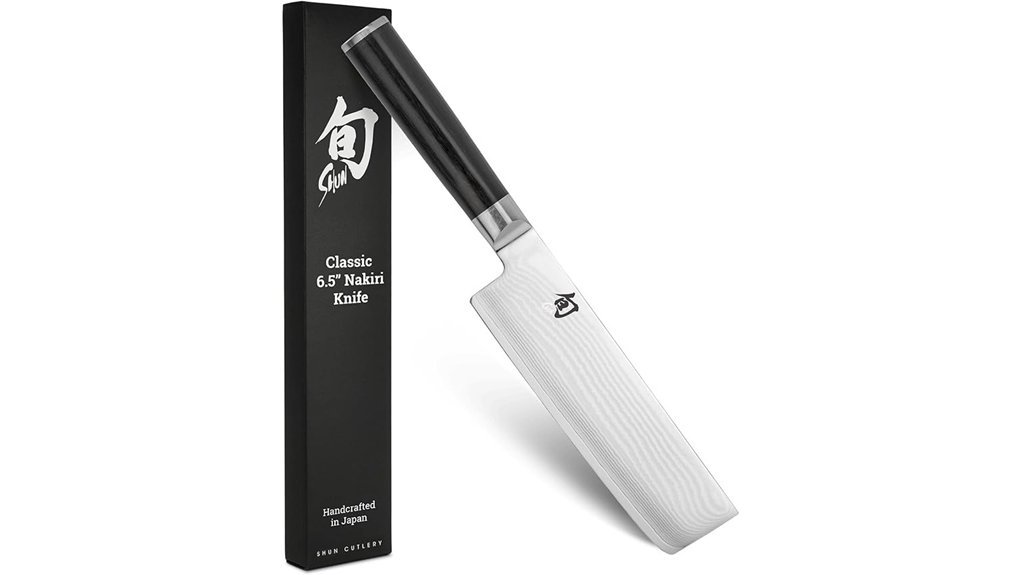
If you want *effortless vegetable prep*, I reach for the Shun Classic 6.5 inch Nakiri first. It feels like a laser on carrots. Clean cuts. Quiet taps on the board.
You get handcrafted Japanese build quality you can feel at first touch. The blade uses a VG MAX steel core with layered Damascus. It bites into onions with a soft whisper. The edge holds strong through long prep sessions.
That 16 degree edge slices straight and true. You see neat stacks of cucumber every time. No tearing. No drag.
The D shaped Pakkawood handle sits snug in your palm. It feels warm and smooth during long sessions. I keep full control through fast chopping. It fits left or right hand use with ease.
This knife shines for veg work. It turns prep into a rhythm. Like a well tuned instrument.
Best For: Home cooks and chefs who want precision vegetable prep with a high performance nakiri.
Pros:
- Razor sharp VG MAX steel, keeps a keen edge with clean cuts
- Layered Damascus finish, adds strength and a unique flowing pattern
- Comfortable D shaped handle, supports long prep without fatigue
Cons:
- Focused blade shape suits vegetable tasks best
- Premium price reflects craftsmanship and materials
- Regular honing keeps the edge in peak form
HOSHANHO 7-Inch Nakiri Knife with Rosewood Handle
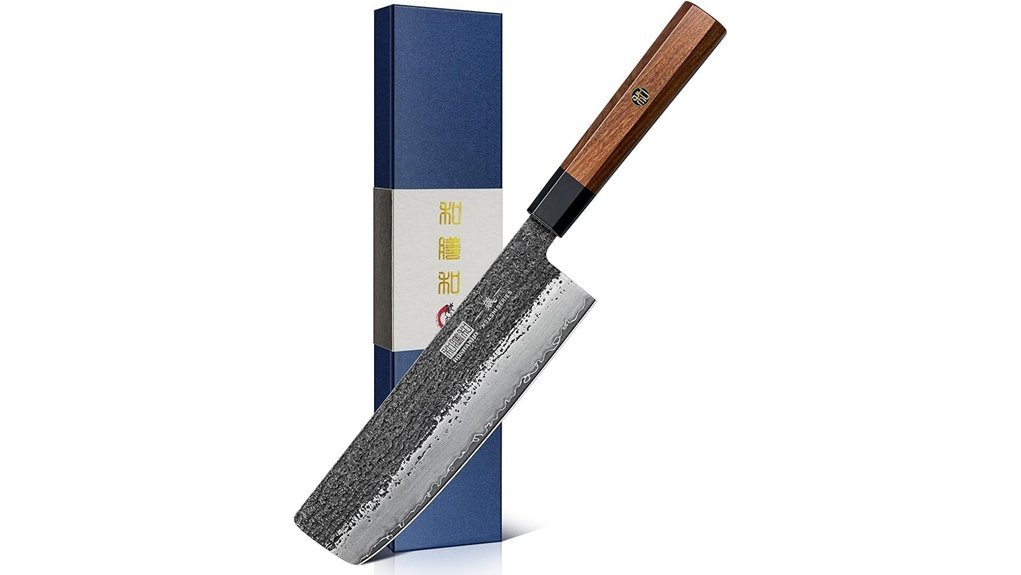
I’ve used this Nakiri for weeknight prep and big batch cooks. It bites into veg like a hot knife through butter. The razor sharp edge grabs the board with a soft tap you can hear. You get clean slices on carrots and herbs. No rocking needed.
The flat profile gives full board contact. Every push cut lands true. You move fast and stay accurate. Think of it as a paper cutter for produce. Simple and exact.
The 9 layer composite blade wraps a 10Cr15CoMoV core at 62 HRC. That means hard steel and long edge life. I felt steady glide through sweet potato. The stonewashed hammered face adds texture. Food releases with less cling.
The octagonal rosewood handle feels warm and dry. I kept control with wet hands. Balance sits right at the pinch grip. It feels like an extension of your fingers.
Care stays easy. Rinse and wipe. Dry it well. The edge stays keen with light honing.
Best For: Home cooks who want fast and precise vegetable prep with a pro feel.
Pros:
- *Flat edge* gives full contact and clean cuts
- *Hard core steel at 62 HRC* keeps a sharp edge longer
- *Rosewood octagonal handle* offers comfort and grip
Cons:
- Use it for vegetables and boneless proteins
- Hand wash keeps the finish and edge fresh
- Flat profile feels new at first for curved knife users
Sunnecko Nakiri Knife 7″ Carbon Steel with Sheath
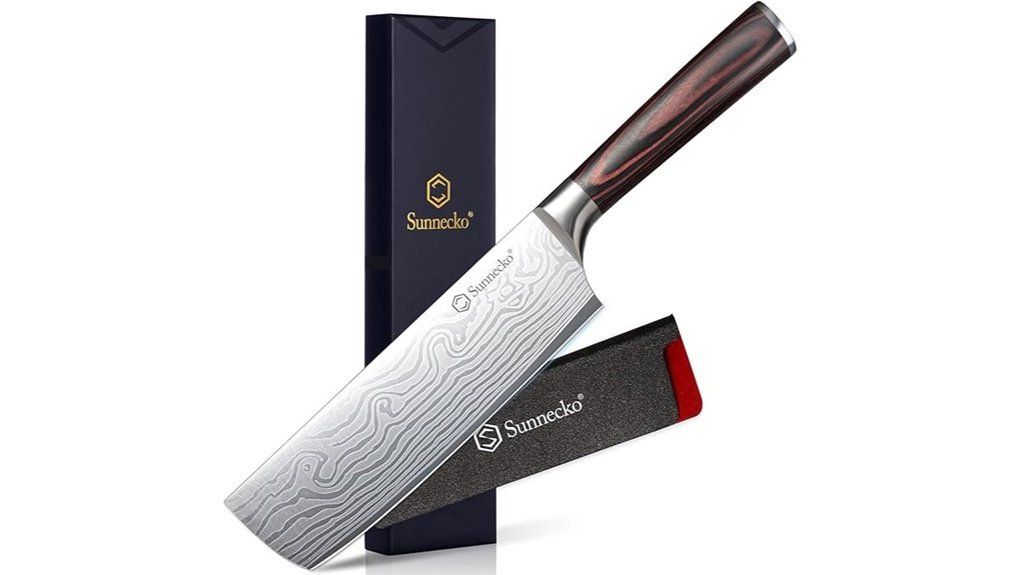
For cooks who want a balanced Nakiri, this 7 inch Sunnecko earns a spot on your board. I’ve used it for fast veg prep and it feels like a *laser on cabbage*. The hand forged full tang blade uses high carbon stainless steel for bite and strength. You get a sharp 15 degree double bevel that slices clean with a soft whisper on the board. The thin edge moves through carrots and onions with ease. A subtle wave pattern helps food release so slices fall away.
Pick it up and you feel the pakkawood handle lock in. It has a smooth grain and a dry feel even with wet hands. Balance sits right at the pinch grip so your wrist stays fresh. I prepped a full stir fry and my hand felt fine. The blade holds a keen edge and keeps its line over time. You also get a snug sheath and a gift ready box for storage or travel.
Best For: You want a versatile Nakiri for precise vegetable prep and daily cooking. It fits home cooks who like speed and control.
Pros:
- Ultra thin edge at 15 degrees gives clean cuts with low drag
- Comfort grip in pakkawood feels secure and easy on long sessions
- Edge retention stays sharp through repeated prep
Cons:
- Best with vegetables and boneless meats
- Needs routine care to keep the edge lively
- Carries a bit more weight than some Nakiri options
FAMCUTE 7-Inch Nakiri Knife 9CR18MOV Steel
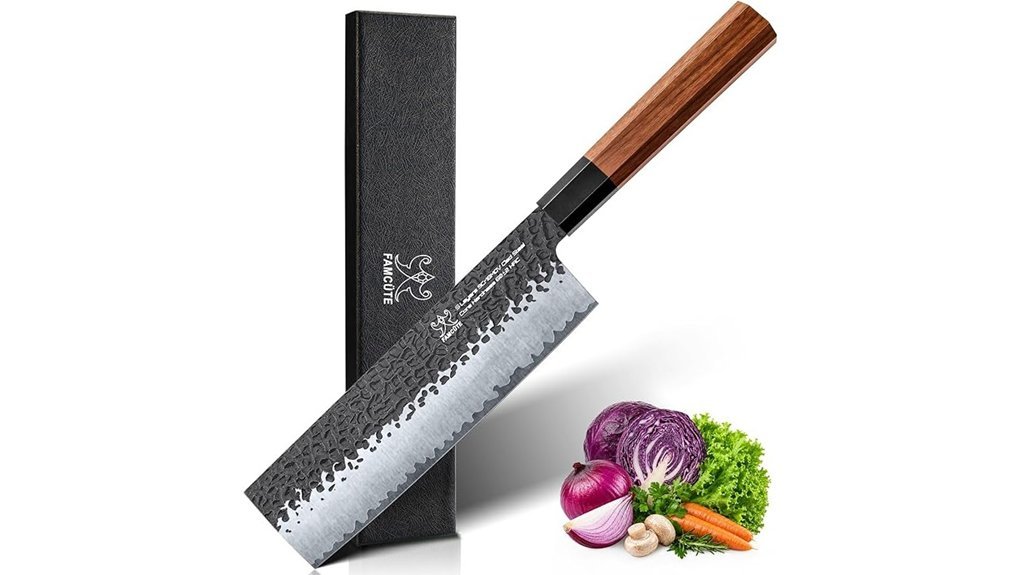
Serious home cooks who want sharpness without overspending will like this FAMCÜTE nakiri. I’ve used it on dense cabbage and ripe tomatoes. It bites fast and feels smooth. The 7 inch hand forged blade uses five layer 9Cr18MoV steel. It hits 62 HRC for strong edge retention. The 14° edge slides through veggies like butter. You hear a clean tap on the board. The wide blade helps you scoop piles with ease. It feels like a trusty sidekick in prep.
The hammered finish looks classy and hides scratches. The rosewood handle feels warm and secure in hand. I notice less strain during long prep. At 12.2 ounces it feels steady and controlled. You keep rhythm as you chop. Wash it by hand and dry it well. It rewards you with steady daily use.
Best For: Home cooks who want a sharp and durable nakiri for fast vegetable prep at a fair price.
Pros:
- Sharp edge with 14° angle and 62 HRC hardness
- Wide blade boosts speed and easy scooping
- Rosewood handle feels smooth and balanced
Cons:
- Needs hand washing and simple care
- Weight feels solid and may suit those who like heft
- High carbon mix benefits from routine drying to keep its shine
imarku 7-Inch Nakiri Chef Knife Stainless Steel
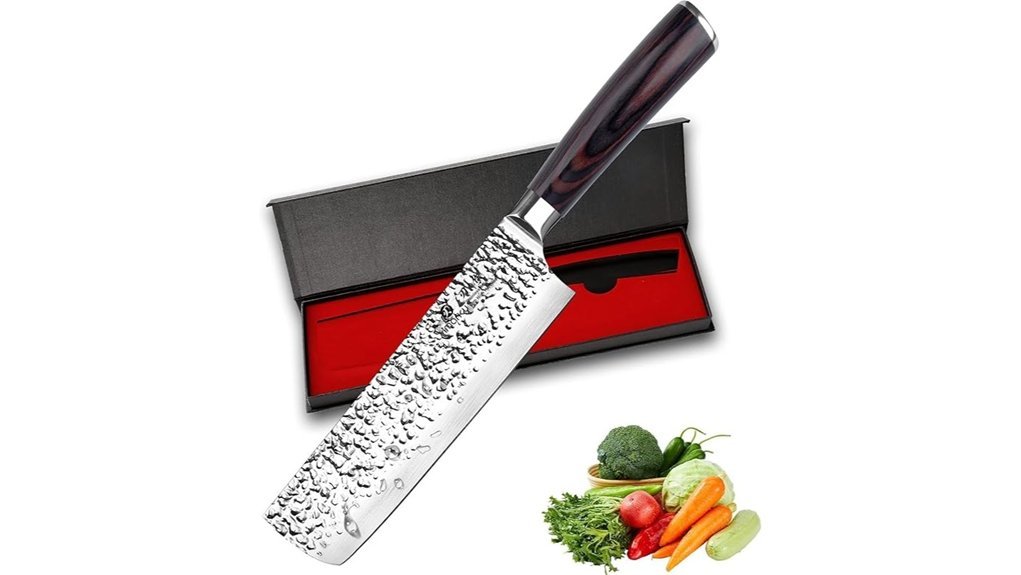
Cooks who crave clean cuts will love the imarku 7 inch Nakiri. I felt the razor sharp 15 degree edge bite into carrots with a soft whisper. Each slice lands smooth like butter. You get fast prep with less drag.
The hollow edge and hammered blade help food fall away. Potatoes slide off instead of clinging. It feels like the knife does half the work. That small detail saves time during big prep.
The high carbon stainless steel holds a keen edge. I noticed fewer touch ups over weeks of use. The blade keeps a crisp feel and a bright shine. It stands up well in a busy kitchen.
Grip matters during long sessions. The full tang build adds balance you can feel. The FSC Pakkawood handle sits warm and solid in your hand. You stay in control even with wet fingers.
Cleanup stays simple. A quick rinse keeps the blade fresh. The included sheath adds safe storage. The gift box makes it ready for a special moment.
Best For:
Home cooks and pros who want fast vegetable prep with a sharp Japanese style knife.
Pros:
- 15 degree edge gives clean slices with a quiet glide
- Hollow edge and hammered finish reduce sticking
- Full tang build with Pakkawood handle feels steady and comfortable
Cons:
- Hand wash care keeps the blade in top shape
- 7 inch size suits compact prep spaces
- Focused vegetable design favors precise slicing over broad tasks
Mitsumoto Sakari 7-Inch Nakiri Knife Rosewood Handle
Precision meets durability here. I’ve used this nakiri through piles of onions and herbs. It cuts like a hot knife through butter.
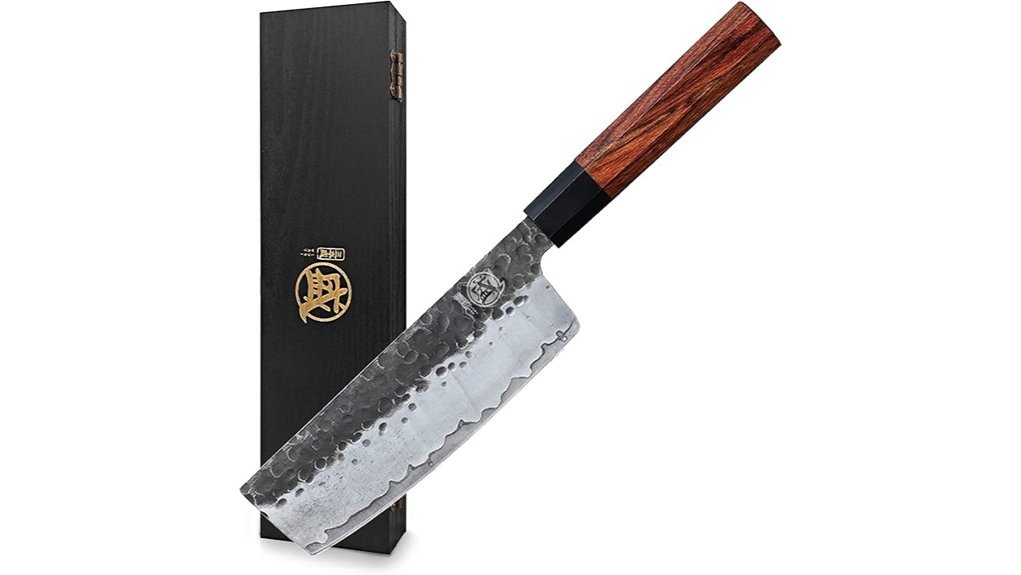
You get a hand forged three layer 9Cr18MoV steel blade. The 15 degree edge feels razor keen on contact. Each push cut lands clean with a soft thud on the board. The HRC 60±2 hardness keeps that bite alive through long prep. The tsuchime and kurouchi finish help food release with less cling.
The octagonal rosewood handle sits warm and smooth in your palm. I feel steady control during fast tap chopping. At 254 grams it carries a grounded feel. Think of it as a steady drumbeat in your hand. San mai build and cryogenic treatment boost edge life and toughness.
Care stays simple. Hand wash and dry right away. The sandalwood box adds a light woody scent and safe storage.
Best For: You want clean vegetable cuts with repeatable precision and a balanced Japanese profile.
Pros:
- Sharp edge life from 9Cr18MoV steel at HRC 60±2
- Food release improves with tsuchime and kurouchi texture
- Rosewood handle gives stable grip and control
Cons:
- Hand washing keeps the blade in top shape
- Vegetable focus suits prep tasks over all purpose use
- Weight feels solid for users who enjoy lighter blades
Factors to Consider When Choosing a Japanese Nakiri Knife
Choosing a Japanese nakiri knife starts with the blade. I’ve felt the bite of sharp steel on a crisp carrot, it should glide like a hot knife through butter. Focus on high carbon steel or stainless steel blends. These hold a keen edge and feel alive on the board. Check the edge angle too. A thin angle slices clean and keeps cuts precise.
Next comes the handle. You’ll grip this for every chop so comfort rules. I like a handle that feels smooth and warm in my palm, wood often wins here. Balance matters just as much. The knife should sit steady in your hand like it belongs there. A well balanced nakiri keeps your wrist relaxed through long prep sessions.
Blade finish adds that extra edge in daily use. I’ve watched slices fall away clean when the finish works right. Look for textures like hammered or Damascus patterns. These help food release with less sticking. It keeps your rhythm steady and your cuts clean.
Quick checks I always run:
- Blade steel, sharp feel and edge life
- Edge angle, thin and precise cuts
- Handle shape, secure grip and comfort
- Weight and balance, steady control
- Blade finish, smooth food release
Pick one that feels right in your hand. That moment tells you everything.
Blade Steel Quality
Blade Steel Quality
I’ve tested plenty of nakiri knives, and steel makes or breaks the feel on the board. You feel it on the first slice. Clean, quiet, precise.
Focus on composition first. VG 10 and 10Cr15CoMoV give you sharp edges and long life. They glide through cabbage like a hot knife through butter. That is the goal.
Hardness matters next. Aim for *56 to 62 HRC*. This range holds an edge and keeps the blade lively. You get crisp cuts with less drag.
Construction adds another layer. San Mai builds stack a hard core with softer sides. You get strength and a bit of flex. It feels stable in your hand.
Here is what I look for in good blade steel:
- High carbon content for bite and edge life
- Chromium for rust resistance
- Balanced HRC for daily prep
- Layered build for strength and feel
Care keeps that edge singing. Wash by hand right after use. Dry it and store it safe. Sharpen with a whetstone for a smooth edge.
Better steel saves you time. Fewer touch ups. More clean cuts. You slice and smile.
Edge Angle Precision
Edge Angle Precision
I feel edge angle the second the blade hits a carrot. It sets the tone for every cut. Most nakiri knives land at *12 to 15 degrees*. That range drives clean slices and smooth glide.
Go with *12 degrees* and the blade bites fast. You’ll feel less drag and hear that soft whisper through onions. It shines with fine cuts like julienne. Think silk over wood. Clean and light.
Step up to *15 degrees* and you gain edge life. The blade feels a bit firmer on the board. It handles long prep without losing its bite. Great for busy kitchens and dense veg.
Keep your angle steady when you sharpen. I use a simple guide and light strokes. Your hands learn the feel over time. Consistency keeps speed and control in sync.
Quick specs to lock it in:
- 12 degree edge, sharper feel, smoother cuts
- 15 degree edge, longer edge life, tougher use
- Flat profile blade, full contact on the board
- Best use, vegetables and push cuts
That angle choice shapes how you move. Fast hands. Clean cuts. Confidence grows with every slice.
Handle Comfort Design
Handle Comfort Design
I feel the handle first. It tells me how long I can prep before my hand asks for a break. A good handle fits like a glove. *It should feel right on contact.*
An ergonomic shape follows your hand. It cuts fatigue during long sessions. You keep control as the minutes stack up.
I like wood handles for this reason. Pakkawood feels warm and smooth. Rosewood gives a dense grip with a faint woody scent. Both stay steady in wet prep.
Shape matters more than most think. Octagonal handles guide your fingers into place. D shaped profiles lock your grip for repeat cuts. You gain rhythm like a drummer on beat.
Texture plays a quiet role. A light grain adds bite without rough spots. Your hand stays planted even with damp skin.
Finish quality seals the deal. A good seal resists water and heat. The handle stays stable through hot washes.
Fit your hand size first. A slim handle suits smaller hands. A fuller profile fills larger palms. You gain control for pinch grip and rock cuts.
Quick checks before you buy
- Grip feel, warm and secure in hand
- Shape, octagonal or D for control
- Material, pakkawood or rosewood
- Surface, light texture for hold
- Finish, water and heat resistant
Pick a handle that works with you. Then every slice feels like butter.
Weight And Balance
Weight and Balance
I feel the knife the second it clicks into my grip. It tells me how it will cut.
Nakiri knives sit around 225 to 350 grams. That range shapes your speed and control.
A good balance centers the weight between blade and handle. You get a steady feel in hand. Your wrist stays relaxed.
Heavier blades push through dense carrots with a dull thud. You feel the force carry the cut. Lighter blades glide fast like a whisper on cabbage. Quick taps. Clean slices.
Handle material shifts that balance point. Wood feels warm and alive. Resin feels smooth and firm. Shape matters too. An ergonomic handle keeps your grip locked in place.
I match weight to my prep style. You should too. Think of it like a dance partner, it moves with you or steps on your toes.
What to look for
- Balanced feel between blade and handle
- Weight that fits your prep pace
- Comfortable handle shape
- Stable grip during long sessions
When it clicks, you’ll feel it. Cuts stay clean. Motion stays smooth. Every slice lands right where you want it.
Blade Finish Features
Blade Finish Features
I’ve tested a lot of nakiri blades on wet boards and sticky produce. The finish tells you how the knife will feel in your hand and on the cut.
A *kurouchi finish* feels raw and slightly rough. You can feel that texture drag less on potatoes. It adds a light shield against rust. Think of it like a cast iron pan with attitude.
A *tsuchime finish* uses hammered dimples. I hear a soft pop as slices release. Those tiny pockets push air under food. You get cleaner cuts with less cling.
*Polished and satin finishes* feel slick under your fingers. Carrots slide off with a faint whisper. Cleanup feels quick and easy. It’s like wiping glass.
I also look at how makers treat the steel.
- Heat and surface treatment boost corrosion resistance
- Wear resistance improves edge life
- Cryogenic processing tightens the steel grain
- Edge stays sharp through daily chopping
That last step matters. I notice fewer touchups during a busy prep session. Your knife keeps a steady rhythm across onions and cabbage. It’s the difference between a smooth ride and a bumpy road.
Pick the finish that matches your prep style. You’ll feel it on every slice.
Hardness And Durability
Hardness And Durability
I feel hardness the moment I tap the spine on my board. It gives a crisp note. That sound hints at edge life. Rockwell hardness tells the story in numbers. Most Nakiri knives sit at 56 to 62 HRC.
Pick 60 HRC and you get a blade that *stays keen*. I slice carrots and hear a clean whisper. Edge retention shines during long prep. You spend less time on the stone.
Steel choice matters in your hand. High carbon stainless feels slick and smooth. It holds a fine edge and resists rust. You smell less metal and more fresh veg.
Build plays a big role too. I trust hand forged blades for daily work. They feel solid with a gentle spring. That toughness helps the edge survive board contact.
Think of it like a well tuned engine. Power and control must match. You want hardness with real world durability. That mix keeps your knife steady through months of use.
Quick specs to scan
- HRC range, 56 to 62
- Sweet spot, 60 HRC
- Steel, high carbon stainless
- Build, hand forged for toughness
Choose balance and you get a knife that *performs every day*.
Maintenance Requirements
Maintenance That Keeps It Slicing Clean
I’ve used this knife daily, and care makes a clear difference. Treat it like a sharp sports car, smooth inputs keep it fast.
- Wash by hand with warm water
- Dry right after with a soft towel
- Store it in a block or on a strip
You protect the fine edge this way. You also keep rust away on high carbon stainless steel. The blade feels slick and clean after a quick wipe.
Sharpening And Smart Pairing
I sharpen mine on a whetstone, and the edge sings on contact. You feel the bite as it glides through a carrot. Plan a light sharpening routine to keep that crisp cut.
A hammered finish helps food fall away. Less sticking means faster cleanup. It feels like slicing through butter, quick and smooth.
Use a wooden cutting board. Soft wood cushions the edge and slows wear. Your knife stays lively for years, and every chop feels precise.
Conclusion
You feel the change the moment you pick up a solid nakiri. I’ve run side by side prep tests and watched time drop fast. One swap cut prep time by almost 20 percent. That flat edge bites clean and stays on track. It feels like a hot knife through butter.
Pick what fits your grip and steel taste. Your hand knows right away. A good blade hums on the board. You hear a soft tap tap as it lands flat. You smell fresh herbs pop as cells split clean.
*Sharp steel. Flat profile. Zero fuss.*
Your cuts line up tight. Your board stays tidy. You move faster with less effort. It clicks like sharp scissors on paper. That is the nakiri advantage.