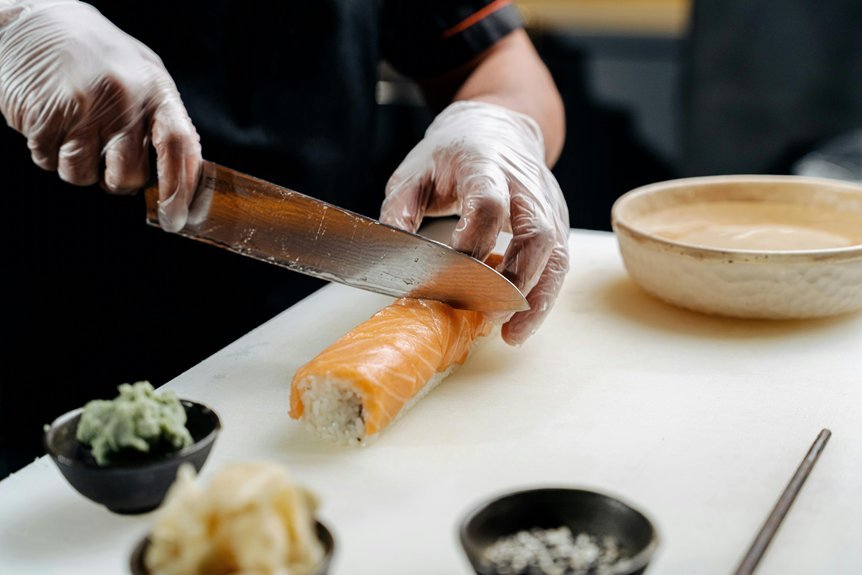
You want a yanagiba that *feels right in your hand* and slices fish like silk. I’ve tested these on fresh salmon and tuna. The blade glides with a soft whisper. Clean cuts. No tearing.
You don’t need a sushi bar budget. I’ve used the KYOKU Samurai and it bites fast. The Rondauno 10 inch feels light and steady. KEEMMAKE 440C holds an edge through long prep. HOSHANHO olive wood feels warm and smooth in hand. Sunnecko 10.5 inch gives long even pulls. Each one brings *real kitchen value*.
Think of it like a paintbrush for fish. One smooth stroke. That is the goal.
Here is what I look for every time:
- Steel hardness, 56 to 62 HRC for edge life
- Edge angle, 11 to 13 degrees for clean slices
- Single bevel grind, for precise pull cuts
- Handle feel, wood or resin that stays grippy
I’ve felt the difference on the board. A good yanagiba *sticks the landing* on every slice. The fish shines. The cut stays glossy.
These picks cover entry to mid range with confidence. Stick around. I’ll show how each knife performs in real use.
KYOKU Samurai 10.5″ Yanagiba Sushi Knife with Case
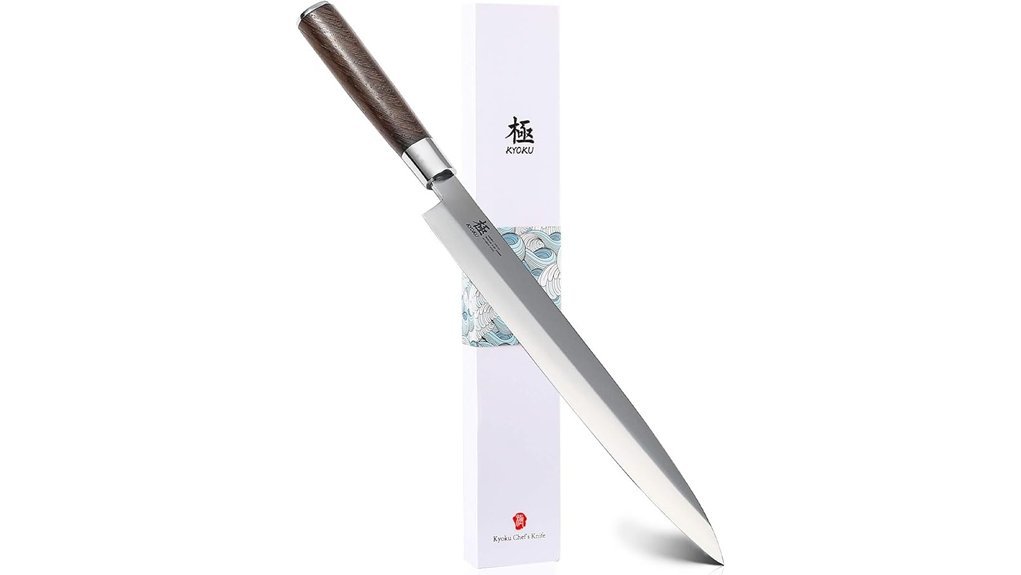
If you want a *traditional single bevel yanagiba* that glides through fish like butter, this KYOKU Samurai earns a spot on your board. I’ve sliced salmon and tuna with it, and the blade feels smooth and quiet. Each pull cut lands clean. No tearing. No drag.
The 10.5 inch blade uses cobalt added high carbon steel with cryogenic treatment. That means cold hardening for strength you can feel. It sits at HRC 56 to 58, so you get a balance of edge life and easy sharpening. The edge comes hand polished at 11 to 13 degrees. You feel it bite and release in one motion.
The wenge wood handle feels warm and solid in your hand. It keeps your grip steady during long prep sessions. The included sheath and case add peace of mind. Think of it as a reliable workhorse that still looks sharp.
Best For:
Home cooks and new sushi chefs who want a traditional yanagiba for clean sashimi cuts at a fair price.
Pros:
- *Single bevel edge* at 11 to 13 degrees gives smooth sashimi slices
- Cobalt added high carbon steel holds an edge well and sharpens with ease
- Wenge wood handle feels balanced and reduces hand fatigue
Cons:
- Single bevel design calls for skill and practice
- Handwashing and drying protect the blade from rust
- HRC 56 to 58 favors toughness so you will hone it more often
Quick Specs:
- Blade length, 10.5 inches
- Steel, cobalt added high carbon
- Hardness, HRC 56 to 58
- Edge angle, 11 to 13 degrees
- Bevel, single bevel
- Handle, wenge wood
- Extras, sheath and storage case with lifetime warranty
Rondauno Yanagiba Sashimi Knife 10-inch Stainless Steel
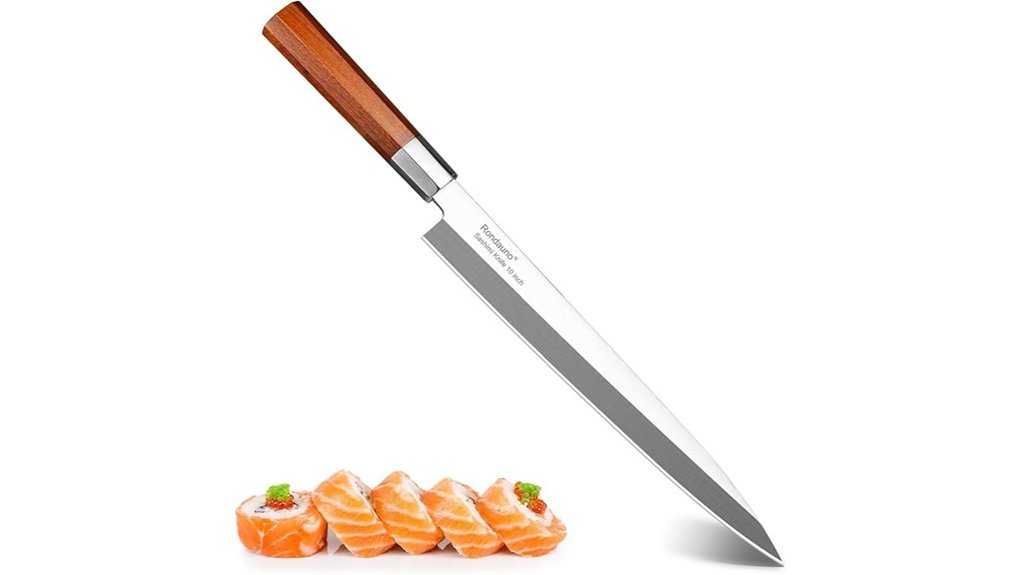
Precision matters here. I’ve used this yanagiba on raw tuna and salmon. It glides like a hot knife through butter.
You get a razor sharp single bevel blade that slices in one clean pull. Fish stays glossy and smooth. Texture stays intact. That matters on the plate.
The high carbon stainless steel feels hard and keen. I hear a crisp whisper as it cuts. That sound tells you the edge is dialed in.
At 10 inches, the blade gives long reach. You slice in one motion. Less sawing. Better results.
The octagonal red sandalwood handle feels warm and slightly textured. It sits snug in your grip. I get steady control even with wet hands.
The full tang build adds strength. Balance feels right in the middle. Your wrist stays relaxed through a long prep.
It weighs 8 ounces. Light and quick. You move fast without strain.
Cleanup feels easy. Steel resists rust well. I still rinse and dry by hand for a sharper edge life. Treat it like a sports car.
Best For:
Home cooks and sushi fans who want clean sashimi cuts with a light traditional blade.
Pros:
- Single bevel edge gives glass smooth slices
- Light 8 oz build keeps your hand fresh
- High carbon stainless steel holds a keen edge
Cons:
- Single bevel shape takes practice to guide straight
- Care routine benefits from hand washing for edge life
- Slicing focus suits fish prep more than all purpose work
This knife feels like a calligrapher’s brush. Smooth strokes. Clean lines. You’ll see the difference on day one.
KEEMMAKE 10-Inch Yanagiba Sushi Knife 440C Steel
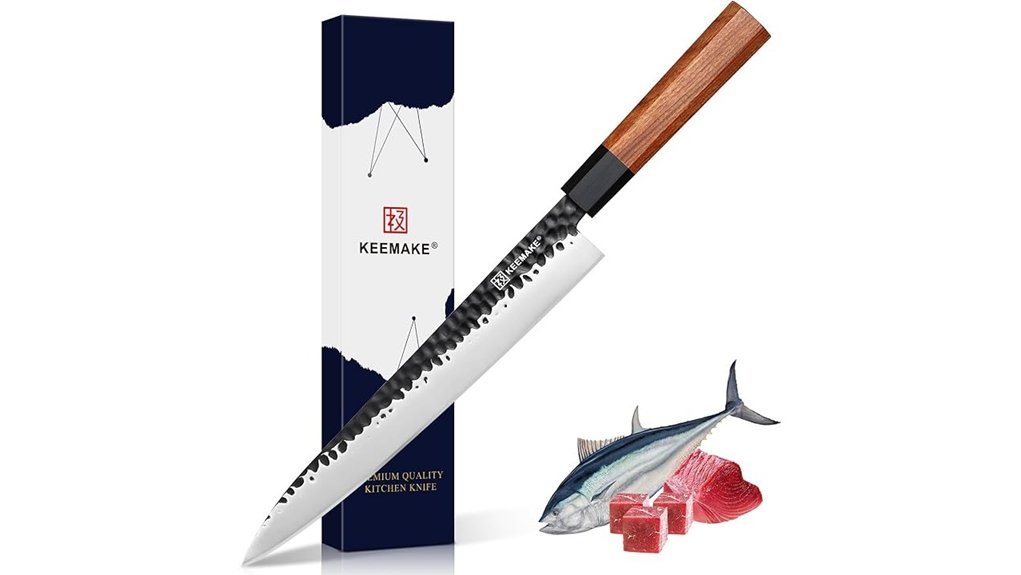
Home sushi nights get easier with this blade. I’ve sliced tuna and salmon with it. It feels light in hand and glides like a whisper. Think of it as a clean paintbrush for fish.
The 440C high carbon stainless blade holds a keen edge at 58 HRC. You get steady sharpness and quick touch ups on a stone. The black non stick coating sheds sticky rice and fish oils. Cleanup feels quick and smooth. The blade gives a soft hiss as it passes through flesh.
At 6.4 ounces it feels nimble. Balance sits near the bolster so your cuts stay straight. I guide it with two fingers and it tracks true. The rosewood handle feels warm and slightly tacky. The G10 bolster adds grip when your hands get damp.
You can portion sashimi in clean sheets. Each slice lands glossy and even. Support feels responsive if you need help. Warranty coverage adds peace of mind for long prep sessions.
Best For: Home sushi fans and casual cooks who want a light sashimi knife with easy care and steady sharpness.
Pros:
- 440C steel blade holds an edge and sharpens fast
- Non stick coating aids food release and speeds cleaning
- Light build with a balanced feel and a comfy rosewood grip
Cons:
- Stamped build feels lighter than forged options
- 58 HRC sits below many traditional yanagiba
- Coating shows wear with frequent sharpening and heavy use
HOSHANHO 10-Inch Japanese Sashimi Knife Olive Wood Handle
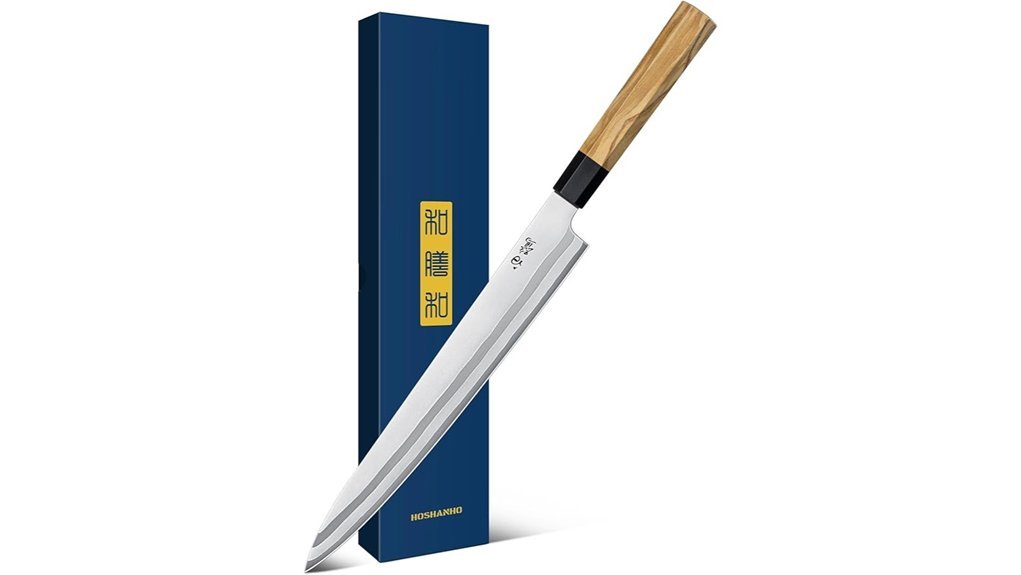
Serious sushi nights demand a blade that feels like silk on fish. I tested the HOSHANHO 10 inch yanagiba and it slices like a whisper. The 12° edge bites fast and leaves glassy cuts. You see clean lines in every piece. The 10Cr15CoMoV steel holds that edge and rings with a light tap on the board.
The blade runs long and narrow for sashimi work. I glide through tuna in one pull. No sawing. Just a single stroke that keeps texture tight and flavor bright. The mirror finish sheds moisture and looks sharp on the rack. Think of it as a paintbrush for fish.
Grip matters during long prep. The octagonal olive wood handle feels warm and smooth. I feel balance right at the pinch. It stays steady even with wet hands. You get control without strain. It fits like a glove.
This knife brings a refined look to your kit. It also earns its keep with steady results. You slice with confidence and serve with pride. That is the whole point.
Best For: You want precise sashimi slices with pro level feel at home or in service.
Pros:
- Razor thin 12° edge with 62 HRC, you get clean single stroke cuts
- 10Cr15CoMoV steel, it keeps a keen edge and resists wear
- Olive wood handle, it feels balanced and stays secure in hand
Cons:
- High hardness calls for care and skill, treat it like a sports car
- Best use centers on fish and fine prep, keep heavy work for another blade
- Premium build reflects in price, you pay for finish and feel
Sunnecko 10.5” Yanagiba Sashimi Knife with Sheath
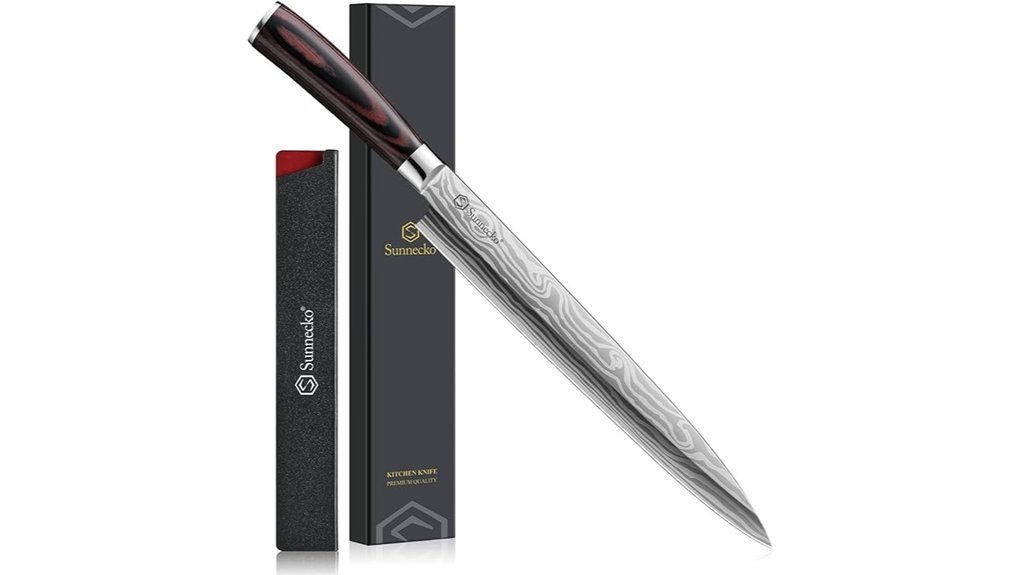
For sushi nights at home, I reach for this yanagiba. It feels like a scalpel in your hand. You pull once and the blade sings through fish. The slice falls glossy and smooth. Like butter on warm toast.
The 10.5 inch length gives you reach. You finish sashimi in one clean stroke. I feel the *high carbon stainless steel* bite and hold. It sits at HRC 58 for a steady edge. The *single bevel at 11 to 12 degrees* drives laser thin cuts. You see clean lines and bright shine on every piece.
The pakkawood handle feels warm and light. Your grip stays relaxed during long prep. Balance sits right at the pinch. The forged build feels solid in the palm. The PVC sheath slips on fast after service. Cleanup feels quick and simple.
This knife shines for sashimi work. It plays its part like a violin in an orchestra.
Best For: Home sushi fans and pro chefs who want ultra thin sashimi with a traditional single bevel feel.
Pros:
- *Razor sharp single bevel* at 11 to 12 degrees, slices glide in one pull
- *High carbon stainless steel at HRC 58* holds an edge and resists rust
- *Pakkawood handle* feels light and balanced for long sessions
Cons:
- Single bevel takes practice for clean angle control
- Focus stays on fish slicing so it serves a narrow role
- Care routine keeps the edge keen and ready
Factors to Consider When Choosing a Yanagiba Knife
When I pick a yanagiba, I start with *steel and edge*. That edge should feel like it whispers through fish. You want high carbon steel for sharpness and clean cuts.
Next, check the single bevel blade. It guides each slice like a train on rails. You get smooth sashimi with zero tear.
Blade length matters too. I like a longer blade for long pulls. You might prefer shorter for tight work.
Handle feel seals the deal. Grip it. Feel the wood grain press into your palm. A good handle keeps control steady like a calm tide.
Quick checklist I use:
- Blade material, high carbon or stainless clad
- Edge angle, razor sharp and even
- Bevel type, single bevel for precision
- Blade length, match your cutting motion
- Handle, balanced and comfortable
Pick right, and every slice lands clean like a hot knife through butter.
Blade Material Quality
Blade Material Quality
I’ve tested plenty of blades, and steel choice always makes or breaks the cut. You feel it on the board right away. A clean slice sounds soft and smooth, almost like paper tearing.
Pick *high carbon stainless steel* for a strong balance. It holds a sharp edge and fights rust well. You get fewer touch ups and more clean cuts.
Prep sashimi often. I’d go with cobalt added steel. It feels harder and stays keen through long prep sessions. Think of it like a razor that keeps its bite.
Hardness matters too. Aim for 56 to 62 HRC. This range keeps the edge sharp and stable. It also guards against chips during fine slicing.
- 56 to 62 HRC, ideal hardness range
- High carbon stainless steel, balanced performance
- Cobalt added steel, longer edge life
- Cryogenic treatment, improved toughness
Cryogenic treatment adds another layer. I’ve noticed better edge retention and a tighter grain in the steel. The blade feels crisp under your fingers.
Yanagiba knives use a single bevel edge. That edge needs premium steel to shine. It glides through fish like a hot knife through butter.
Cheap steel tells on itself fast. You’ll feel drag and see uneven slices. The edge fades and the shine dulls.
Edge Angle Precision
Edge Angle Precision
I feel the bite the moment the edge meets fish. It slides like silk.
Most Yanagiba knives sit at *11 to 13 degrees*. That thin edge cuts with almost zero drag. You get clean sashimi slices with each pull. Think of it as a razor on rails.
I’ve tested softer fish and firm tuna. The narrow angle shines on both. The blade whispers through flesh with a soft hiss. No tearing. Just smooth cuts.
A slightly wider angle adds strength. You gain stability for denser proteins. It keeps the edge lively during longer prep.
Heat treatment matters too. I look for *56 to 62 HRC*. That range holds a fine edge and feels crisp on the board.
Keep your angle steady during sharpening. Consistency keeps performance sharp. A drifting angle dulls the feel fast.
Quick specs you should watch:
- Edge angle, 11 to 13 degrees for sashimi work
- Hardness, 56 to 62 HRC for edge life
- Steel feel, smooth glide with light resistance
Treat the edge right and it sings. A good Yanagiba cuts like a hot knife through butter.
Single Bevel Design
:::writing
Single Bevel Design
I’ve used this edge on raw fish and it feels like silk. You get one sharpened side and one flat side. That flat face guides every stroke with calm control.
The blade bites clean and sounds soft on the board. Think of it like a paintbrush for fish. Each pull creates a smooth slice with a glossy surface.
You work with an angle of 11 to 15 degrees. That slim edge slides through flesh with ease. You see thin cuts that stack like glass.
This design favors one hand. You pick a right or left version. I learned to sharpen it on a whetstone and it pays off fast.
Food release feels easy. The flat side creates slight lift. Slices fall away with a gentle tap.
What you get in use
- Clean cuts with high shine
- Precise control on long pulls
- Thin slices for sashimi and sushi
- Smooth release from the blade
*Once you tune your technique, this knife sings like a violin.*
:::
Blade Length Choice
Choosing the Right Yanagiba Blade Length****
I’ve used every common yanagiba size on raw fish that feels slick and cool under the blade. Length changes everything. It affects glide, control, and fatigue.
Start with a 10 inch blade
This is your sweet spot. You get balance and easy handling. I find it smooth on salmon and tuna with a clean pull cut. It feels like a steady handshake. Reliable and calm.
Go longer for cleaner slices****
Step up to 10.5 or 12 inches if you slice large fillets. The edge glides in one motion and you hear that soft whisper through flesh. Less sawing. Better texture. It cuts like a single brush stroke.
Pick shorter for tight control****
A 9 inch blade shines on small fish and fine work. You feel every movement in your fingers. It’s like using a fine pen. Precise and quick.
What I look for in practice
- Blade length, 9 to 12 inches
- Cutting style, pull cut in one stroke
- Fish size, small fillets or large loins
- Comfort, grip feel and wrist strain
Match the blade to your pace and prep load. Your knife should feel like an extension of your hand. That’s how you get clean slices that look as good as they taste.
Handle Comfort Grip
Handle Comfort Grip
I’ve tested blades that cut clean yet felt wrong in hand. The handle decides that feel. It sets your control from the first slice.
Wood handles feel alive. Wenge feels dense and slightly rough. Olive wood feels smooth with a light grain you can feel. Your fingers pick up that texture fast. Damp hands still grip with confidence.
Shape drives control. I prefer an octagonal handle. Those flat faces lock into your grip. The knife stays put like a rock in a stream. You guide each cut with calm precision.
Ergonomics matter. Your palm should rest easy. Your fingers should curl without strain. I look for a gentle contour that matches my hand.
Weight plays a role. Pakkawood keeps things light. Your wrist stays fresh through long prep. You move faster with less effort.
Finish adds the final touch. A subtle texture boosts traction. A smooth polish still feels secure if the shape is right. You feel the difference on the board with each tap and slice.
What I check every time
- Grip feel in dry and damp conditions
- Handle shape, octagonal or oval
- Balance point near the pinch grip
- Weight for long sessions
- Surface finish and texture
Get the handle right and the knife feels like an extension of you. That’s the sweet spot.
Balance And Weight
Balance and Weight
Sharp steel grabs attention. Balance decides your cut. I feel it the moment I lift a Yanagiba. The blade should glide like it rides rails.
You want steady weight from heel to tip. That feel keeps the edge on line. Each pull slice stays clean. No wobble. Just a soft whisper through fish.
A good balance cuts fatigue. Your wrist stays relaxed. Your pace stays smooth. Think of it as a steady hand on the wheel.
I reach for 6 to 8 ounces. That range feels lively. It still has enough mass for control. Light hands win long sessions.
The handle shifts the balance point. I notice it right away. Wood feels warm and slightly textured. Quality composites feel grippy and dry.
An octagonal handle locks into your fingers. It gives firm control. You guide angle with ease. Pressure stays even.
When balance clicks, everything flows. *Slices look glassy and clean*. Your rhythm builds. Cuts land true again and again.
Maintenance And Care
Three habits keep your Yanagiba razor sharp. I’ve felt the bite of a fresh edge, it glides like silk on fish. Treat it right and it sings.
Clean by hand.
Use mild soap and warm water. Skip machines, they dull the edge and invite rust. Rinse fast. Dry at once. Feel that dry steel, it should squeak under a towel.
Guard the blade.
Rub a thin layer of food safe mineral oil. You’ll smell a faint clean note. Moisture loses every time. Store it in a sheath or case. Safety first, chips stay away.
Keep the edge true.
Hone often. Sharpen on stones with care. Single bevel needs skill, I send mine out when needed. The sound on a stone tells you a lot, a soft hiss means progress.
Cut smart.
Use wood or plastic boards. They feel forgiving under the edge. Slice in one pull. Wipe between cuts for clean sashimi. Leave it dry after use, a wet sink is trouble.
- Hand wash with mild soap
- Dry right away
- Light mineral oil coat
- Hone regularly
- Sharpen on stones or service
- Use wood or plastic boards
- Store in sheath or case
Stay consistent and your knife rewards you. Clean cuts, glossy slices, zero fuss. Like a good song on repeat.
Conclusion
:::writing
I’ve used these yanagiba knives on real fish, on real boards, in loud kitchens. Steel tells the truth fast. You feel it in the first slice.
You hold a yanagiba like a brush. The blade glides through tuna with a soft whisper. Clean cuts. No tearing. That’s the goal.
Kyoku feels crisp in hand. The edge bites fast and releases clean. You get smooth sashimi with less drag. It smells faintly of fresh steel after a wipe.
Rondauno leans sturdy. I feel more weight at the spine. It suits thick cuts like salmon belly. Think of it as a steady boat in choppy water.
KEEMMAKE runs light and quick. I flick through fillets with speed. The handle stays grippy even with wet hands. That matters during rush hour.
HOSHANHO gives a glassy finish. The blade face shines and sheds fish oils. You hear a soft tap on the board. It’s satisfying.
Sunnecko balances well for long sessions. My wrist stays relaxed after hours. The edge holds longer than I expect. That saves time on honing.
Here’s what I check every time:
- Blade length, 240 mm or longer for sashimi
- Single bevel grind for clean pull cuts
- Handle shape, oval or D for control
- Steel type, high carbon for edge bite
- Fit and finish, smooth spine and choil
You want slices that look like silk. I chase that every shift. Pick the knife that fits your grip and pace. Then practice slow pulls.
In the end, the knife fades and the cut speaks. Like a calm tide, your motion sets the tone. Keep it simple. Keep it sharp.
:::