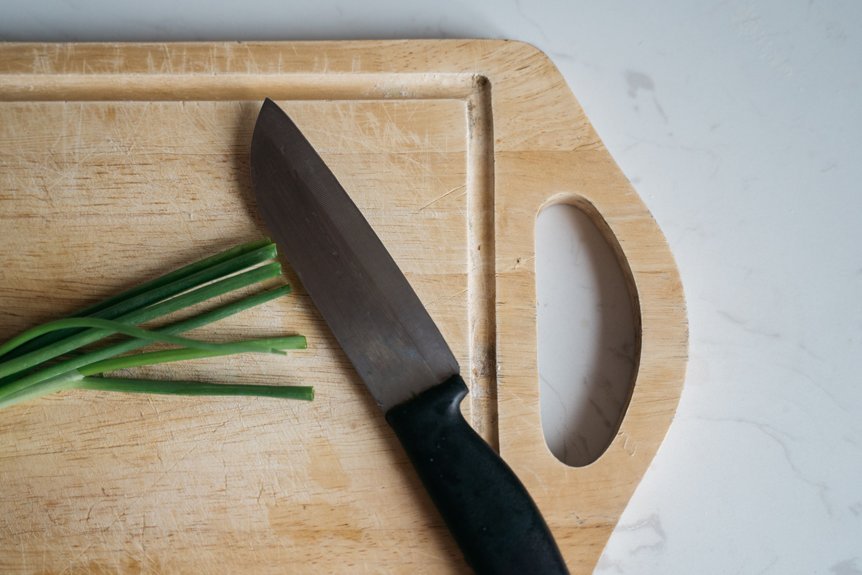
Choosing between an end grain cutting board and an edge grain board comes down to how you cook. I’ve tested both on busy prep days and quiet dinners. You feel the difference right away.
End grain feels soft under the blade. Your knife sinks in with a dull thud. It’s like cutting on a forest floor. The wood fibers close back up after each slice, which helps your edge stay sharp. You get a thick board that handles heavy chopping with ease.
Edge grain feels firm and smooth. The knife glides with a crisp tap. It’s lighter in your hands and easy to move from sink to counter. You get a solid surface that handles daily prep without fuss.
Here’s how I break it down:
- End grain boards
- Gentle on knife edges
- Thick and long lasting
- Higher price point
- Heavier feel
- Edge grain boards
- Budget friendly option
- Lighter and easier to store
- Simple care routine
- Great for daily slicing
I reach for end grain when I chop a pile of herbs or break down meat. It feels like a workhorse that keeps giving.
I grab edge grain for quick meals and fast cleanup. It’s the reliable weeknight tool.
Pick based on your rhythm in the kitchen. Your board should match your pace like a good dance partner.
THETCHRY Walnut End Grain Cutting Board Juice Groove
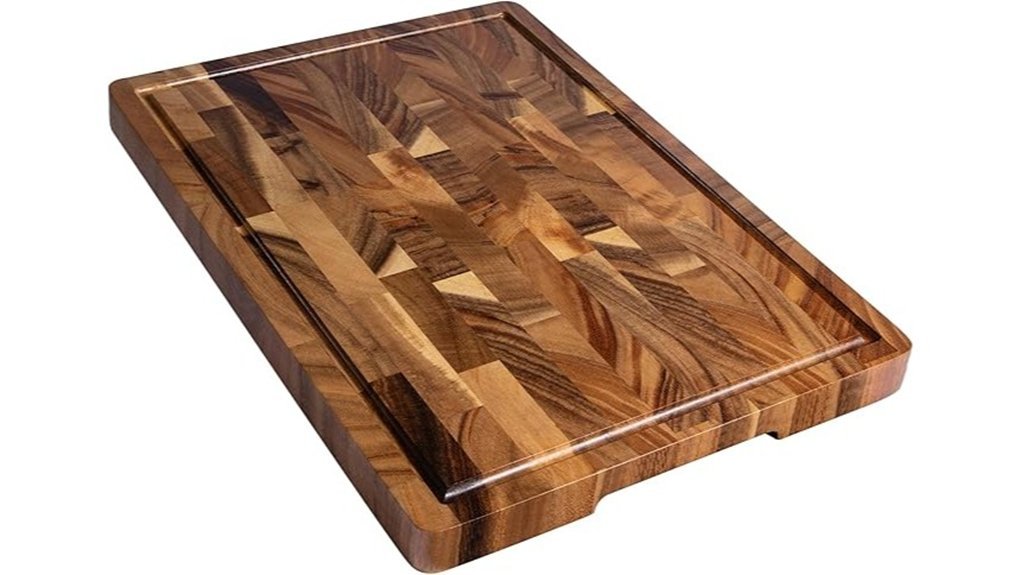
If you need a board that takes a beating and stays kind to your knives, I keep reaching for the THETCHRY *Walnut End Grain Cutting Board*. I feel the dense wood under my blade with each chop. It lands with a soft thud that sounds right. The deep juice groove holds about 3 ounces. It catches steak drippings and fruit juice like a moat around a castle.
I’ve used it for brisket, herbs, and weekend charcuterie spreads. The end grain walnut surface self heals over time. You get fewer visible cuts and a smoother feel. Your knife edge stays sharper longer. It feels solid on the counter and stays put during heavy prep.
Best For: You want a knife friendly board that handles heavy prep and serves well at the table.
Pros:
- End grain walnut feels dense and smooth under the blade
- Juice groove holds up to 3 oz and keeps your counter clean
- Works for chopping, slicing, and serving
Cons:
- Needs oil or beeswax to keep the wood rich and smooth
- Rubber feet come separate and need setup
- Weight feels heavy during frequent moves
THETCHRY Walnut End Grain Cutting Board with Handle
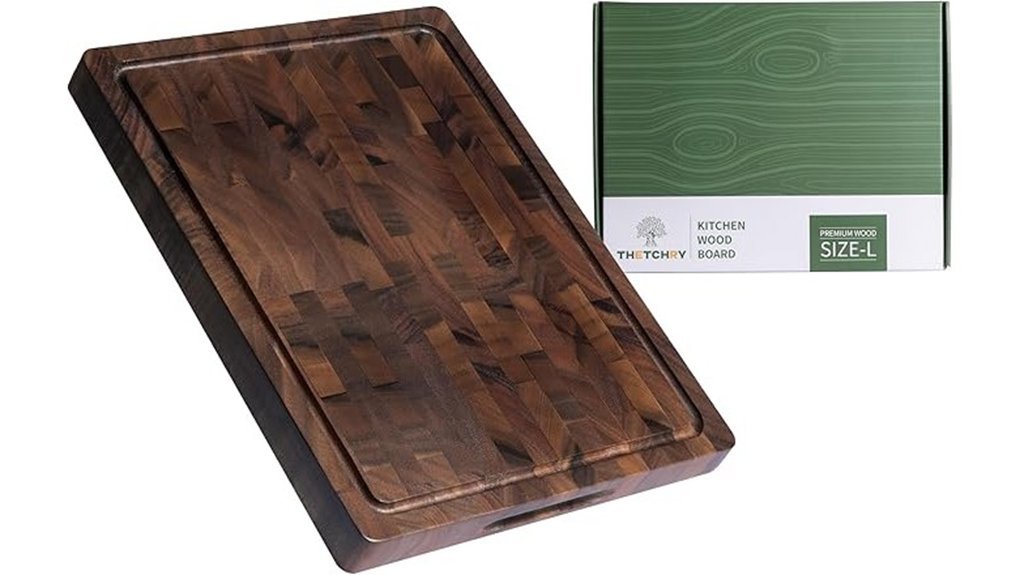
I’ve prepped piles of veg and slabs of meat on this board. It feels like a tank in your hands. The walnut smells warm and rich. The surface feels smooth yet grippy. Like a good cast iron pan, it earns its keep every day.
You get a 17 by 13 inch board that takes heavy chopping with ease. The end grain surface cushions each cut. Your knife edge stays keen longer. Those self healing fibers close up fast. Cuts fade like footprints in sand. Beeswax oil adds a soft sheen. It also blocks moisture and stains.
I like the flow during prep. The juice groove catches drips before they spread. Built in sections hold chopped food in place. It keeps your station tidy and calm. The handle gives quick control. You lift and serve in one move. Flip it over and it turns into a serving piece. Cheese and fruit look great on the deep walnut tones.
The board sits solid on the counter. Non slip feet grip well. You chop with rhythm and hear a soft thud. It feels controlled and safe. Cleanup stays simple. A quick hand wash and dry keeps it happy. Grain patterns vary so each board looks unique.
Best For: You want a durable cutting board that treats your knives well and serves food with style.
Pros:
- *End grain walnut* feels gentle on edges and lasts long
- *Juice groove and compartments* keep prep clean and organized
- *Serving ready design* with handle and rich wood look
Cons:
- Needs hand washing and routine oil care
- Carries more weight from thick construction
- Grain pattern varies so each piece differs in look
Sonder LA Alfred Walnut End Grain Cutting Board
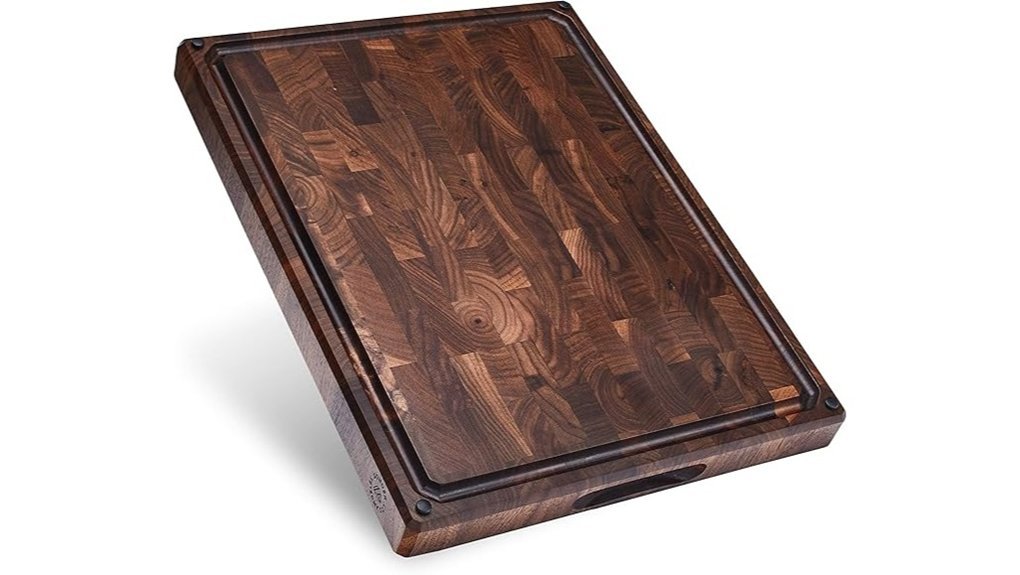
Home cooks who value edge care will love the Sonder LA Alfred. I’ve used it daily and the end grain walnut feels soft under the blade. It gives a quiet thud with each chop. That texture helps knives stay sharp and fresh. Think of it like a cushion for steel.
You get a 17 x 13 x 1.5 inch board that feels thick and steady. It weighs 7.5 pounds and sits like a rock. Finger grips help you lift it with control. The surface self heals so cuts close over time. That keeps it clean and smooth.
Prep flows fast here. Three sorting wells hold garlic or herbs. A deep juice groove catches drips from meat or fruit. I saw it hold about 3.5 ounces with ease. Your counter stays dry and tidy. It works like a moat around your prep zone.
Non slip feet grip the counter well. The board stays put during heavy chopping. You also get a dual sided design for raw and ready foods. Flip it and keep going. It feels like having two boards in one.
Care stays simple. Hand wash with warm water. Dry it and add oil every few weeks. The walnut smells rich when oiled. A one year warranty adds peace of mind. It also arrives gift ready in a clean box.
Best For: Home cooks and food lovers who want a premium wood cutting board with smart prep zones and strong knife care.
Pros:
- End grain walnut feels gentle on edges and lasts for years
- Sorting wells and a deep juice groove speed up prep and cut mess
- Non slip feet and finger grips improve control and safety
Cons:
- Regular oiling keeps the wood hydrated and looking great
- Heavier build at 7.5 pounds adds effort when moving
- Premium build reflects a higher price point
Ziruma End Grain Acacia Butcher Block Cutting Board
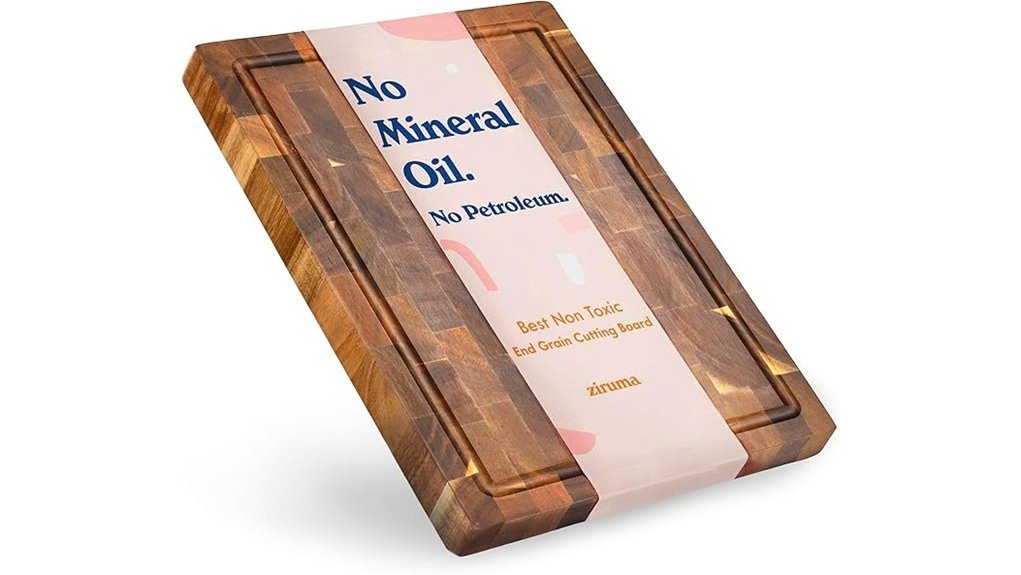
Cooks who want power and precision will love Ziruma’s thick end grain design. I felt the weight right away. It sits solid like a rock. You get a 16 x 11 inch acacia board with 1.5 inch thickness. It stays flat during heavy prep. Your knife glides with a soft thud.
The end grain fibers self heal over time. Cuts close up like a sponge. Your blade stays sharper longer. It arrives pre seasoned with beeswax and flaxseed oil. You catch a light citrus note from lemon oil. The surface feels smooth and slightly waxy. It stays free from BPA and toxins.
You also get a juice groove and a side handle. I found cleanup quick and tidy. It’s built from FSC certified acacia. That wood brings strength with a warm grain look. Think of it as the workhorse in your kitchen.
Wash it by hand and dry it well. Give it oil now and then. It will serve you for years.
Best For: Home cooks and serious chefs who want a thick board for heavy daily prep.
Pros:
- Thick 1.5 inch end grain design protects knife edges and stays flat
- Pre seasoned with natural oils for a smooth feel
- Juice groove and handle improve control and cleanup
Cons:
- Needs hand washing and routine oil care
- Feels heavy during frequent moves
- Costs more than basic boards
Quick Specs:
- Size: 16 x 11 inches
- Thickness: 1.5 inches
- Material: FSC certified acacia wood
- Finish: Beeswax and flaxseed oil with lemon oil scent
- Features: End grain surface, juice groove, side handle
It chops like a champ and holds steady. That’s half the battle won.
Calphalon Edge Guard Acacia Wood Cutting Board
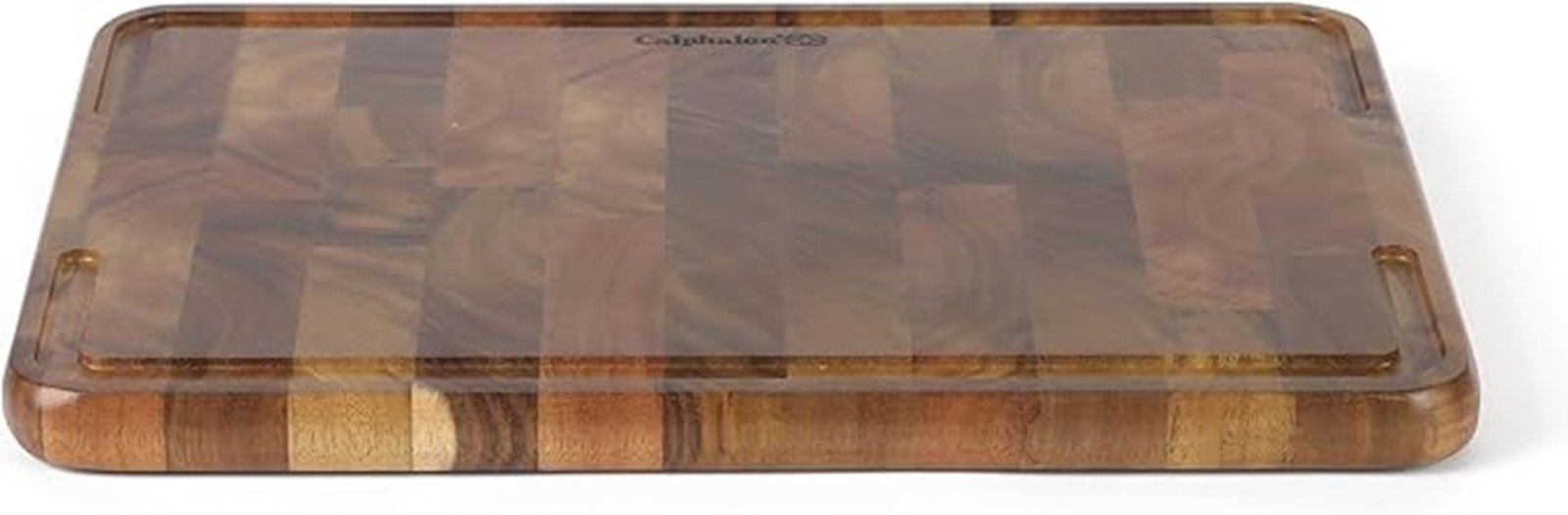
Small kitchens feel tight. This board feels like a smart fit. I’ve used it on cramped counters and it sits steady. The compact footprint saves space and still gives you room to work. Think of it as a pocket knife for prep.
You get acacia wood that feels warm and solid in hand. It resists moisture and holds up over time. I notice the faint wood scent when I cut herbs. The end grain pattern cushions each chop and keeps blades keen. Your knife glides with a soft thud.
Grip matters. The deep side handles feel carved for your fingers. I lift it with one hand and carry food to the table with ease. It moves from counter to stove with no fuss. Like a trusty sidekick, it stays ready.
Best For: Small kitchens and home cooks who want a compact board that treats knives well and feels easy to carry.
Pros:
- Compact size fits tight spaces and still handles daily prep
- End grain acacia feels durable and stays kind to edges
- Deep handles give a steady lift and smooth carry
Cons:
- Smaller surface limits big batch prep
- Thick build takes more cabinet room
- Wood needs oil to keep its glow and feel smooth
XXL Black Walnut End Grain Cutting Board 24×15
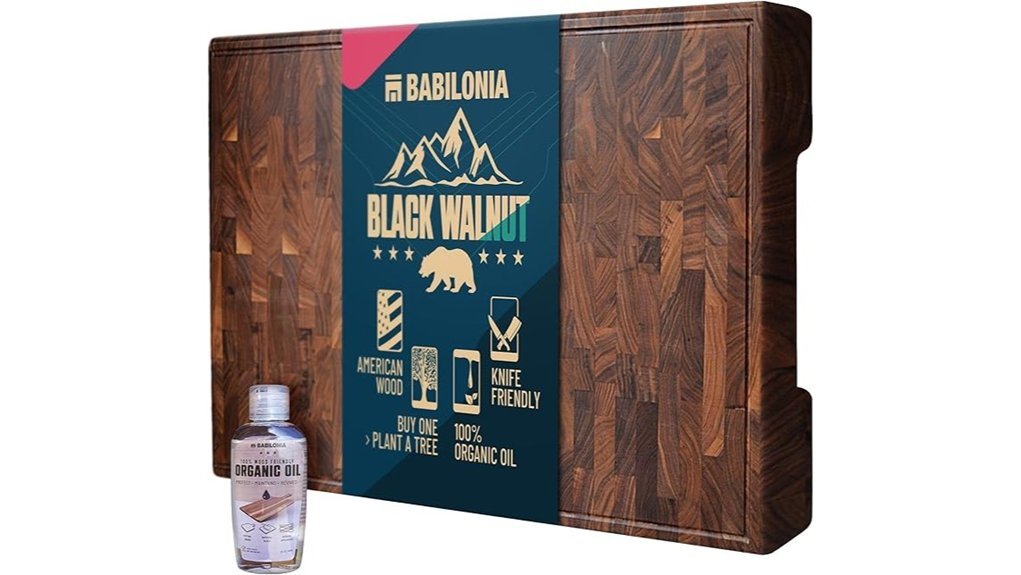
Serious meal preppers love the 24 x 15 inch surface. You get room to chop and stage ingredients with ease. I felt the space right away. It keeps your flow smooth like a well oiled line.
This board uses end grain black walnut. Your knife sinks in with a soft thud. The surface feels springy and quiet. Cuts stay clean and edges stay keen. At 1.7 inches thick it feels planted. It works as a butcher block and a serving tray.
Flip it and find a hidden handle. The notch with plate catches food as you slide it over. I moved diced onions in one sweep. Each board shows unique grain with warm brown tones. It smells faintly nutty when fresh. It arrives pre seasoned with organic oil. A quick hand wash keeps it ready.
Best For: You cook big meals and host often. You want a large wood cutting board that looks sharp on the table. Think prep plus presentation in one piece.
Pros:
- Big 24 x 15 surface gives you space for prep and plating
- End grain walnut feels gentle on knives and looks rich
- Reversible face with hidden handle and smart transfer notch
Cons:
- Size and weight demand solid counter space
- Hand wash care keeps the wood happy
- Premium build places it in a higher price tier
Specs:
- Size, 24 x 15 inches
- Thickness, 1.7 inches
- Material, black walnut end grain
- Finish, organic oil pre season
It’s a workhorse with a dinner party face. Like a cast iron pan in board form. You use it hard and serve with pride.
Acacia End Grain Cutting Board with Pull-Out Tray
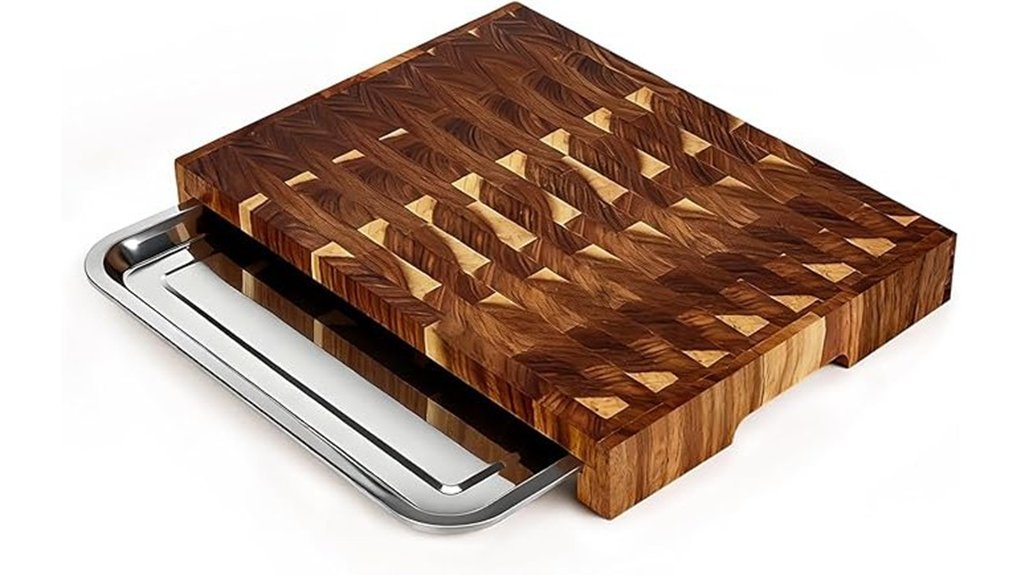
Home chefs who crave *clean prep* will love this acacia end grain cutting board. I’ve used it daily and it feels solid in hand. The wood smells warm and earthy. The surface gives a soft, quiet thud under your knife. It protects edges like a good cutting board should.
You get a 15.7 by 11.8 inch workspace. It feels roomy. The near two inch thickness adds weight and confidence. It stays put like a rock.
The pull out metal tray is the star here. Slide it out and drop in chopped onions or herbs. Your counter stays clear. Think of it as a sous chef that never talks back.
Care stays simple. Wash by hand. Dry it well. Oil it to keep that smooth feel and rich color. Do that and it will age like fine wood furniture.
It’s a *practical upgrade* that speeds up prep and keeps things tidy. Once you use the tray, you won’t go back.
Best For: Home cooks who want a durable board with smart prep flow and built in organization.
Pros:
- End grain acacia feels gentle on knives and lasts for years
- Pull out tray keeps ingredients in order and within reach
- Thick build adds stability for heavy chopping
Cons:
- Needs regular oiling to keep the surface rich
- Hand wash care takes a bit more effort
- Heavier size takes up more storage space
Factors to Consider When Choosing End Grain Cutting Board Vs Edge Grain
I’ve used both boards on busy prep days, and the feel tells the story fast. *End grain feels soft under the blade*, it almost drinks the impact. Edge grain feels firmer, you hear a sharper tap with each cut.
You should weigh wood type first. Hard maple gives a clean scent and steady grip. Walnut feels warmer and looks rich.
Durability matters in daily use. End grain heals itself like a forest floor after rain. Edge grain stays strong and steady through heavy chops.
Think about your knife edge. End grain keeps blades keen for longer. Edge grain supports clean slices with a crisp feel.
Maintenance sets the tone. I oil end grain more often, it soaks it up like a sponge. Edge grain asks for less fuss and stays stable.
Price shapes the final call. End grain costs more and feels *premium in hand*. Edge grain brings solid value and dependable service.
Material And Wood Type
Material and wood type set the tone for every cut. I feel it the second my knife hits the board. A soft thud means the wood gives just enough.
End grain boards use hardwoods like walnut and maple. The surface feels springy under the blade. *Your knife edge stays sharper longer.* Think of it like cutting on a bundle of straws. The fibers part then close back up.
Edge grain boards use the same hardwoods. The surface feels firmer and more direct. You get a crisp sound with each chop. *Cuts land clean and fast.* The grain runs in lines so the feel stays consistent.
Wood species shifts the whole experience. Walnut feels smooth and slightly oily. Maple feels tight and bright. Acacia feels dense and solid in hand. Dense woods resist water and slow warping. Your board keeps its shape over time.
I always check sourcing. Responsibly harvested lumber supports better forests. Many premium end grain boards follow that path.
Balance matters. Cost meets feel here. Knife friendliness plays a big role. Maintenance also shifts with each wood.
- Walnut, rich color and gentle feel
- Maple, light tone and firm surface
- Acacia, dense build and strong moisture resistance
Grain pattern changes the look of your kitchen. Some boards show bold swirls. Others stay calm and uniform. Pick what fits your space and your habits. It is like choosing a good pair of shoes. You feel the difference every day.
Durability And Longevity
Durability And Longevity
I’ve used both styles in busy kitchens. I feel the difference fast.
End grain acts like a soft forest floor. The knife sinks in and the fibers close up. Cuts fade over time. You get fewer deep scars. *That means longer life.*
Edge grain feels firmer under the blade. The cut lines stay visible. Wear shows sooner. It still holds up well. You just see age faster.
Thickness matters a lot. Go thick and you feel it.
- Aim for 1.5 inches or more
- Heavier boards stay flat
- Extra mass fights warping
Maintenance stays simple. You oil both styles. End grain asks for it less often. That saves time and effort.
I notice the smell of fresh oil on maple. It soaks in slow and leaves a smooth touch. The board feels alive again.
Pick end grain if you want longevity. Pick edge grain if you want a lower cost start. Either way you get solid service. Think of it like tires on a car, softer rubber lasts longer with care.
Knife Edge Impact
Knife Edge Impact
You feel board choice fast. Your edge tells the story with every chop. I’ve tested both styles on onions, herbs, and dense squash.
End grain feels soft under the blade. The edge slips between wood fibers. You hear a muted thud. That’s the sweet spot. Less friction means slower wear. Your knife keeps its bite longer. I notice fewer passes on the honing rod. The board even closes tiny cuts. *Like a sponge that springs back.* That helps both wood and steel last.
Edge grain feels firmer on contact. The blade meets a harder face. You hear a sharper tap. Each cut adds more resistance. Edges lose sharpness faster. I reach for the honing rod more often. You spend time fixing the edge instead of slicing clean lines. *It’s like driving on rough gravel instead of smooth pavement.*
Maintenance Requirements
Maintenance Requirements
I’ve lived with both boards on a busy counter. Here’s the truth you’ll feel in your hands.
End grain drinks oil like dry soil after rain. You oil it every two to three weeks. The surface feels soft and rich. That steady care keeps fibers strong and stops splits.
Edge grain asks for less fuss. You oil it less often. The surface feels tighter and smoother. It shrugs off stains and smells with ease.
Cleaning stays simple for both. You wash by hand with warm water and mild soap. The wood smells clean and fresh. You set it upright to dry so air can move.
End grain shows a neat trick. Knife marks close up over time. Cuts fade and the face looks fresh again. You keep it longer even with heavy prep.
Condition each board with food safe mineral oil. I rub it in until the wood looks satin and deep. You wipe off the extra and let it rest.
Stay on a rhythm. Your board stays smooth and ready. Your prep feels quick and calm.
Price And Value
Price and Value
I’ve tested both styles on busy prep days. The difference shows up fast. End grain boards feel solid and warm under your hands. You hear a soft thud with each chop. That surface treats your knife like a friend.
You pay more up front. You get craft and time in return. End grain builds use blocks set upright. That takes skill and hours. The result is durability that lasts.
Edge grain boards cost less at checkout. They feel smooth at first touch. They show wear sooner with heavy use. Knives meet a firmer face and lose bite faster.
Think long term. A penny saved is a penny earned. End grain saves edge life and service time. You sharpen less often. You replace boards less often.
Here is how it plays out in my kitchen.
- End grain
- Higher initial cost
- Softer feel on impact
- Slower wear over years
- Fewer sharpening sessions
- Edge grain
- Lower initial cost
- Firmer feel on impact
- Faster wear with daily prep
- More frequent sharpening
I grab end grain for daily cooking. It smells faintly of wood oil after a fresh coat. It stays kind to my blades. It pays you back over time.
Size And Thickness
Size and Thickness
I’ve used boards that feel like a rock and others that flex. Thickness changes everything.
End grain boards land thick. Think 1.5 to 2 inches. You feel the weight the moment you lift it. It sits firm on the counter. No slide. No chatter. Each chop sounds dull and soft, like a drum with a towel on it. The wood fibers close back up after cuts. That surface keeps a clean look over time. It’s like a sponge that springs back.
Edge grain boards feel slimmer. They move easier in your hands. You pick them up with one hand and rinse fast. They suit quick prep. They suit tight kitchens. The trade shows up with heavy chopping. The surface marks faster.
Size drives your workflow. I’ve prepped on cramped boards and it feels like cooking on a postcard.
- Large boards, around 24 x 15 inches, give you space to spread out
- You slide food aside with ease
- You can serve right on the board, warm wood smell and all
Smaller boards stay light and handy. They fit cabinets with ease. They suit quick tasks and small meals.
Pick your lane. Big and thick feels like a workbench. Thin and light feels like a notepad.
Conclusion
I’ve used both boards in real kitchens. You feel the difference fast. Match the board to your cooking style and you win.
Love smooth cuts and quiet chops? Go *end grain*. The knife sinks in with a soft thud. It feels like cutting on a tight bundle of straws. Your edge stays sharper longer.
Want light and simple? Pick *edge grain*. It feels firm and steady. You lift it with one hand. It costs less and still handles daily prep with ease.
Think care sounds like a chore? It’s quick. I rub in food grade mineral oil and the wood drinks it in. The surface turns rich and warm. Do this often and your board stays happy.
Here is how I break it down:
- End grain, best for knife care and heavy chopping
- Edge grain, best for budget and easy handling
- Both need oil, both last years with steady use
Choose the one you’ll grab every day. That habit keeps knives sharp and prep smooth. Your kitchen runs like a well oiled machine.