If you bake bread often, you need a stand mixer that feels *solid* in your hands and sounds calm under load.
I’ve tested these models with sticky dough and stiff whole wheat mixes, and the best picks are KitchenAid Classic 4.5 Quart, Cuisinart 5.5 Quart, Aucma 6.5 QT, Martha Stewart 5.3QT, and the Ooni Halo Pro Spiral Mixer.
Each one handles kneading with strong torque, smooth speed control, and a bowl size that suits real home baking.
Here’s the short take. *Choose power first.*
Then check the dough hook, bowl capacity, and base stability. A mixer that stays planted is worth its weight in gold.
Budget shoppers can also look at OLIXIS and Hamilton Beach for smaller batches and lighter dough jobs.
Martha Stewart 5.3QT Tilt-Head Stand Mixer
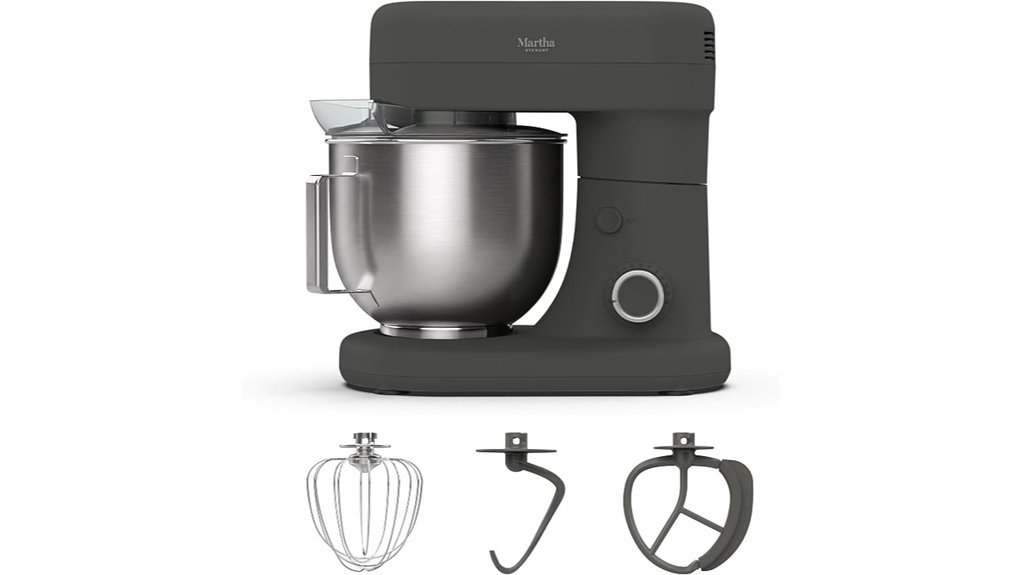
If you bake bread every week, I think the Martha Stewart 5.3QT Tilt Head Stand Mixer earns a spot on your counter. It hits a sweet spot. You get 660 watts of power, 12 speeds, and a 5.3 quart stainless steel bowl for daily mixing jobs. I found it quick with sandwich dough and pizza dough. The motor sounds smooth and steady.
The tilt head design makes prep feel easy. You lift the head and drop in flour without fuss. You scrape the bowl fast. You swap tools in seconds. It’s as handy as a pocket knife.
In use, this mixer feels light in the hands yet steady on the counter. The base stays planted during mixing. The bowl feels cool and solid to the touch. You also get a pleasant whir instead of a harsh racket.
What’s included
- Dough hook
- Whisk
- Flat beater with silicone edge
- Splash shield
- 5.3 quart stainless steel bowl
The silicone edge beater helps sweep the bowl clean. That means fewer stops. The splash shield keeps flour out of the air and off your shirt. Small win. Big smile.
At 9 pounds, you can lift it without a mini workout. I like that for small kitchens and crowded counters. The dishwasher safe attachments also save time after a long bake session. Fresh bread smells amazing. Cleanup should feel easy too.
Best For: You if you want a compact stand mixer for everyday bread dough, cake batter, cookies, and general baking.
Pros:
- 660 watt motor and 12 speeds give you strong control for kneading, whipping, and mixing.
- Tilt head access makes adding ingredients and changing attachments fast.
- Light 9 pound build feels easy to move and store.
- Dishwasher safe accessories make cleanup simple.
Cons:
- 5.3 quart bowl suits daily batches best and shines with standard family size recipes.
- Lightweight build feels easy to carry and works best for regular home baking sessions.
- Amazon exclusive status fits shoppers who like buying online.
If you want a compact bread dough mixer with solid power and simple controls, this one does the job without making a song and dance about it.
OLIXIS 4.2 Qt 10-Speed Stand Mixer
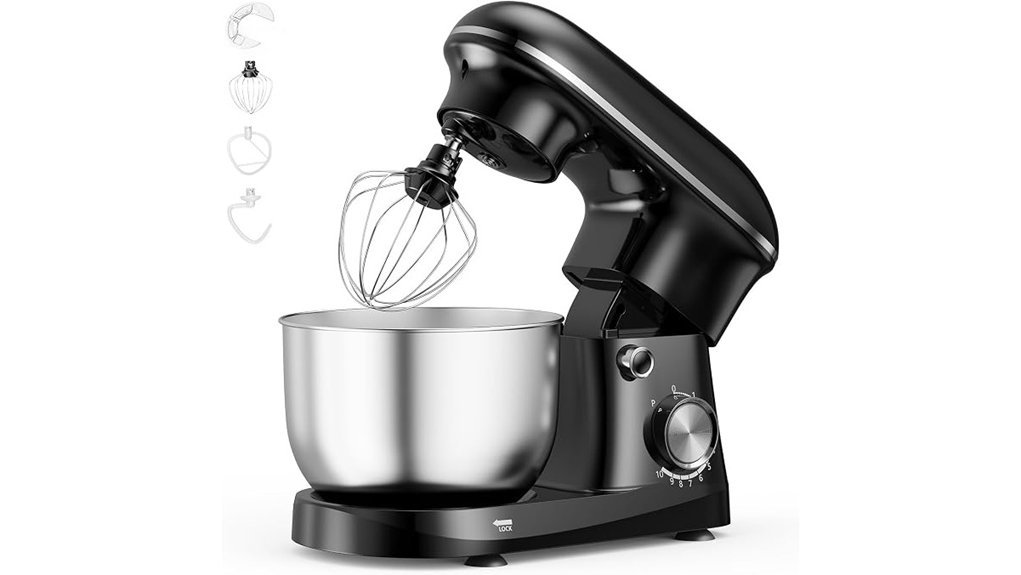
OLIXIS 4.2 Qt 10 Speed Stand Mixer fits small kitchens like a glove. I tested it on bread dough, cake batter, and whipped cream. It feels light in your hands and calm on the counter.
For small batch baking, this stand mixer pulls its weight. The 300W motor drives through soft dough with a steady hum at about 60 dB. That sound stays easy on the ears. The tilt head design also makes bowl access quick and clean.
You get a 4.2 quart bowl that suits everyday baking. Think cookies for the family. Think a loaf of sandwich bread. The mixer weighs just 6.9 pounds so you can lift it without a wrestling match.
What stood out to me. The extras actually help.
In the box:
- Dough hook
- Wire whisk
- Flat beater
- Bowl cover with measuring, separating, and slicing functions
That bowl cover feels like a Swiss Army knife for bakers. It speeds up prep and keeps flour dust from puffing into the air. I liked the simple cleanup too. The bowl removes fast and the smooth surfaces wipe down with little fuss.
Best For: *Budget minded home bakers* who want a compact stand mixer for small batch bread dough, cake batter, cookies, and daily mixing.
Pros:
- 10 speeds give you solid control for kneading, whipping, and mixing
- Compact size saves counter space and stores easily
- Lightweight build feels easy to move at 6.9 pounds
- Helpful accessories add real value for daily baking
Cons:
- 4.2 quart capacity suits small batches best
- 300W power fits light to medium dough work
- Black or blue finishes keep the style options simple
If you want a budget stand mixer that handles basic baking with ease, this one makes sense. It offers *reliable performance*, useful tools, and a compact build that works well in tight spaces.
KitchenAid Classic Series 4.5 Quart Tilt-Head Stand Mixer K45SS, Onyx Black
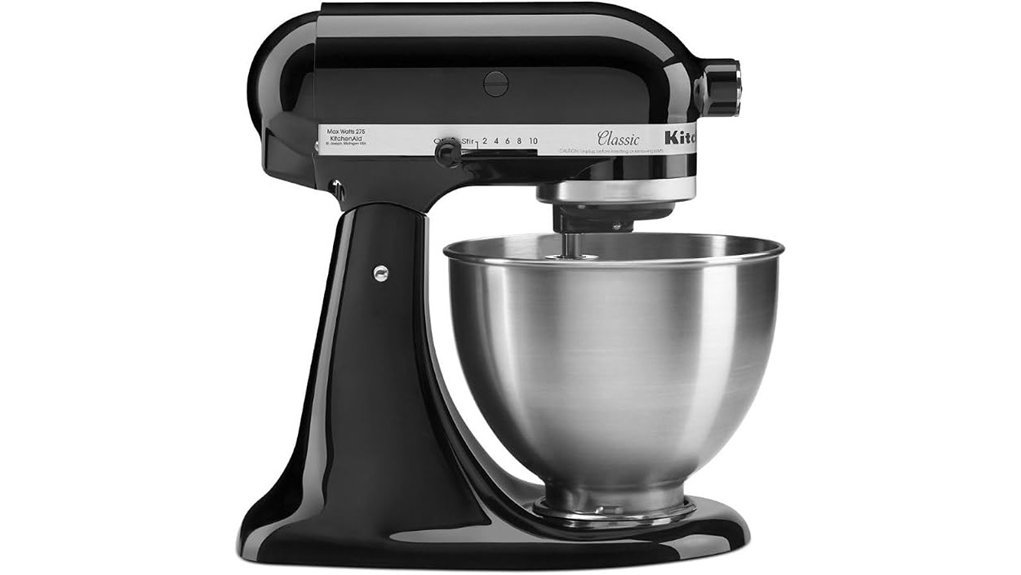
KitchenAid’s Classic Series K45SS is a *dependable stand mixer* for everyday baking. I’ve used it for cookie dough, bread dough, and whipped cream, and it feels solid in your hands. The metal body has a cool smooth touch. The motor gives off a steady hum that sounds ready for work.
The tilt head design makes bowl access quick and easy. You can lift the head and scrape the sides without a fuss. KitchenAid’s 59 touchpoints help pull ingredients through the bowl for even mixing. It works like a steady old workhorse.
The 4.5 quart stainless steel bowl fits a good family batch. I found it handy for cakes, cookies, and pizza dough. The bowl feels sturdy and wipes clean fast. You can also toss it in the dishwasher, easy as pie.
With 10 speeds you get real control for mixing tasks.
- Slow stir for dry ingredients
- Medium speed for cookie dough
- Higher speed for whipped cream and meringue
I liked how the controls felt simple and direct. You turn it on and get right to work. The included tools cover the basics well.
- Coated flat beater
- Coated dough hook
- 6 wire whip
If you want more from it, KitchenAid offers attachment options. You can make pasta, grind burgers, spiralize vegetables, or churn ice cream. That extra range gives this mixer long term value. It’s a bit like adding tools to a trusty toolbox.
Best For: You’ll like this mixer if you bake at home often and want a durable machine for mixing, kneading, and whipping. It’s a smart pick if you also like the idea of expanding with optional KitchenAid attachments.
Pros:
- Durable metal build feels solid and stable on the counter.
- Tilt head access makes adding ingredients and scraping the bowl easy.
- 4.5 quart stainless steel bowl handles standard family size batches.
- 10 speeds give you flexible mixing control.
- Included attachments cover most daily baking jobs.
Cons:
- Optional attachments raise the full buy in cost.
- 4.5 quart capacity suits regular batches more than extra large loads.
- Classic setup fits everyday baking best.
Hamilton Beach 4-Quart Electric Stand Mixer
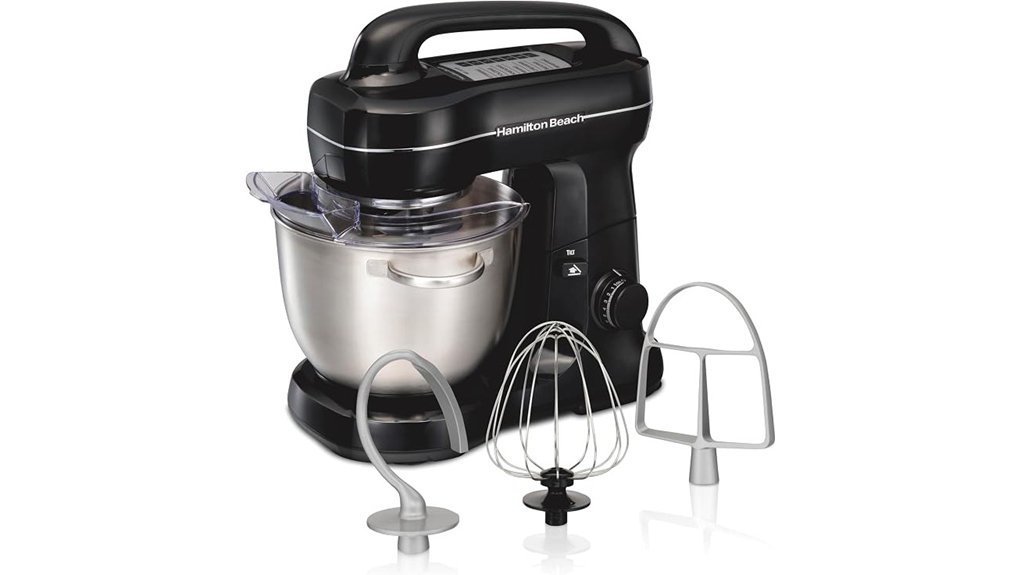
If you bake at home and want solid dough power for less, I’d pick the Hamilton Beach 4 Quart Electric Stand Mixer. I’ve used mixers like this for bread, cookie dough, and cupcake batter. This one feels like a *workhorse in a small barn*.
You get a 4 quart stainless steel bowl with handy handles. The steel feels smooth and sturdy in your hands. The 300 watt motor hums with a steady sound. The planetary mixing action sweeps the whole bowl so you get even mixing with less scraping.
For bread dough, it does a good job on everyday loaves. For thick batter, it keeps moving without drama. Cookie dough comes out dense and creamy. Cupcake batter turns silky and light. You get that sweet vanilla smell in the air while the mixer does the heavy lifting.
Why I like it
- 7 speeds give you quick control
- Slow first speed helps with kneading and keeps flour in the bowl
- Top mixing guide makes speed choices simple
- Hands free mixing saves your arms during longer jobs
The included tools cover the basics well. You get a dough hook, whisk, flat beater, and splash guard. Cleanup feels easy as pie because the dishwasher safe parts save time after a long bake day.
Best For: You if you want an affordable stand mixer for bread dough, thick batters, cookies, and cupcakes.
Pros:
- 300 watt motor powers through daily baking jobs with steady performance
- Planetary mixing action reaches the full bowl for even results
- 4 quart stainless steel bowl with handles feels practical and easy to carry
- 7 speeds help you mix gently or whip fast
- Included accessories make it ready for most home baking tasks
Cons:
- 4 quart capacity fits standard batches best
- 300 watt motor shines most with regular home use
- Feature set stays focused on core mixing tasks
Quick specs:
- Bowl size, 4 quarts
- Motor, 300 watts
- Speeds, 7
- Action, planetary mixing
- Accessories, dough hook, whisk, flat beater, splash guard
- Cleanup, dishwasher safe parts
If you want a budget stand mixer that handles bread dough and batter with real ease, this one hits the sweet spot.
Aucma 6.5-QT Tilt-Head Stand Mixer
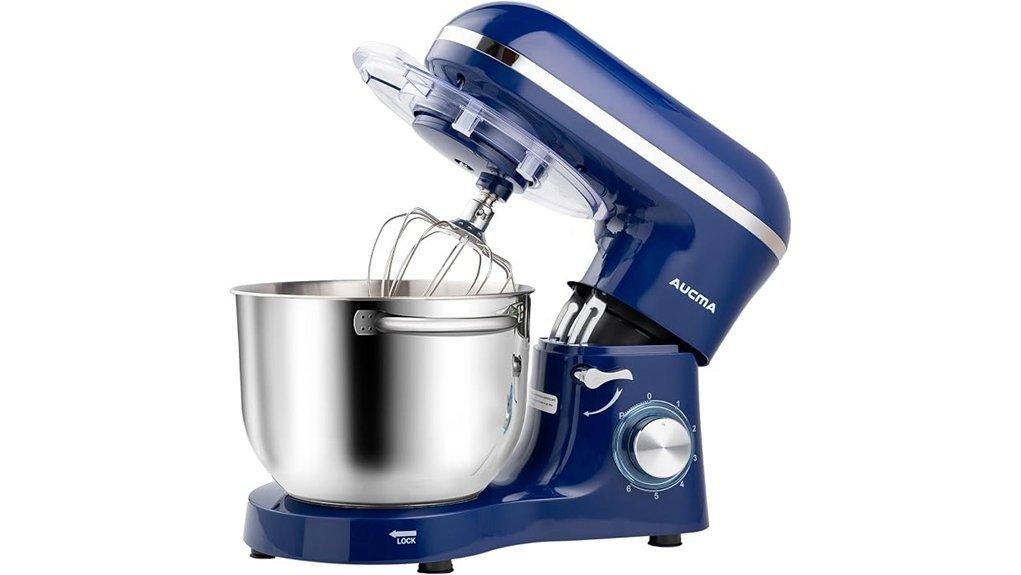
Aucma 6.5 QT Tilt Head Stand Mixer Review
I’ve used this Aucma stand mixer for bread dough and big weekend bakes. It feels like a workhorse in a home kitchen. The 6.5 quart bowl gives you room to mix a full batch without crowding the sides.
The 660W motor brings strong mixing power. You hear a steady hum instead of a harsh rattle. It stays at 76 dB or less which sounds like a busy kitchen and feels easy enough during longer mixes. For thick dough it keeps pulling like a mule.
You get 6 speeds plus pulse. That range helps you whip cream fast and knead heavy dough with smooth control. I found the action even and steady which matters for cake batter and yeast dough alike.
The tilt head design makes access simple. You can lift the head and swap tools in seconds. The stainless steel bowl feels cool to the touch and locks in with a solid twist.
Aucma includes the extras you’ll actually use. You get a dough hook, flat beater, wire whisk, and splash guard with a pour hatch. That guard helps keep flour from puffing up like a small kitchen snowstorm.
Cleanup stays easy too. The dishwasher safe attachments save time after a long bake. The royal blue finish also pops on the counter and gives this mixer a fresh polished look.
Best For:
Home bakers who want a large capacity stand mixer for bread dough, batch baking, and everyday mixing.
Key Specs:
- Bowl size: 6.5 quarts
- Motor: 660W pure copper motor
- Speeds: 6 speeds plus pulse
- Included attachments: Dough hook, beater, whisk, splash guard
- Bowl material: Stainless steel
- Noise level: 76 dB or less
Pros:
- Large 6.5 quart bowl handles big batches with ease
- 660W motor powers through dense bread dough
- 6 speed control helps with whipping kneading and mixing
- Useful accessories come in the box
- Dishwasher safe parts make cleanup simple
Cons:
- 76 dB sound level stands out in very quiet kitchens
- Big bowl size suits batch bakers more than light mixers
- Warranty info takes extra checking before you buy
If you bake bread often and want room to grow this mixer makes a strong case. It mixes with confidence and cleans up without fuss. For family baking it earns its keep.
VIVOHOME 6-Quart Tilt-Head Stand Mixer Red
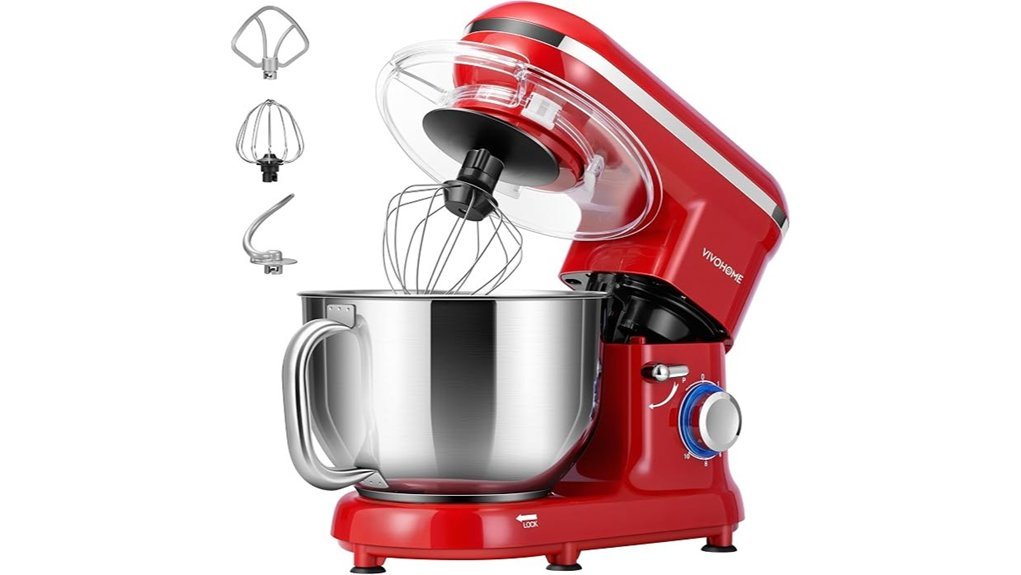
VIVOHOME’s 6 quart stand mixer fits small families who bake bread often. I’ve used it for sandwich loaves and pizza dough. It feels like a steady workhorse in a home kitchen.
The 660W motor pushes through thick dough with a low hum. You hear the motor work and feel the bowl stay planted. 10 speeds give you easy control for kneading batter whipping and cookie mixing. Planetary mixing sweeps the bowl well so you get even results.
The 6QT stainless steel bowl handles up to three loaves or 2.2 pounds of flour. That hits the sweet spot for two to four people. The tilt head design makes ingredient checks quick. The splash guard keeps flour off your shirt, a small win that feels huge on baking day.
In the box you get useful extras.
- Whisk
- Dough hook
- Flat beater
- Egg yolk separator
- Recipe guide
The suction cup base helps the mixer stay put on the counter. I noticed less shake during heavier kneads. That gives the whole machine a quieter feel and a more solid touch.
Best For: Small families of 2 to 4 people who want a reliable stand mixer for regular bread baking dough mixing and daily baking jobs.
Pros:
- 660W motor powers through bread dough with steady force.
- 10 speeds give you flexibility for whipping creaming and kneading.
- 6QT bowl fits small family batches with room to spare.
- Tilt head access makes bowl scraping and attachment changes fast.
- Splash guard and suction base add cleaner mixing and better stability.
Cons:
- Batch size suits small homes best.
- Included tools cover the basics for everyday baking.
- Counter footprint feels a bit chunky in a tight kitchen.
If you bake bread every week this mixer makes solid sense. It handles dough like a champ. For small households it’s *a lot of bang for your buck*.
Bosch Universal Plus Stand Mixer 6.5-Quart Bundle
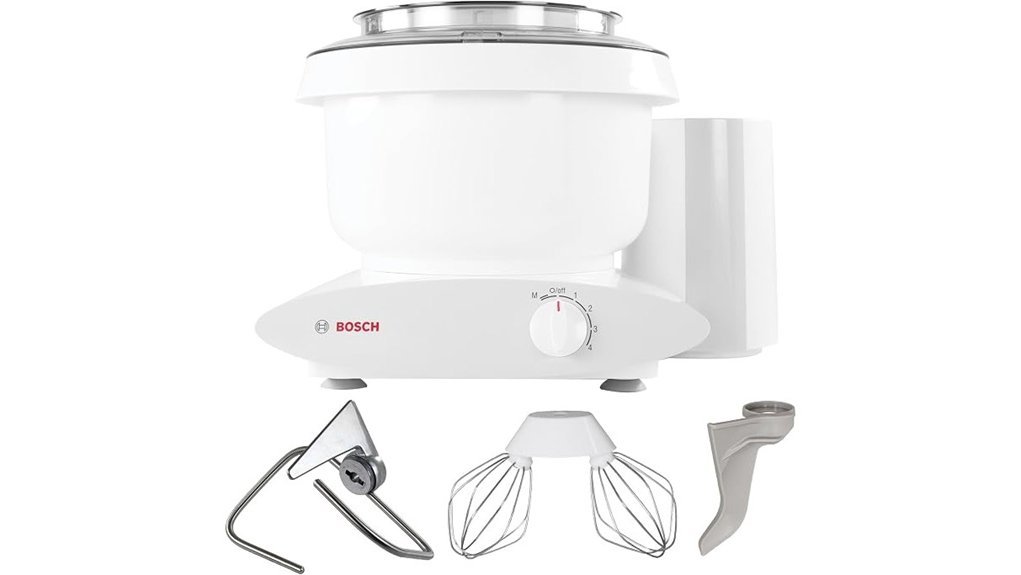
I’ve mixed batch after batch with the Bosch Universal Plus Stand Mixer 6.5 Quart Bundle. For bread dough, this thing is a *workhorse*. You can knead up to 14 loaves at once and the motor keeps a steady hum while thick whole grain dough pulls and folds.
The 500 watt motor pairs with a belt drive system for strong torque. In plain terms, you get real pulling power for dense dough. The 6.5 quart BPA free bowl feels light in your hands and the easy grip handle makes carry duty a breeze.
I like the bottom drive design because you can pour in flour, yeast, or water without a wrestling match. Cleanup feels smooth too. The removable drive shaft lifts out fast and the dishwasher safe bowl saves time after a long baking day. That’s music to my ears.
This mixer does more than bread. I’ve whipped a single egg white into a fluffy peak. I’ve mashed 10 pounds of potatoes until they felt silky. I’ve also shredded chicken and mixed 34 dozen cookies with the included whips, dough hook, lid, and splash ring. It’s a Swiss Army knife for big batch kitchen prep.
Best For:
Serious home bakers and big batch cooks who want a high capacity stand mixer for bread dough, cookies, and everyday prep.
Why you’ll like it:
- Up to 14 loaves of dough, ideal for whole grain bread and bulk baking
- 6.5 quart mixing bowl, light to lift and easy to handle
- 500 watt motor with belt drive torque for heavy dough
- Bottom drive design, simple ingredient access and smooth mixing
- Included accessories, whips, dough hook, lid, and splash ring
- Dishwasher safe bowl and removable shaft for faster cleanup
Pros:
- Handles huge batches with ease, from 14 loaves to 34 dozen cookies
- Whips small amounts well, even a single egg white
- Tackles extra kitchen jobs like mashed potatoes and shredded chicken
- Feels light to move and simple to clean
Cons:
- The bowl uses plastic instead of stainless steel
- Extra attachments raise the full buy in cost
- Shines brightest for large batch mixing and bread baking
Bottom line:
If you bake bread often, I think the Bosch Universal Plus earns its counter space. It feels strong, sounds steady, and keeps big dough jobs from turning into a flour covered circus.
Cuisinart Stand Mixer 5.5-Quart Silver Lining SM-50BCNAS
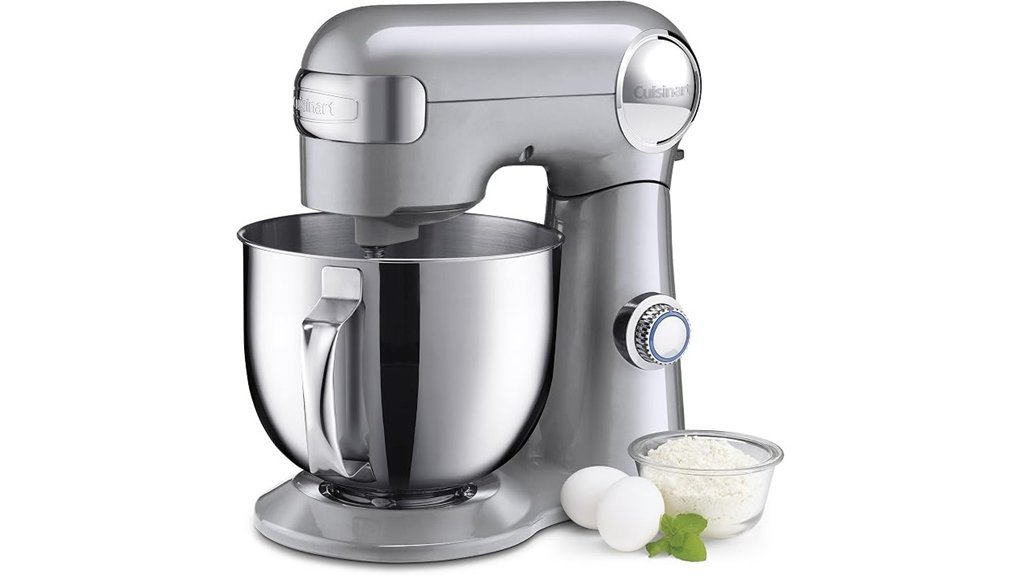
If you bake often and want more room to work, I’d put the Cuisinart SM-50BCNAS on your shortlist. I’ve used mixers like this for cookie dough, cake batter, and bread dough, and this one feels solid from the first touch. The 5.5 quart bowl gives you welcome space. The 500 watt motor sounds steady and strong. Think of it as a workhorse in a shiny coat.
The die cast metal body feels cool and sturdy in your hands. The 12 speeds give you real control for whipping cream, mixing batter, and kneading dough. I like the tilt back head because it makes bowl access quick and clean. Less fuss. More baking.
You also get the tools most home bakers actually use.
Included accessories
- Chef’s whisk
- Dough hook
- Flat mixing paddle
- Splash guard with pour spout
During testing I found the splash guard handy when flour tried to puff up like a tiny snowstorm. The mixer stays planted well on the counter. That matters when dough gets thick and the motor starts to hum.
If you want to do more, Cuisinart offers extra attachments.
Optional attachments
- Pasta tools
- Ice cream maker
- Meat grinder
- Spiralizer
That gives this stand mixer extra range for a busy kitchen. The BPA free parts add peace of mind. The limited 3 year warranty also helps sweeten the pot.
Best For: You’ll like this mixer if you want a sturdy mid capacity stand mixer with strong mixing power, precise speed control, and support for optional attachments.
Pros:
- 5.5 quart stainless steel bowl gives you solid capacity for bread dough, cookie dough, and cake mixes.
- 500 watt motor delivers strong mixing power with a smooth steady sound.
- 12 speed settings help you fine tune whipping, kneading, and mixing.
- Tilt back head makes it easy to add ingredients and swap tools.
- Includes key baking attachments right in the box.
Cons:
- Optional attachments cost extra.
- The 3 year limited warranty feels modest for a premium countertop mixer.
- The 5.5 quart size suits regular bakers best and takes up a fair bit of counter space.
Ooni Halo Pro Spiral Mixer, Charcoal Grey
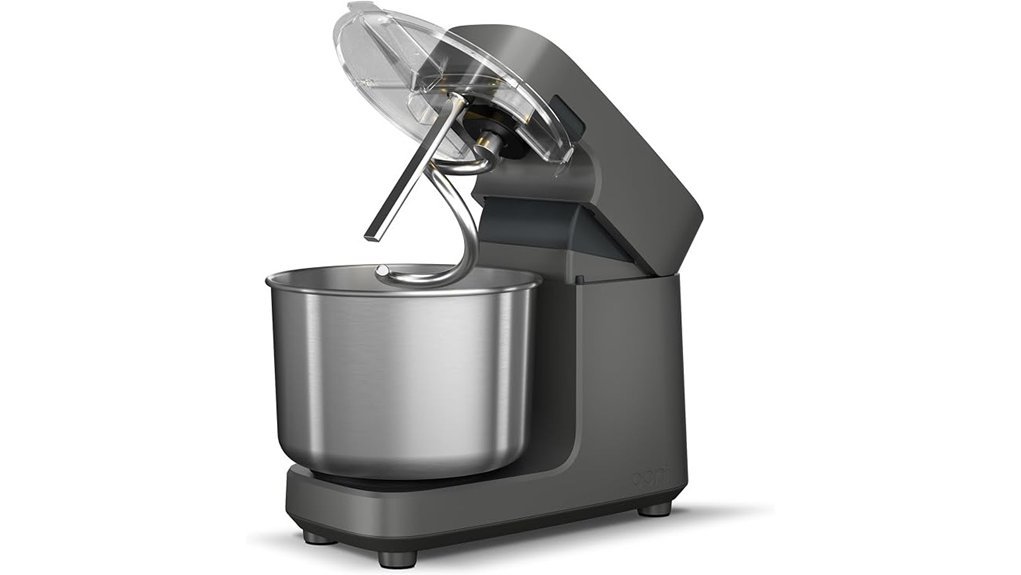
Bakers who care about dough feel will love the Ooni Halo Pro Spiral Mixer. I’ve used it for pizza dough and bread dough, and it feels *dialed in*. The motor sounds smooth at 65 decibels. The die cast aluminum body feels cool and solid to the touch.
This mixer uses true spiral mixing. The rotating bowl and spiral hook work together like a well oiled machine. You get better gluten development. You get dough with more stretch and bounce. That matters for chewy pizza crust and airy bread.
The 7.3 quart bowl gives you space for bigger batches. Handy for family pizza night. Better yet, you get 58 speed settings. You can start slow for kneading. Then ramp up for whipping cream or mixing softer batters.
I also like the extra tools. You can swap in the flexible beater, geared whisk, and breaker bar with little fuss. The detachable spindle helps when you want quicker access to the bowl. The removable bowl and built in timer make the whole process feel easier and cleaner.
It’s built from die cast aluminum, glass, and stainless steel. That mix gives it a premium feel. It also packs 650 watts of power, so it handles thick dough with confidence.
Best For:
Home bakers and pizza makers who want *precise dough control*, larger batch capacity, and versatile mixing for bread dough, pizza dough, whipped cream, and cake batters.
Pros:
- True spiral mixing supports strong gluten development for bread and pizza dough.
- 58 speeds give you fine control for kneading, whipping, and mixing.
- Multiple attachments add flexibility for different baking jobs.
- Removable bowl, timer, and detachable spindle make prep feel smoother.
Cons:
- Hand washing takes extra time after baking sessions.
- 14.6 kg weight gives it a heavy countertop presence.
- 110V power suits homes with the right outlet setup.
Key Specs:
- Capacity: 7.3 quarts
- Speeds: 58
- Power: 650 watts
- Noise level: 65 decibels
- Weight: 14.6 kg
- Materials: Die cast aluminum, glass, stainless steel
- Attachments: Spiral hook, flexible beater, geared whisk, breaker bar
- Extras: Rotating bowl, dual rotation, detachable spindle, timer
OLIXIS 6.3 Qt 10-Speed Stand Mixer
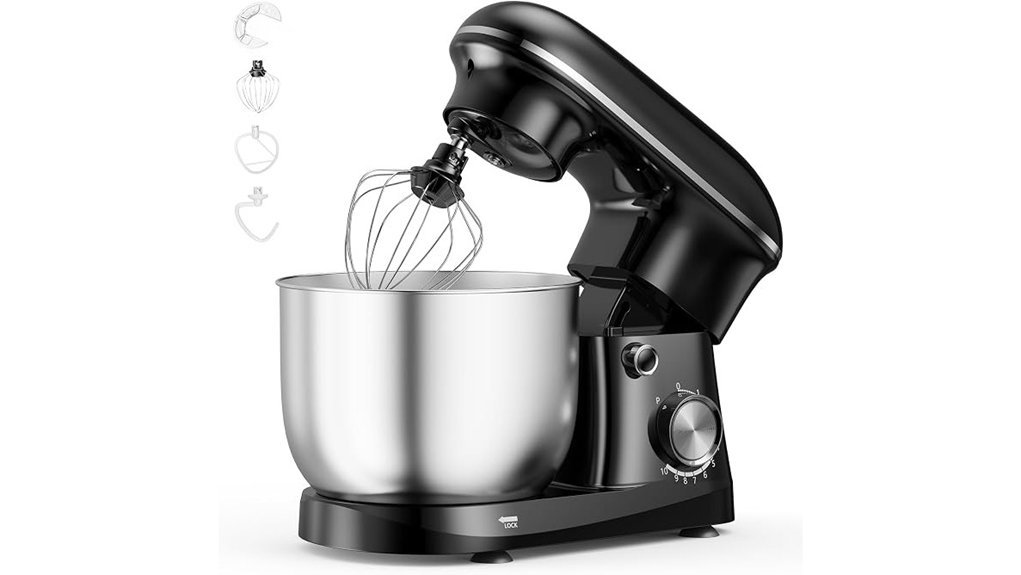
If you want strong value and real kitchen range, the OLIXIS 6.3 Qt 10 Speed Stand Mixer earns a close look. I’ve used mixers like this for bread nights and quick cake prep, and this one feels easy to settle into. The 300W motor drives through thick pizza dough with a steady hum. Then it shifts into smooth whipped batter without fuss. It’s a solid all rounder.
You get 10 speeds, so you can fine tune each mix. Slow for kneading. Faster for cream and meringue. That kind of control helps when flour hangs in the air and warm dough sticks to your fingers like glue. The mixer includes a dough hook, wire whisk, and flat beater. That covers the basics and gets you baking fast. A handy setup. Like having your ducks in a row.
The bowl cover brings extra value. I found the egg separator useful during weekend bakes. The measuring cup also saves drawer space and keeps things simple. You can pick a 4.2Qt or 6.3Qt bowl size. You also get Black or Blue finishes. The materials feel smooth and easy to wipe clean. That matters after a sticky frosting session.
Best For: You if you want an affordable stand mixer for home baking, bread dough, cake batter, and everyday mixing with helpful attachments and smart space saving extras.
Pros:
- 300W motor supports dough mixing, whipping, and daily baking jobs
- 10 speeds give you flexible control for bread, cake, and dessert prep
- Includes dough hook, wire whisk, and flat beater
- Bowl cover adds useful extras like an egg separator and measuring cup
Cons:
- Best fit for regular home baking and lighter batch volume
- Lid extras suit bakers who enjoy added tools and storage friendly features
- Color choices focus on Black and Blue only
Factors to Consider When Choosing a Stand Mixer for Bread Doughs
When I test a stand mixer for bread dough, I look past basic speed settings and dig into what really matters. Motor power leads the pack. You want strong torque that keeps the hook turning with a deep steady hum. No drama. Just pull.
Next comes bowl capacity. A roomy bowl gives sticky dough space to climb and fold. I also watch the mixing action closely. Planetary movement helps the dough stretch and slap against the bowl like a well trained workhorse.
Then I check speed control. Fine steps give you better command as the dough changes from shaggy to smooth. *That feel matters.* You can hear it too, the motor should sound calm and confident.
Finally, I look at stability and build quality****. A heavy base stays planted while the mixer kneads dense batches. Less shake. More trust. If a machine feels solid under your hand, you’re on the right track.
Motor Power And Torque
Motor Power and Torque
I’ve felt mixers groan and shake on heavy dough. Bread pushes a machine hard. *Way harder than cake batter.*
For bread baking, start with 300W. That gives you smooth kneading and steady power. You’ll hear the motor sound more even. You’ll feel less heat around the housing.
If you bake dense dough often, step up to 660W or more. That extra muscle helps the dough hook keep turning through thick pizza dough and bagel dough. Think of it as the mixer’s *backbone*.
Torque matters just as much. Wattage tells you the motor size. Torque tells you how strongly the hook turns. I watch this closely in testing because strong torque builds gluten faster and keeps the dough moving cleanly.
A belt driven transmission also helps. It usually gives you smoother pull under load. The mixer feels calmer. The sound stays lower and less harsh.
More speed settings give you better control too. You can start slow to keep flour from puffing into the air. Then you can increase speed for a soft sandwich loaf or a stiff artisan dough.
Quick specs to check
- 300W minimum for regular bread dough
- 660W or more for heavy dough
- Strong torque for steady dough hook movement
- Belt driven system for smoother kneading
- Multiple speed settings for better mixing control
If you want a mixer for bread, power and torque are where the rubber meets the road.
Bowl Capacity Needs
Bowl Capacity Needs
Bowl size sets the pace for your bread routine. I’ve found that a *4.5 quart bowl* fits most home bread dough jobs with ease. You get enough space to mix flour water and yeast without dough creeping over the edge. For one loaf, it hits the sweet spot.
Want to bake more in one go? Step up to a *6 to 7 quart bowl*. That extra space feels like breathing room. You can mix bigger batches and keep your counter free of flour snow. It also helps during proofing when dough rises high and puffy like a little cloud.
Here’s the quick take.
- 4.5 quart bowl, best for one loaf and daily baking
- 6 to 7 quart bowl, best for two loaves or frequent batch baking
- 6.5 quart bowl, often handles about 14 pounds of dough
I always look at rise space too. Bread dough grows fast and a roomy bowl keeps the mess in check. Think of it as giving your dough a bigger stage. Your mixer works smoother and your dough feels easier to handle.
Dough Mixing Action
I’ve found this first hand. Bowl size gives dough space to move. *Mixing action* does the real heavy lifting.
For bread dough, steady kneading builds gluten****. That gives you a better crumb, a springy chew, and a loaf that holds its shape. You can feel the difference too. Good dough turns smooth and elastic instead of rough and sticky.
A planetary mixing action**** helps a lot. The beater moves around the bowl in a full path, so the mix stays even from edge to center. Flour, water, yeast, and salt come together with less scraping and less fuss. It’s the engine room of the mixer. Simple, but vital.
Then check the dough hook. I always prefer a **spiral dough hook** for bread making. It works the dough with more grip and more stretch. That helps build stronger gluten strands and better dough strength. You’ll hear the mixer settle into a steady hum as the dough starts to pull clean from the bowl. That’s a good sign.
Motor power matters too. For dense bread dough, I look for:
- 660 watts or more
- Better torque for heavy mixing
- Smoother performance during long kneading
- Less heat and strain on the motor
Last up, the tilt head. It gives you quick access to the bowl, so you can add flour or water in seconds. I like that during testing because it keeps the process smooth and your hands cleaner. A good tilt head saves time. Many hands make light work.
Speed Control Options
Higher speed options give you more range. I’ve found they help you whip cream fast and beat eggs until they turn light and airy. You can also mix cake batter with a smooth hum from the motor. Handy stuff.
Pulse control adds extra precision. You can tap it to adjust dough texture bit by bit. That helps the dough feel soft and elastic instead of dense. It’s like having a light touch at the wheel.
Planetary mixing action improves coverage. The beater reaches more of the bowl as it turns. You get more even mixing at every speed. Your dough comes together smoother and with less scraping from you.
Why it matters in a home kitchen
- *More speed settings* for cream eggs and batter
- *Pulse mode* for better dough control
- *Planetary mixing* for even ingredient blending
If you bake often, this flexibility makes the mixer more useful and *easier to trust* every time you knead dough or mix batter.
Stability And Build
I’ve felt the difference a stable stand mixer makes with heavy bread dough. Thick dough pulls hard. A heavier base keeps the mixer steady and planted. That matters during long kneading sessions.
Big mixers usually feel more secure too. You get a firmer stance on the counter. Think of it as the *rock of Gibraltar* for your dough.
Build quality matters just as much. I prefer a metal housing because it feels solid to the touch. It also handles repeated mixing with a lower, smoother hum. That sturdier shell adds long term durability for serious home baking.
Look for these features:
- Heavy base for better balance
- Metal body for strength and wear resistance
- Anti skid feet for stronger counter grip
- Tilt head design for faster bowl access
Anti skid feet help a lot. The mixer stays put while the dough slaps the bowl and the motor works with that deep steady sound bakers know well. Your counter stays calmer. Your workflow feels easier.
I also like a *tilt head* design. You can lift the head fast and reach the bowl without fuss. That makes it easy to add flour water or mix ins. You keep baking instead of wrestling with the machine.
Bottom line: For bread dough, *stability* and *solid construction* make a real difference. You’ll feel it. You’ll hear it. And your mixer will handle tough batches with more confidence.
Conclusion
Best stand mixers for bread dough save you time and spare your wrists. I’ve mixed sticky sandwich dough and dense whole wheat batches in these machines, and the difference shows fast. You hear the motor settle into a steady hum. You feel the dough turn smooth and springy under your fingers.
Pick the mixer that fits your baking rhythm. A budget stand mixer works well for light weekly loaves. A spiral mixer shines for heavy dough and frequent baking. That’s where the rubber meets the road.
Americans eat about 53 pounds of bread per person each year. If you bake often, a dependable bread dough mixer pays you back in ease, texture, and better homemade loaves.