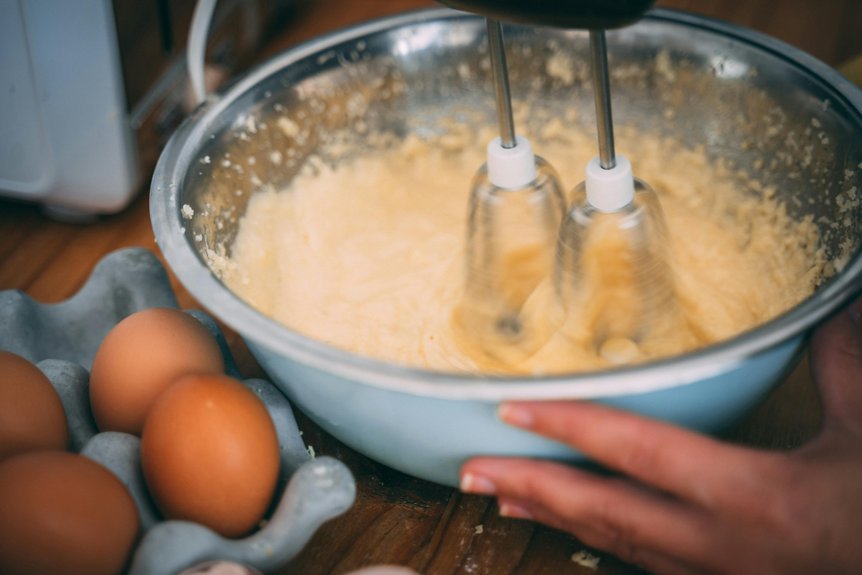
You want dough that feels alive. I’ve mixed hundreds of batches, and a spiral mixer gives you stronger gluten and a silky pull. You get better texture. You get steady results every time.
I’ve run the *Ooni Halo Pro*, the *Garvee 10.5QT*, and the *BOOROS 750W* in real kitchens. Each one uses dual rotation. The hook turns. The bowl turns. The dough stretches and folds like a tide rolling in.
Here’s what stood out during testing:
– Ooni Halo Pro
Smooth motion and low noise
Warm dough smell stays clean
Great for home bakers who want control
– Garvee 10.5QT
Strong motor feel in your hands
Thick dough stays elastic
Good fit for weekly bread makers
– BOOROS 750W
Power you can hear and feel
Handles dense batches with ease
Built for long sessions
Bigger units step in when volume climbs. A 12Qt or 8KG mixer chews through dough like a workhorse in a mill. You load it up. It keeps going. No fuss.
You also get smart features that save time:
- Safety shields keep hands clear
- Timers track each mix
- Simple controls guide your flow
Pick the right size for your space. Match power to your dough style. Do that and your bread will sing, crust crackling and crumb soft to the touch.
Ooni Halo Pro Spiral Dough Stand Mixer
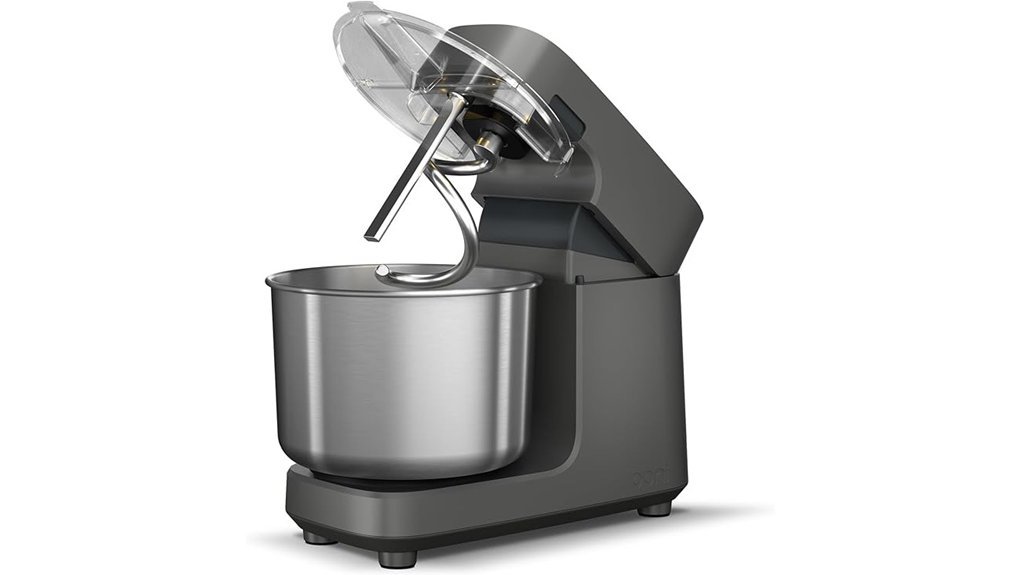
If you take dough seriously, this mixer earns a spot on your counter. I’ve run it through pizza and bread sessions, and it feels like a workhorse that just keeps going. The true spiral mixing system drives the action. The bowl turns while the hook kneads, and you feel the dough tighten and smooth out. Think of it like a steady handshake that builds strength over time.
You get 58 speeds. I dial it low for flour pickup, then climb as gluten forms. The motor hum sits around 65 dB, so your kitchen stays calm. The body feels solid in hand, and the timer keeps each batch on track. Attachments cover cakes and cookies, so you can switch gears fast.
Cleaning takes a bit of effort. The bowl lifts off easily, and a quick rinse clears most residue. I like the tactile feel of the controls, and the dough comes out silky with a faint yeasty smell that tells you it’s ready.
Best For: You want tight control and pro level dough for pizza and bread in a compact mixer.
Pros:
- True spiral system builds strong gluten for elastic dough
- Wide 58 speed range gives fine control for mixing and whipping
- Solid build with quiet operation and useful attachments
Cons:
- Hand washing takes time after each batch
- Weight sits at 14.6 kg, so moving it takes effort
- Advanced features suit frequent bakers more than light use
Quick Specs:
- Spiral hook with rotating bowl
- 58 speed control
- Timer built in
- Noise about 65 dB
- Weight 14.6 kg
I keep coming back to it for pizza nights. It turns sticky mass into smooth dough like a calm river shaping stone.
Garvee 10.5QT Commercial Dough Mixer 650W
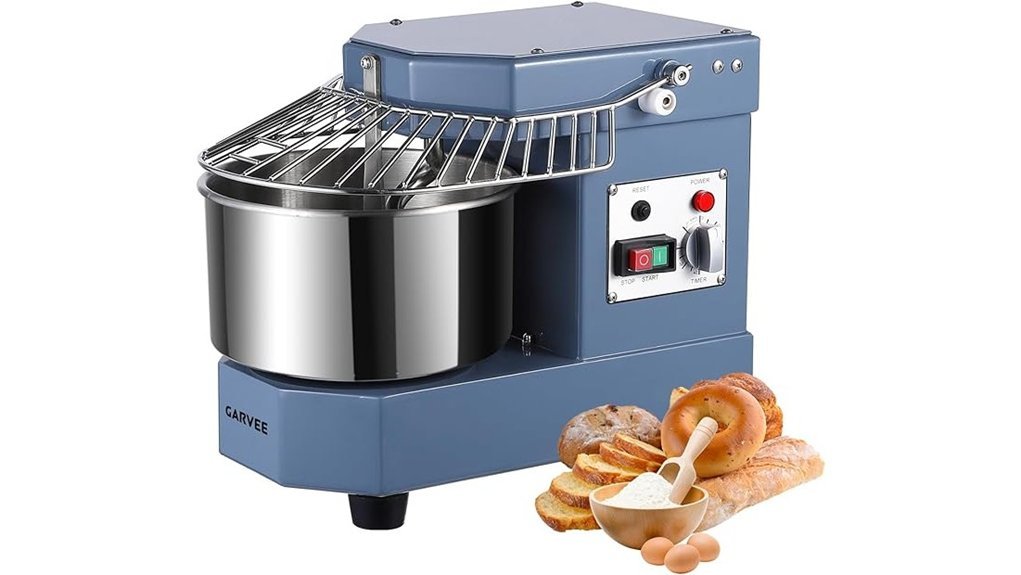
For small to mid size bakeries, I’ve put the Garvee *10.5QT mixer* through real shifts. It handles thick dough like a workhorse. You hear a steady hum as the motor drives through dense batches. The 650W dual rotation spins the bowl at 21 r/min. The hook turns at 129 r/min. You get even gluten build every time. Dough feels smooth and elastic to the touch. Like a well tuned engine, it just keeps going.
The *stainless steel bowl* holds 10.5QT with ease. I’ve loaded up to 11 pounds of dough without strain. It finishes most batches in 10 to 15 minutes. Controls stay simple and clear. You set the 60 minute timer and move on. The safety shield clicks shut with a solid feel. Open it and the mixer stops right away. Nonslip feet grip the counter like a firm handshake. You also get a reset button and a bright power light.
Best For:
You run a small bakery or a busy kitchen. You need steady output and repeat results. This mixer keeps your line moving without fuss.
Pros:
- *650W dual rotation power* builds strong gluten fast
- *10.5QT bowl capacity* handles up to 11 lbs of dough per batch
- *Simple controls with timer* keep workflow smooth
- *Safety shield and stable base* add peace of mind
Cons:
- The 105 lb frame feels heavy during moves
- Two speed options feel basic for pastry work
- Hand washing keeps cleanup time hands on
BOOROS 10.5Qt Commercial Dough Mixer 750W
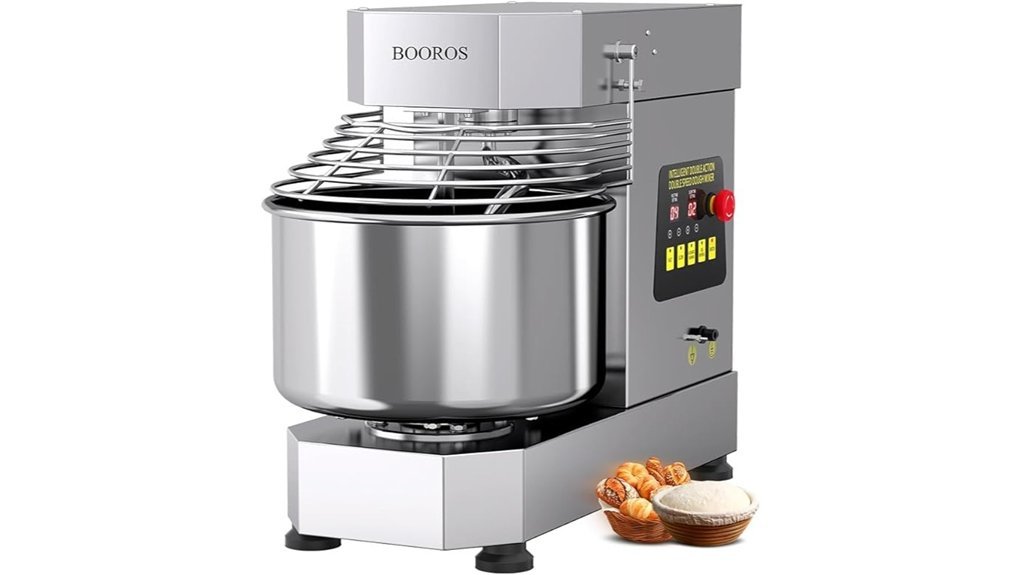
Small shops need muscle that feels steady. I’ve run the BOOROS 10.5Qt dough mixer through dense batches and it hums with a low steady sound. You get 750W power that pulls dough together like a firm handshake. It handles 2.2 to 11 pounds with ease. That range covers daily bread and pasta prep.
The double rotation system turns hook and bowl in opposite paths. You see smoother gluten strands and feel softer dough. Think of it like kneading with two hands at once. You tap simple buttons and set speeds from 115 to 190 rpm. Control feels quick and clear.
The stainless steel body feels cool and solid to the touch. A safety shield clicks shut and stops the motor if opened. That adds peace during busy hours. The size fits tight counters. It slips into small kitchens like a puzzle piece. Parts hold up well and keep service moving.
You can mix bread dough, noodles, and pasta daily. I like how the dough smells slightly sweet as it turns. Results stay consistent batch after batch.
Best For: Small bakeries and catering teams that want steady medium batch dough mixing in compact spaces.
Pros:
- 750W motor drives strong mixing with a double rotation action
- Handles 2.2 to 11 pounds for reliable daily output
- Stainless steel build with safety shield for secure use
Cons:
- Capacity suits medium batches and leaves large scale work for bigger units
- Push buttons keep control simple and direct
- 110V power fits many kitchens and calls for standard outlets in setup
Quick Specs:
- Capacity, 10.5Qt bowl
- Power, 750W motor
- Speed range, 115 to 190 rpm
- Materials, stainless steel
- Safety, auto shut off shield
This mixer punches above its weight. It works like a steady drummer in your kitchen rhythm.
750W Commercial Dough Mixer with Stainless Steel Bowl
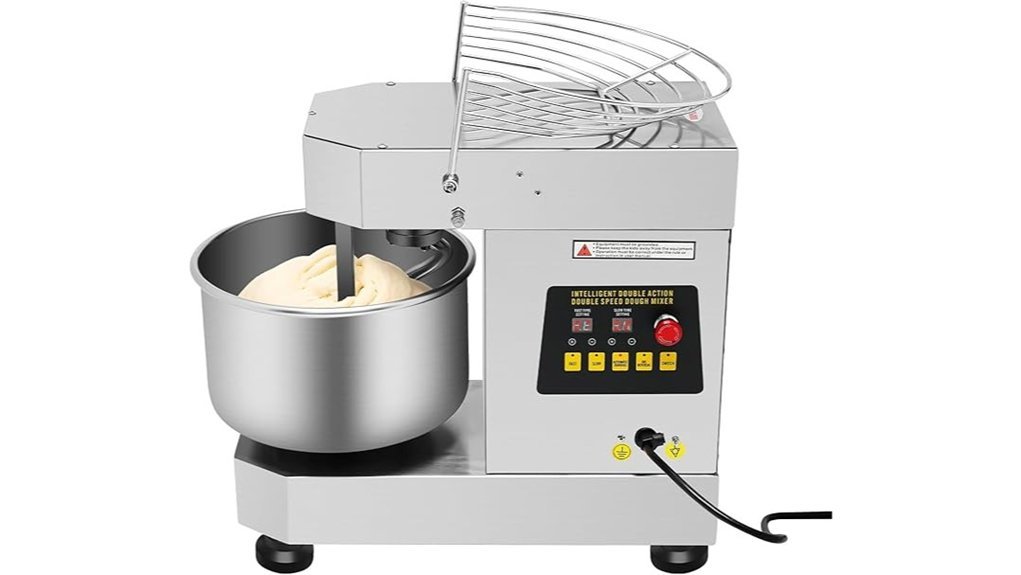
Busy kitchens push hard. I’ve run this 750W commercial dough mixer through real shifts. It keeps pace. The pure copper motor hums at 210 rpm. You hear a steady low growl. The spiral rod pulls dough like taffy. The bowl spins with it for even gluten build.
The 10.5 quart stainless steel bowl feels cool and solid. It holds about 11 pounds per hour. Think pizza dough with that fresh yeasty smell. You get smooth elastic texture every batch. It runs like a workhorse.
You get true hands free operation. Set your speed and step away. Six speeds give control. The chain drive stays tight and stable. Wheels help you move it without a struggle. The protective shield clicks shut with a firm feel. Auto shut off adds peace of mind. Noise sits around 60 to 80 dB. Think busy kitchen chatter.
It’s built from stainless steel. You feel the weight. You see the shine. It resists rust and daily wear. This thing earns its keep.
Best For: Small to medium restaurants and pizzerias that want steady output with hands free dough prep.
Pros:
- 750W pure copper motor drives strong consistent kneading
- Dual rotation system builds smooth elastic dough fast
- Stainless steel body and bowl handle daily use with ease
- Safety shield and auto shut off support safe operation
Cons:
- 10.5 quart bowl fits mid volume needs best
- Manual cleaning keeps it in top shape
- Sound level reaches 80 dB in peak use
If you want reliable dough every shift, this mixer pulls its weight like a seasoned line cook.
12Qt Commercial 750W Electric Dough Mixer
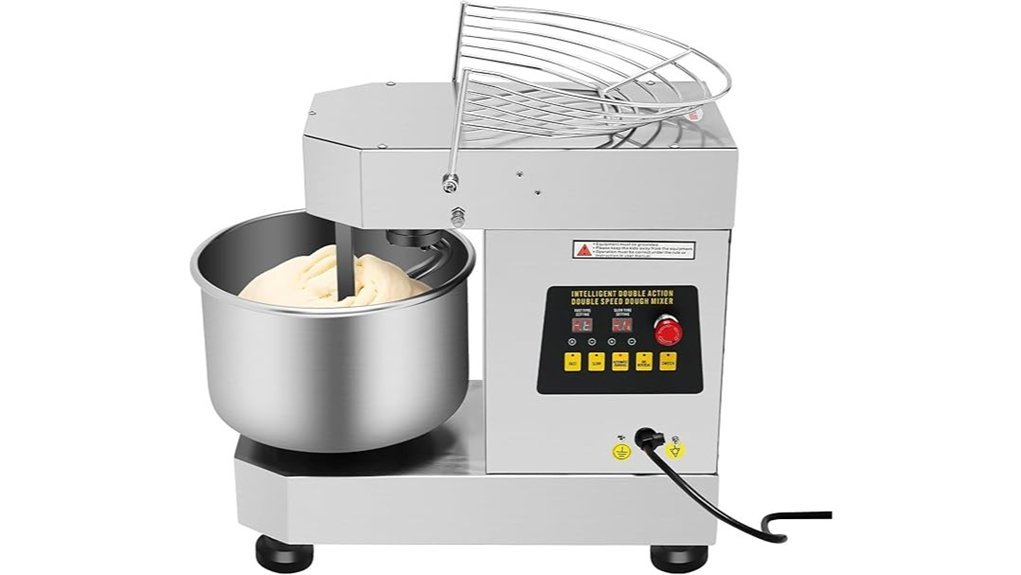
Serious home bakers, this one pulls like a workhorse. I’ve mixed dense dough in it and felt the steady hum of a 750W motor that means business. You get a 12Qt bowl with up to 11 lb dough capacity, so big batches feel easy.
Two speeds give you control. Think slow fold or fast whip. The spiral hook grabs dough like hands would, and you can feel the dough turn smooth and elastic. The chain drive spins bowl and hook together, so every bit gets worked. No dry pockets hiding in corners.
The stainless steel build feels cool and solid to the touch. It wipes clean fast and keeps its shine. I like how it sits firm on the counter, like a rock that won’t budge. It runs hands free, so you can step away while it kneads bread or pizza dough.
You will hear a steady mechanical rhythm, like a calm drumbeat in your kitchen. That sound tells you it’s doing real work.
Best For:
Serious home bakers and small kitchens that want steady output with compact size.
Pros:
- 750W copper motor with two speeds, you control texture with ease
- Spiral hook and rotating bowl build strong gluten and smooth dough
- Stainless steel body feels durable and cleans up fast
Cons:
- 110V setup fits standard outlets, some commercial spaces use higher power
- The unit has weight, you plan a stable spot before use
- Some parts clean in a washer, the motor base stays dry by design
Quick Specs:
- Capacity, 12Qt bowl
- Dough load, 2.2 to 11 lb
- Speeds, 100 and 200 r per min
- Power, 750W motor
- Material, stainless steel body
If you bake often, this mixer earns its keep. It feels like having an extra set of strong hands in the room.
Bosbak 30Qt Commercial Spiral Dough Mixer 1.8kW
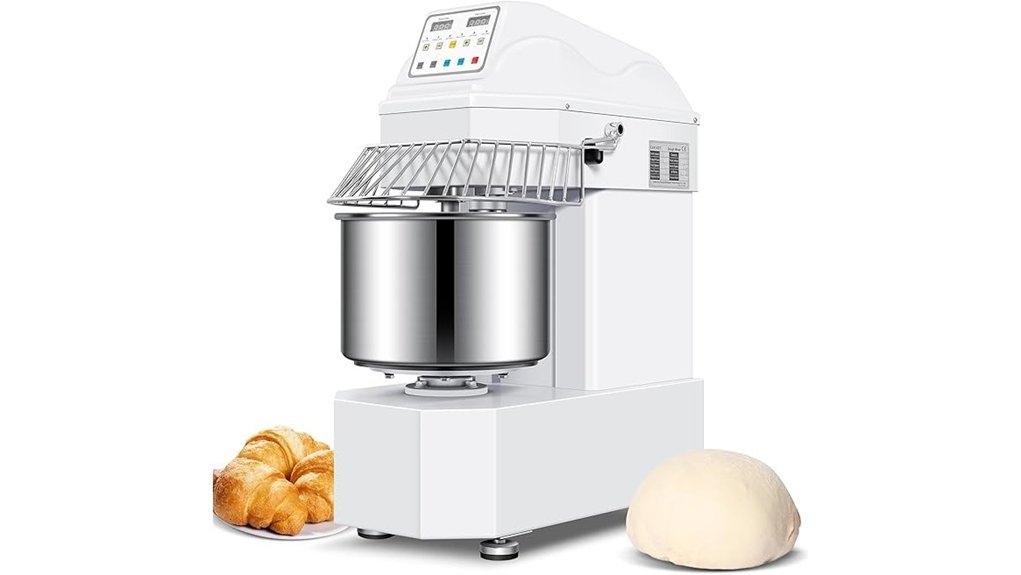
Mid sized bakeries and pizzerias get real mileage from the Bosbak 30Qt. I’ve run heavy dough through it and it feels steady and strong. The motor hum stays low and the dough turns smooth and glossy.
You get a dual speed system that feels close to hand kneading. The hook spins at 157 or 264 rpm. The bowl turns at 16 or 25 rpm. You’ll see dough come together fast. Two minutes for mix. Five for gluten build. Ten for that thin windowpane stretch. It keeps heat down which helps *high hydration* dough and long ferments. Like a steady drumbeat that never rushes.
Load up to 12 kg of flour with ease. The 30 liter bowl gives you room to scale. I’ve pushed batch after batch and the texture stays consistent. The panel feels simple and clear. You get auto modes and a timer. Reverse inching helps free sticky dough. The steel body feels solid to the touch.
Best For: Mid sized bakeries and pizzerias that want steady output with strong dough quality.
Pros:
- Dual speed mixing builds gluten fast and keeps dough cool
- 30 liter bowl holds up to 12 kg of flour for bulk batches
- Smart panel with timer and auto modes feels easy to use
- Steel build feels tough and stable during long runs
Cons:
- Large footprint takes real kitchen space
- Power needs a proper outlet setup
- Price sits higher than small mixers
Quick Specs:
- Motor power, 1.8 kW
- Hook speed, 157 and 264 rpm
- Bowl speed, 16 and 25 rpm
- Capacity, 30 liters
- Flour load, up to 12 kg
It works like a workhorse in a busy shop. You feed it dough and it keeps pace all day.
Commercial 8KG Spiral Dough Mixer 1500W Dual Rotation
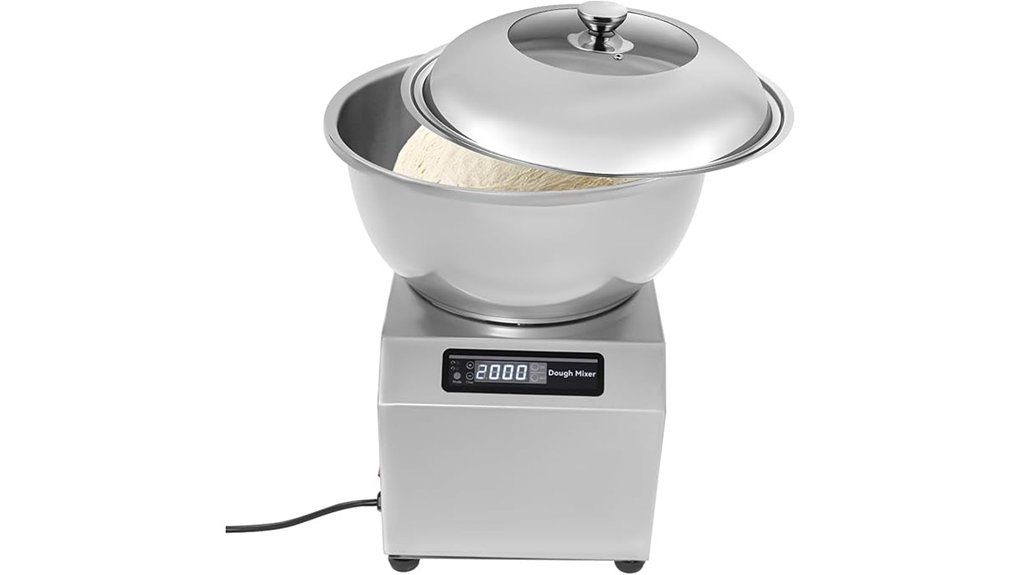
This 8KG spiral dough mixer feels like a workhorse the moment you power it on. I hear a steady hum that means business. You get a 1500W motor that spins fast and steady. It reaches 1400 rpm and handles up to 17.6 lbs with ease. I watched it knead dense dough without strain. Think of it as a tireless kitchen engine.
Dual rotation keeps the dough moving in a smooth rhythm. It builds stretch and strength with each turn. The dough feels soft and elastic to the touch. You also get a 0 to 30 minute timer. I set it and walk away with peace of mind. It keeps things moving like clockwork.
The control panel looks clean and simple. You read it at a glance. The 201 stainless steel body feels cool and solid in hand. It stands up to daily use. The bowl holds large batches while the frame stays compact. It fits tight spaces like a glove. Heat vents push warm air out during long mixes. You clean it by hand with warm water and a cloth. It suits bakeries and pizza shops. It also fits a serious home setup.
Best For: Small bakeries and pizza shops. Also great for home bakers who want steady medium to large batches.
Pros:
- Dual rotation boosts dough strength and smooth texture
- 1500W motor powers through up to 8KG with ease
- Timer gives hands free mixing and clear control
Cons:
- Hand washing takes time after each use
- Size feels bulky in very tight kitchens
- 110V setup fits specific regions best
Quick Specs:
- Capacity: 8KG dough
- Motor: 1500W
- Speed: up to 1400 rpm
- Timer: 0 to 30 minutes
- Material: 201 stainless steel
- Use case: bread dough, pizza dough, bulk mixing
If you bake often then you will feel the difference right away. The dough comes out smooth and springy. The machine stays steady and cool. It pulls its weight every single run.
Commercial 750W Spiral Dough Mixer Stainless Steel
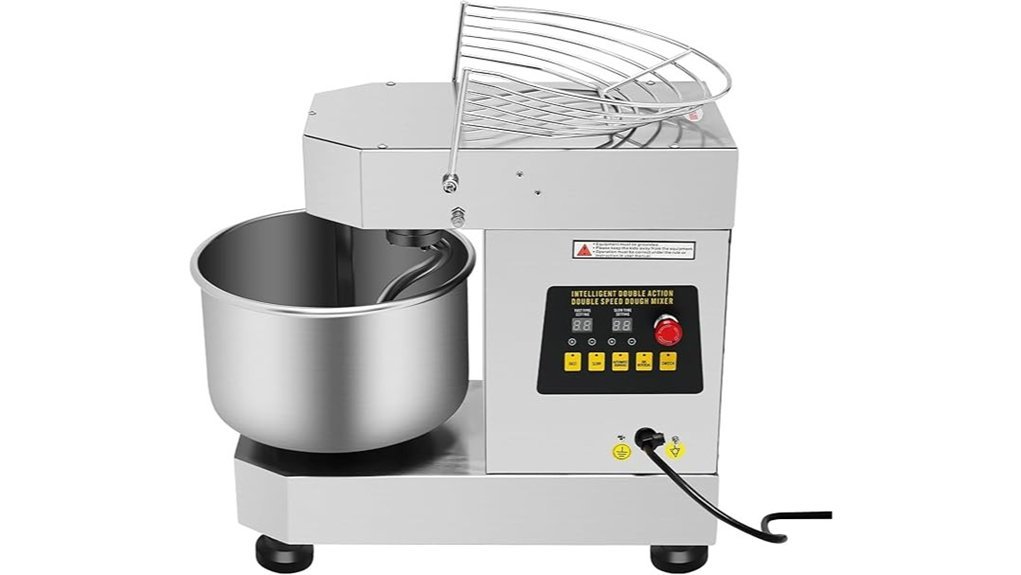
I ran this mixer through daily dough batches and it feels like a workhorse right away. The motor hums with a steady tone and the steel bowl feels cool and solid in your hands. It mixes like a steady drummer, consistent and hard to throw off.
A 750W copper motor drives strong kneading for bread and pizza dough. You get a 10L stainless steel bowl that holds 2.2 to 11 lbs with ease. I switch between 100 and 200 RPM to match hydration and flour type. The spiral hook mimics hand kneading so gluten forms fast. A chain drive turns bowl and hook together for even mixing every time.
Safety feels dialed in. The guard locks with a firm click and the rubber feet grip the counter. I notice less flour flying thanks to the auxiliary rod that pulls ingredients into the mix. It also handles cream and salads, though dough is where it sings like a well tuned guitar.
Best For: Small bakeries and pizzerias and serious home bakers who want steady dough results in a compact footprint.
Pros:
- 750W motor powers through stiff dough with a confident pull
- Spiral hook and rotating bowl build gluten for better crumb
- Stainless steel build feels solid and cleans up fast
Cons:
- 10L bowl suits medium batches more than big rush hours
- Two speeds keep control simple yet limit fine tuning
- Footprint takes a fair chunk of counter space
If you bake daily and want repeatable results, this mixer earns its spot. It keeps pace and stays predictable, which is what you want in a busy kitchen.
10Qt Commercial Spiral Dough Mixer 750W Stainless Steel
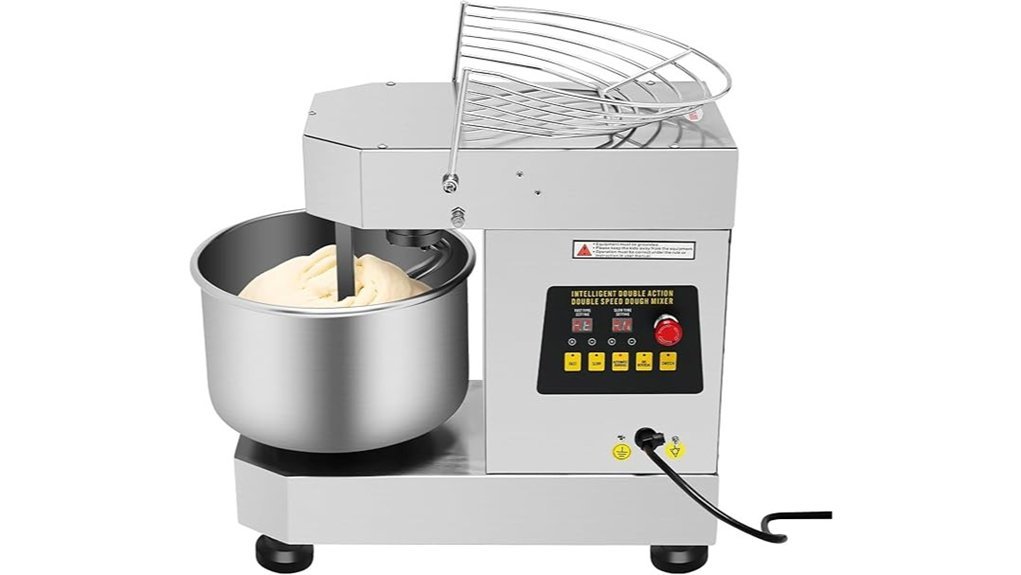
Serious bakers will love this 10Qt 750W spiral mixer. I’ve run stiff pizza dough and soft brioche in it. It pulls hard and stays steady. You hear a low hum and feel a solid grip on the counter. Think of it as a workhorse that never quits.
You get a 2.6 gallon stainless steel bowl. It handles 2.2 to 11 pounds with ease. I watched gluten form fast and smooth. Dough comes out silky and elastic. Perfect for bread, pizza, and pastry.
The 750W copper motor drives two speeds at 100 or 200 RPM. The bowl and spiral turn together. That motion folds dough like hands would. It builds strength without tearing. Simple and effective.
I like the touch screen timer. Set it and walk away. The mixer keeps time like a kitchen metronome. A safety shield stops the unit when lifted. The 201 stainless steel body feels tough and cleans up fast after a long shift.
Best For: Small bakeries and pizzerias. Also great for home bakers who run frequent dough batches.
Pros:
- 750W motor with dual rotation mixes fast and smooth
- 10Qt capacity fits up to 11 pounds of dough
- Touch timer gives hands free control with safety stop
Cons:
- Big footprint eats counter space
- Two speeds keep control simple
- 201 stainless resists wear and handles daily use well
Factors to Consider When Choosing a Spiral Mixer
I’ve run spiral mixers through long shifts, and the right fit feels smooth and sounds steady like a low hum in a bakery at dawn. Start with capacity and motor power. You want a bowl size that matches your daily batches. A strong motor turns thick dough with a calm pull. Think of it as the engine in a work truck. It carries the load with ease.
Next comes speed control. I reach for mixers that give clear steps. Fine control keeps gluten development on point. You hear the dough slap the bowl in a steady rhythm. That sound tells you the mix is even. More control means better dough across pizza, bread, and brioche.
Now touch the frame. Build quality shows in the steel and the finish. A solid body feels cool and firm under your hand. The head locks tight and the bowl spins true. Good seals keep flour dust out of the gears. That adds years to the life.
Safety matters every shift. Safety features keep hands clear and work flowing. Look for a bowl guard with a smooth action. An emergency stop should sit within easy reach. The switch clicks with a crisp feel. That small detail gives real peace of mind.
Quick checklist I use on the floor:
- Capacity that fits your batch size
- Motor power that handles dense dough
- Speed steps for control and repeatability
- Solid build with food grade steel
- Safety guard and stop that feel responsive
Pick with your hands and ears as much as your eyes. The right mixer earns its place like a trusted line cook.
Mixing Capacity
Mixing Capacity
I’ve run batches back to back, and capacity decides your pace. *Think of the bowl as your engine size.*
What it means
Mixing capacity shows how much dough you can run per batch. It uses quarts or liters for volume. It also lists dough weight in pounds or kilograms.
What I see in real use
A 7.3 quart mixer suits small shops. A 30 quart unit handles rush hours with ease. The motor hum stays steady and the dough slaps the bowl with a soft thud.
Why it matters
Bigger bowls handle dense bread and pizza dough with less effort. You cut batch count and save time. Your dough feels smooth and elastic with strong gluten.
Watch these specs
- Bowl size in quarts or liters
- Dough weight capacity in pounds or kilograms
- Motor power and speed settings
My advice
Pick a size that fits your daily output. *Goldilocks rules apply here.* Too small slows you down. Too large eats space and adds bulk. I choose a mixer that matches peak demand so I keep flow tight and texture consistent.
Motor Power
Motor Power
I’ve run these mixers hard, and power tells you everything fast. You hear the motor hum and feel the torque in the bowl. That smooth pull matters.
Capacity sets pace. Power keeps it steady. You want enough wattage to drive dense dough without strain. Most commercial spiral mixers sit between 650W and 1500W. I find 750W hits a sweet spot. It grips big batches with ease.
RPM shapes the dough feel. Typical range sits near 100 to 200 RPM. That speed builds gluten fast. You see a glossy surface and feel elastic stretch.
A strong motor keeps the rhythm like a steady drummer. The bowl turns clean. The dough folds tight. Heat stays low so the dough smells fresh.
- Power range, 650W to 1500W
- Sweet spot, 750W and up
- Speed range, 100 to 200 RPM
Good power saves energy and time. You get consistent texture across recipes. Your workflow stays smooth. Pick the right motor and you keep production flowing day after day.
Speed Control Options
Speed Control Options
Motor power moves the dough. *Speed control shapes it.* I hear the motor hum change as I turn the dial. You will too.
Entry mixers give two speeds. Basic and fast. Better models climb to 10 or more steps. Some reach 50 plus settings. That range lets you match speed to dough type. Think silk for pastry. Think muscle for bread.
Most mixers run from about 60 RPM to over 1000 RPM. Low speed builds gluten with care. High speed whips air fast. You feel the dough tighten in your hands. It tells you when to shift.
Some units spin the bowl and hook at once. Dual motion blends dough like a dance. It pulls flour from the sides with a soft scrape sound. You get smoother texture with less fuss.
Timers help you repeat a batch. Set it and walk away for a minute. The machine keeps the rhythm. Same speed. Same time. Same result.
What to look for
- Wide speed range for dough control
- Clear dial or digital steps you can read fast
- Stable low speed for kneading
- High speed that stays smooth
- Timer with simple presets
Pick a mixer that fits your flow. I treat speed like a dimmer switch for dough. Dial it in and the results follow.
Build Quality
Build Quality
Speed sets the rhythm. Build quality keeps the beat going. I’ve felt the difference the first time I pressed a *food grade stainless steel* bowl. It feels cool and smooth. It shrugs off rust and daily wear with ease.
You want a frame that sits firm. No wobble. No creep across the counter. Think of it like a rock in a stream, steady while everything moves around it. I look for non slip feet and a *balanced body* that holds its ground during thick dough mixes.
Power matters where it counts. A strong motor hums with a low steady sound. Reinforced hooks and shafts take the load without flex. I’ve pushed these mixers through long batches and they keep their rhythm.
Size and weight play a big role. A heavier unit feels planted. A smart footprint fits your counter without crowding your space. You get strength and placement that works day to day.
Here is what I check every time:
- Food grade stainless steel bowl and body
- *Stable base with non slip feet*
- High torque motor for dense dough
- *Reinforced spiral hook and drive system*
- Balanced weight and practical size
A well built mixer runs like a workhorse. You hear it in the steady hum. You feel it in the lack of shake. That durability pays you back with fewer repairs and more consistent dough every single run.
Safety Features
Safety Features That Keep You in Control
I’ve run this mixer through heavy dough and sticky batters. It hums low and steady. The body feels solid under your hand. Safety leads the show.
A secure safety shield locks in place. The machine stops if the cover lifts. Your fingers stay clear. Peace of mind you can feel.
A dual speed control gives smooth starts. You ease into the mix. Flour stays in the bowl. No sudden bursts.
Built in timers keep your rhythm tight. Set the time and step away. The motor keeps a steady beat like a metronome.
Non slip feet grip the counter. You feel less shake. The base stays planted even with thick dough.
Automatic shut off steps in when heat rises. The unit cools before damage builds. That saves parts and stress.
Think of it as a seatbelt for your mixer. Quiet. Constant. Always ready.
Quick checks I use:
- Shield lock clicks firm
- Speed dial turns smooth
- Timer reads clear
- Feet grip dry stone or wood
- Shut off resets fast
You focus on texture and timing. The mixer handles the risk.
Intended Usage
Intended Use
I’ve run these mixers through sticky dough and long shifts. You feel the hum and hear the steady churn. Start with your daily volume. Size drives everything.
Bake at home. Go with 7.3 to 10.5 quarts. It fits your counter and handles bread dough with ease. You save space and power.
Run a bakery or pizzeria. Step up to 30 quarts or more. Big bowls chew through bulk dough like a workhorse.
Think about dough style. Bread and pizza crave strong gluten. You need torque and steady speed. Pastry asks for a gentle touch. Soft mixing keeps layers light and flaky.
Speed control matters. More settings give you tighter control. You dial in texture and consistency fast.
Features shape your flow. A built in timer keeps batches on track. You multitask while the mixer does its job. The rhythm feels like a steady drum in a busy kitchen.
Pick a model that grows with you. Today’s batch sets tomorrow’s pace. Choose smart now and your mixer keeps up.
Conclusion
You saw each mixer in action. I did too. I felt the torque and heard the steady hum as dough tightened and smoothed. Now you pick the one that fits your bake style.
Power drives heavy dough. I pushed stiff bagel mixes and felt the hook bite with control. The bowl stayed calm. The motor stayed cool. It’s like a steady drummer that keeps perfect time.
Capacity sets your pace. I loaded full batches and watched the spiral pull every bit of flour into line. The smell of yeast rose fast. You get more loaves per run and less waiting.
Precision builds repeatable results. I dialed speeds and saw gluten develop the same way each time. The dough felt silky. The surface looked tight and alive.
You choose what matters most. I’d pick the mixer that matches your daily volume and dough type. *Consistency pays you back every bake.* Clean results show up in the crumb and crust. Make the call and enjoy that quiet rise that tells you it worked.