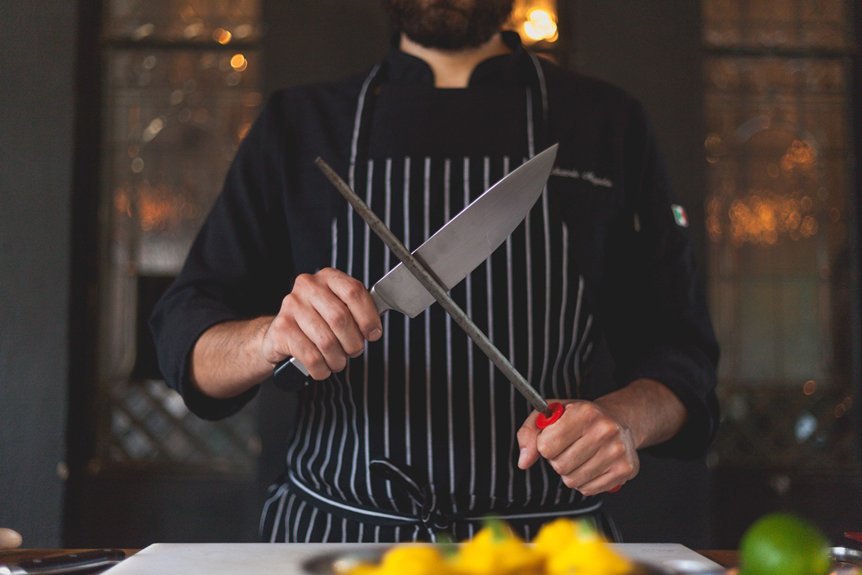
You want a knife that feels pro in your hand. I’ve used these on busy prep days. They slice with a soft whisper on the board. Steel meets onion and you feel that clean glide.
Pick a beginner Japanese chef knife with a thin 13 to 15° edge. It bites fast. You get fine cuts with less force. Aim for 58 to 62 HRC steel. That range holds an edge and stays friendly for home care. Think of it like a sharp pencil that keeps its point.
Brands like ATUMURYOU, imarku, FAMCUTE, and HOSHANHO hit a sweet spot. I’ve chopped herbs and diced carrots with each. The edge grabs then releases with a smooth pull. The handle feels warm and secure even with wet hands.
Focus on what you feel first.
- Balance, the blade and handle share weight well
- Grip, your fingers lock in with zero slip
- Edge feel, a quiet slice with light pressure
- Maintenance, easy honing and simple care
I like a handle that sits snug in my palm. You should feel in control from tip to heel. A good knife becomes an extension of your hand. Like a well tuned guitar it responds to every touch.
These picks give you sharpness and control right away. You get solid edge life with simple upkeep. Your prep speeds up and your cuts look clean. Keep reading and I’ll guide you to the one that fits your style.
ATUMURYOU 8″ Damascus Chef Knife VG10 Steel
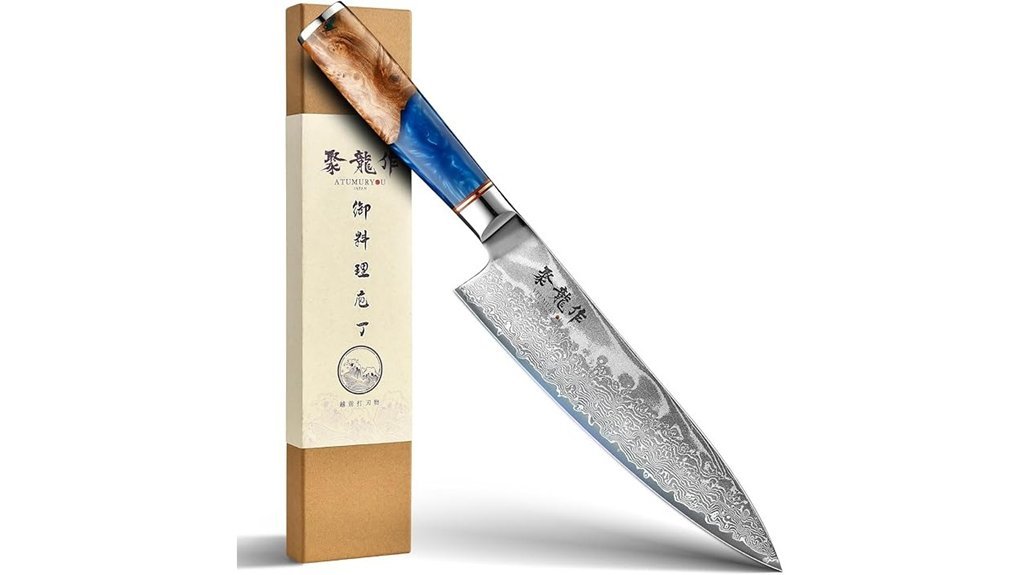
If you’re new and want a knife that feels pro, this one hits the mark. I’ve used it on onions, fish, and steak. It glides like butter. The VG10 steel core sits at 60 HRC. That means a hard edge that stays sharp. The 67-layer Damascus adds strength and a *rippled look* that catches the light. It feels like holding a quiet storm.
You get a razor sharp edge right out of the box. I felt it bite into tomato skin with a soft hiss. No crush, no tear. The resin wood handle feels smooth and warm in hand. It locks your grip in place. Balance sits right at the pinch grip. Your wrist stays fresh through long prep. Think of it as a steady dance partner.
It handles daily prep with ease. Slice herbs, dice onions, break down chicken breast. It stays keen longer than basic stainless steel. Care is simple. Hand wash and dry. Treat it well and it will serve you for years.
Best For: Home cooks and beginners who want a pro feel, sharp edge, and clean style in one knife.
Pros:
- VG10 core steel holds a sharp edge and cuts clean
- Balanced build improves control and comfort
- Damascus cladding adds strength and a *unique* visual pattern
Cons:
- Needs hand washing and quick drying after use
- Suits slicing and dicing better than bone work
- Price sits above entry level options
Quick Specs:
- Blade length: 8 inch chef knife
- Core steel: VG10 at 60 HRC
- Layers: 67 Damascus
- Handle: Resin wood ergonomic grip
- Edge: Hand finished, razor sharp
imarku Japanese Chef Knife 8-Inch HC Steel
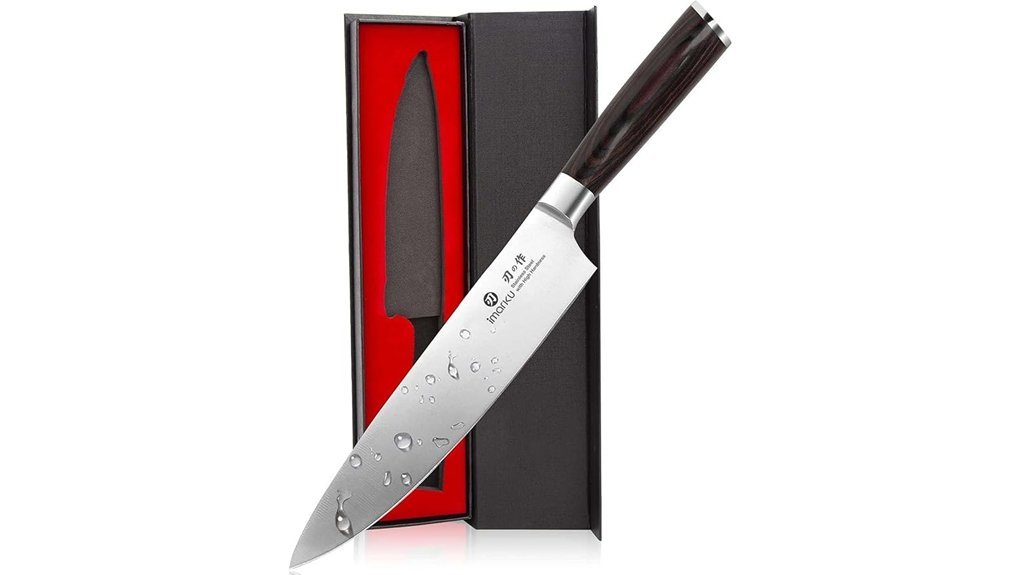
The imarku 8 inch chef knife feels lively in your hand. I used it on onions and heard a clean soft tap on the board. You get a *high carbon stainless steel blade* that holds a keen edge. It weighs 0.41 pounds and feels easy to guide. Think of it as your daily driver that just works.
The blade sits at HRC 56 to 58. You slice tomatoes with a smooth glide and no crush. The glossy finish looks slick and helps resist rust. The edge stays sharp through weeknight prep. A quick hone brings it right back. Like a well tuned bike, it keeps rolling.
The *pakkawood handle* feels warm and secure. I gripped it with wet hands and it stayed steady. The shape supports long prep with less strain. FSC certified wood adds a nice touch. It fits like a glove and keeps you in control.
You can cut meat, veg, and herbs with ease. The knife arrives gift ready with a clean box. You get a lifetime warranty and a three month refund window. Brand logos may vary while updates roll out. Quality stays steady.
Best For: Beginners and home cooks who want a sharp, easy care, all purpose chef knife with real comfort and value.
Pros:
- *High carbon stainless steel* edge with solid retention at HRC 56 to 58
- Light weight feel at 0.41 pounds with good balance
- *Ergonomic pakkawood handle* with a secure grip and smooth finish
Cons:
- Softer steel than premium Japanese blades, edge life feels shorter with heavy use
- Regular honing keeps the bite crisp
- Logo changes may look different across batches
67-Layer Damascus Chef Knife with Olive Wood Handle
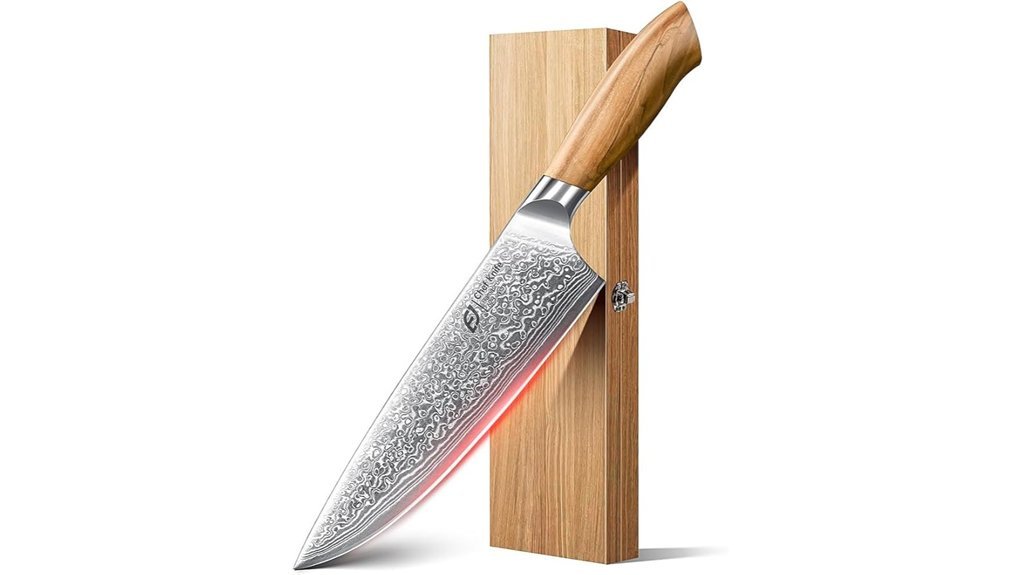
Home cooks who want control and style will enjoy this 67 layer Damascus chef knife. I’ve used it on meat and herbs. It bites clean and glides like silk. You feel the blade whisper through onions. The steel packs 0.98% carbon and 18% chromium. It sits at 58 HRC for steady edge life. The 15° edge comes laser sharp. It feels like a hot knife through butter. The hand forged build adds strength you can feel.
The Calabrian olive wood handle feels warm and smooth. It smells faintly earthy when dry. I get a steady grip even with wet hands. The half bolster adds control at the pinch. Balance feels centered and calm. The Damascus pattern shimmers under light. It resists rust and draws eyes. It ships in a wooden box with a lifetime warranty.
Best For: Home cooks and enthusiasts who want a sharp and stylish chef knife with easy control.
Pros:
- 15° edge slices clean and fast, you feel precise cuts every time
- 67 layer Damascus steel holds an edge and looks striking
- Olive wood handle feels balanced and comfortable in long prep
Cons:
- 58 HRC calls for regular honing to keep peak bite
- Olive wood benefits from light oil to keep its glow
- Premium build sits at a higher price tier
Quick Specs:
- Blade, 67 layer Damascus steel
- Carbon, 0.98%
- Chromium, 18%
- Hardness, 58 HRC
- Edge angle, 15° per side
- Handle, Calabrian olive wood
- Bolster, half bolster for control
In daily prep this knife keeps things smooth. I reach for it often. It earns its spot on the board.
FAMCUTE 8″ Japanese Chef Knife 9CR18MOV
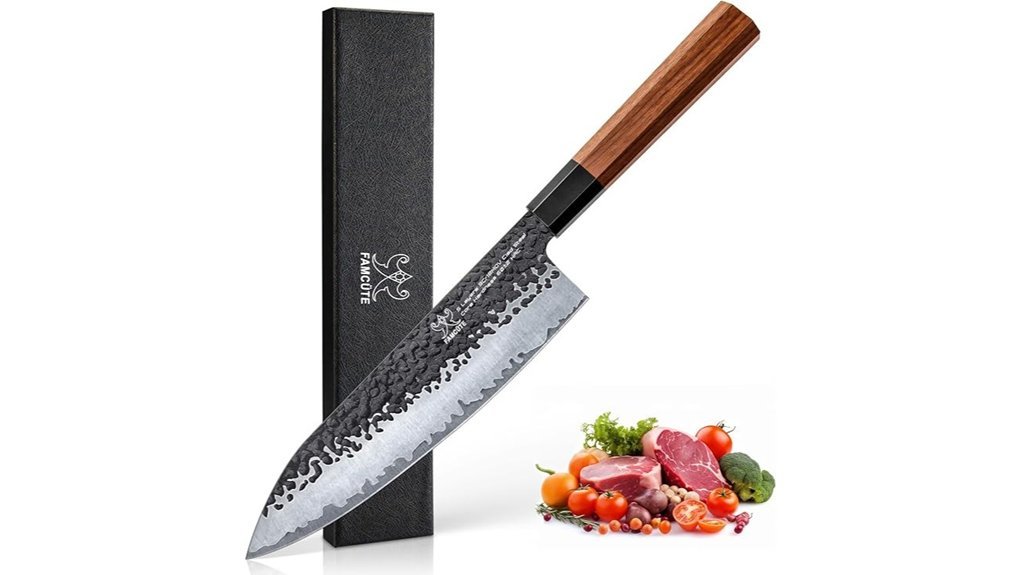
New cooks need a blade that feels steady in hand. I tested the FAMCÜTE 8 inch Japanese chef knife on onions and carrots. It bites clean and sounds crisp on the board. The five layer 9CR18MOV high carbon steel feels tough and keeps a sharp edge. Think of it as a reliable workhorse that won’t quit mid prep.
The rosewood handle feels warm and smooth. You grip an octagonal non slip shape that stays secure with wet hands. I felt less strain after long chopping sessions. The balance sits right in the middle so you guide each cut with ease.
At HRC 62 hardness it holds an edge well and resists rust. The blade went through a 60 day build with quenching and nitriding. That adds strength you can feel with each slice. It stays light yet firm so you move faster with clean cuts.
Support matters too. You get one on one help if issues pop up. That adds peace of mind for new cooks. It turns an old dull setup into a sharp daily tool.
Best For: You want a durable chef knife with easy control and steady performance at home.
Pros:
- Strong edge life from HRC 62 9CR18MOV steel
- Comfortable rosewood grip with a secure octagonal feel
- Light body with solid feedback for precise cuts
Cons:
- Finish benefits from regular care and drying
- Premium steels like VG10 offer finer edge feel
- Brand has a smaller track record than legacy makers
HOSHANHO 8-Inch Japanese High Carbon Chef’s Knife
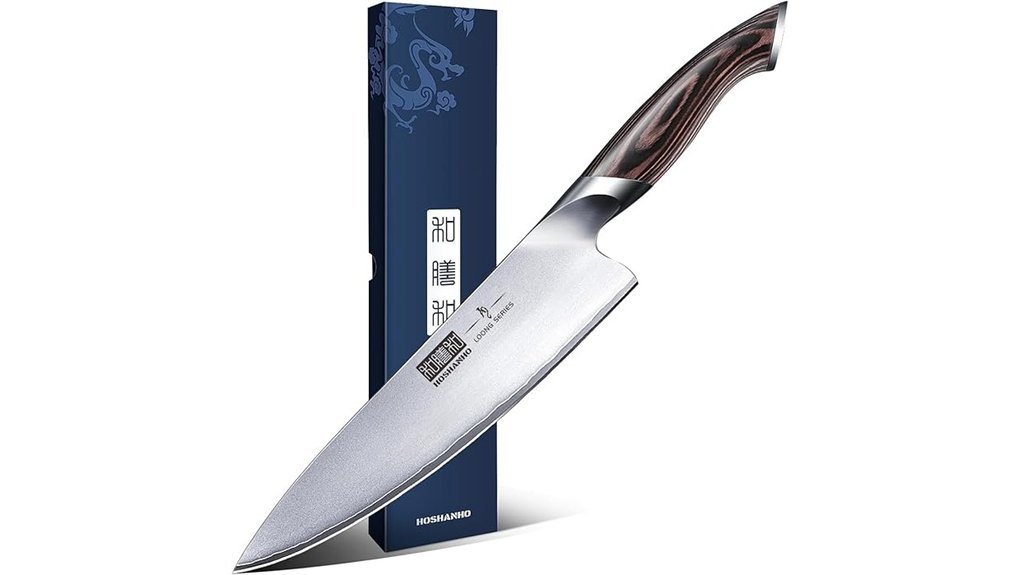
Beginners who want a *forgiving sharp all rounder* will enjoy this 8 inch HOSHANHO chef’s knife. I used it for weeknight prep and it felt ready right away. The blade glides through onions with a soft hiss. Carrots crack clean with each push. It feels like a steady workhorse.
The 10Cr15CoMoV high carbon steel sits near 60 HRC. You get edge life with a calm feel in hand. The 13 degree edge bites fast and leaves clean faces on herbs. The matte ice tempered finish shrugs off splashes and heat shifts. The pakkawood handle feels warm and smooth. The sloped bolster guides a pinch grip like a handshake.
Weight lands at 350 grams. You feel planted on the board. Think of it as a small anchor that keeps cuts true.
Best For: Beginners and home cooks who want a sharp durable chef’s knife for daily prep.
What I like
- Sharp out of the box, the 13 degree edge gives neat slices
- Edge retention, the steel keeps bite through long prep
- Grip comfort, the pakkawood handle feels secure and balanced
Watch for
- Heft, the 350 gram weight favors a stable feel over a nimble feel
- Care habits, hand washing keeps the finish bright and edge keen
- Packaging, a simple box suits storage and casual gifting
Quick specs
- Blade length, 8 inches
- Steel, 10Cr15CoMoV high carbon
- Hardness, about 60 HRC
- Edge angle, 13 degrees per side
- Handle, pakkawood
- Finish, matte ice tempered
- Weight, 350 grams
If you want a daily driver that feels steady and cuts clean, this one earns a spot on your board.
imarku 7-Inch Santoku Chef Knife High Carbon
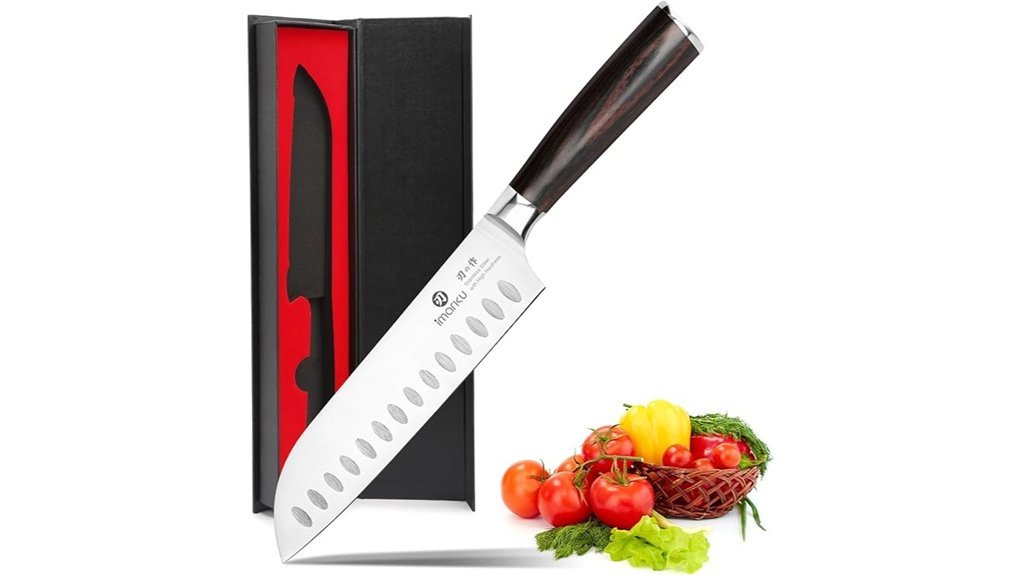
The imarku 7 inch Santoku feels like a sharp whisper on a cutting board. I’ve used it through onions, chicken, and apples, and it glides with clean control. You get *razor sharp precision* right away, so prep feels easy from the first slice.
The high carbon stainless steel blade holds a fine edge with a 15 to 18 degree angle. It bites into food with a soft crunch sound that signals control. The hollow edge keeps slices from clinging, so each cut flows like butter on warm toast.
Your hand settles into the pakkawood handle with a smooth and warm feel. I felt steady through long prep, and my wrist stayed relaxed. The forged build adds solid weight that feels balanced in motion.
Care stays simple. A quick hand wash keeps the blade bright and ready. Over time it keeps its shine and edge with basic upkeep.
Best For: You want a sharp and friendly knife for daily prep. I’d hand it to home cooks and rising chefs who value control and comfort.
Pros:
- Sharp 15 to 18 degree edge gives clean slices every time
- Hollow edge helps food release fast and clean
- Pakkawood handle feels secure and smooth in your grip
Cons:
- Hand washing keeps the blade in top shape
- Size suits compact prep and tight boards
- High carbon steel thrives with regular care
Sunnecko 8″ Damascus Chef Knife VG10 67-Layer
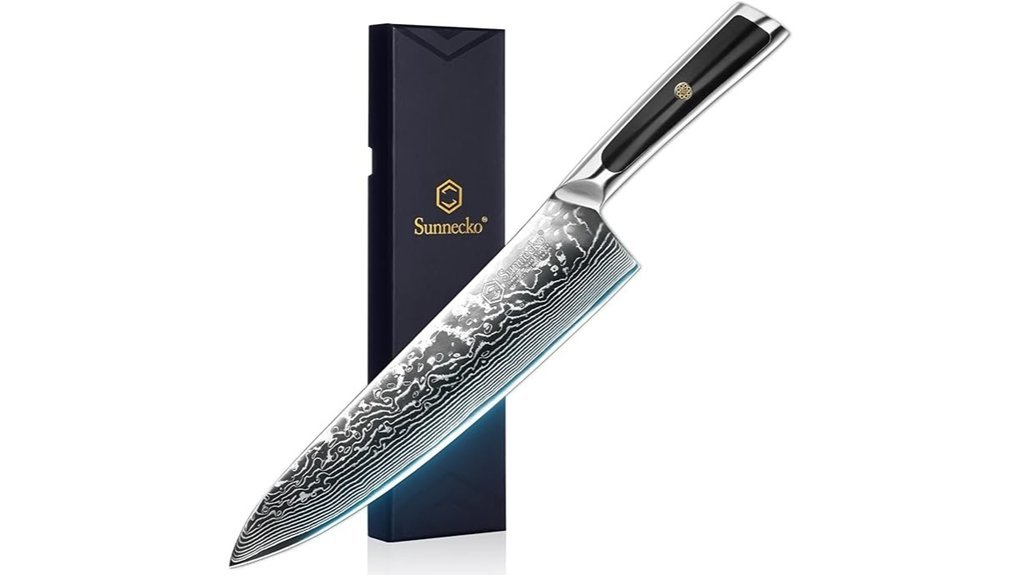
Home cooks who want pro level sharpness with easy use will love this Sunnecko VG10 Damascus chef knife. I felt the bite on onions right away. The blade whispers through food. You get a 10 to 12° hand honed edge that slices clean like a hot knife through butter. The VG10 core holds that edge for long prep. The 67 layer Damascus steel adds strength and rust resistance. The ripple finish looks *unique* and catches the light. A full tang build keeps balance steady in hand. The ABS handle feels grippy even when wet. I prepped herbs and fish with calm control. Cleanup is quick and the blade stays bright. It arrives in a gift ready box. Quality checks keep performance consistent.
Best For: Home cooks and food fans who want pro sharpness and long edge life in a versatile chef knife.
Pros:
- Razor sharp edge, 10 to 12° grind with VG10 core for long wear
- 67 layer Damascus steel, strong build with corrosion resistance
- Full tang balance, secure feel with non slip handle
Cons:
- Very sharp edge, care keeps fingers safe
- ABS handle feel, some prefer wood warmth
- Price tier, reflects premium steel and grind
Quick Specs:
- Blade length, 8 inch
- Core steel, VG10
- Layers, 67 Damascus
- Edge angle, 10 to 12° per side
- Handle, ABS
- Build, full tang
In use it feels like a trusty workhorse. I slice, dice, and chiffonade with smooth rhythm. You get speed and control in one tool.
imarku 3-Piece Japanese Stainless Steel Knife Set
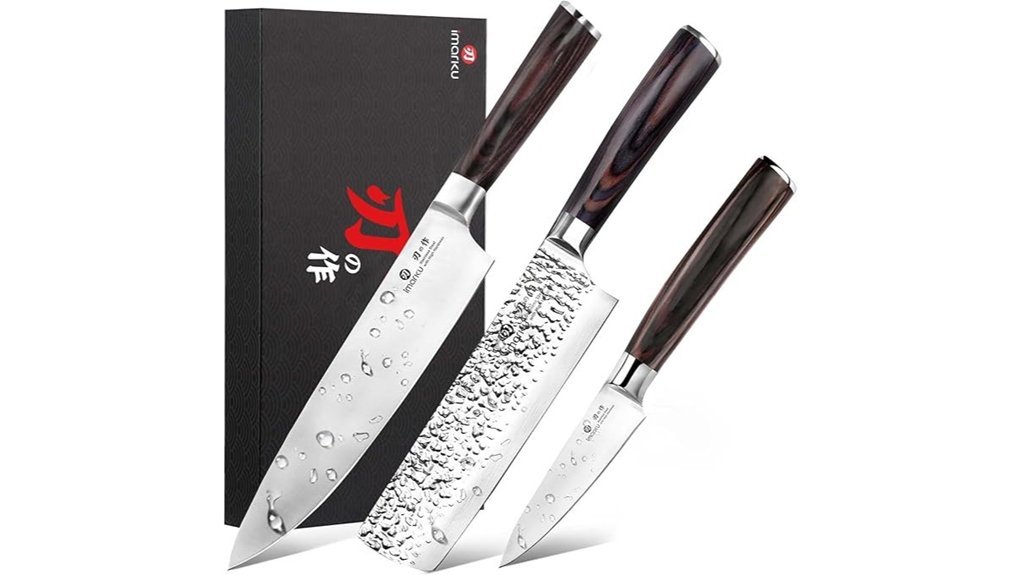
Three blades, one smart kit. I’ve used this set on busy weeknights and slow prep days. It covers almost everything without fuss.
You get an 8 inch chef knife. It bites into onions with a soft crunch. The 7 inch nakiri glides through carrots like a hot knife through butter. The 3.5 inch paring knife feels nimble for peeling and detail work.
The high carbon Japanese stainless steel feels crisp on the board. You hear a clean tap with each cut. The 15 degree edge slices fast and stays keen. At 57 HRC, the steel balances strength and easy upkeep. The 2.3 mm spine gives steady control.
Pakkawood handles feel warm and smooth in hand. I kept a firm grip even with damp fingers. Long sessions stay comfortable, like a well worn tool that fits just right.
It arrives in a sleek gift box. Presentation looks sharp right out of the box. Support felt responsive when I had a quick question.
Best For:
Home cooks and beginners who want a versatile knife set for daily prep. Think quick dinners and weekend batch cooking.
Pros:
- Three knife set handles chopping slicing dicing and peeling
- Sharp 15 degree edge delivers clean cuts with less force
- Pakkawood handles feel comfortable and stable in hand
Cons:
- 57 HRC steel favors easy honing over edge life of harder steels
- No bread or boning knife in this kit
- Wood look handle suits classic tastes over modern metal styles
Quick Specs:
- Steel type, high carbon Japanese stainless steel
- Edge angle, 15 degrees per side
- Hardness, 57 HRC
- Blade thickness, 2.3 mm
- Knives included, 8 inch chef 7 inch nakiri 3.5 inch paring
Bottom line. You get a reliable trio that works like a trusty sidekick. It keeps prep smooth and simple without extra clutter.
Brewin CHEFILOSOPHI 5-Piece Japanese Chef Knife Set
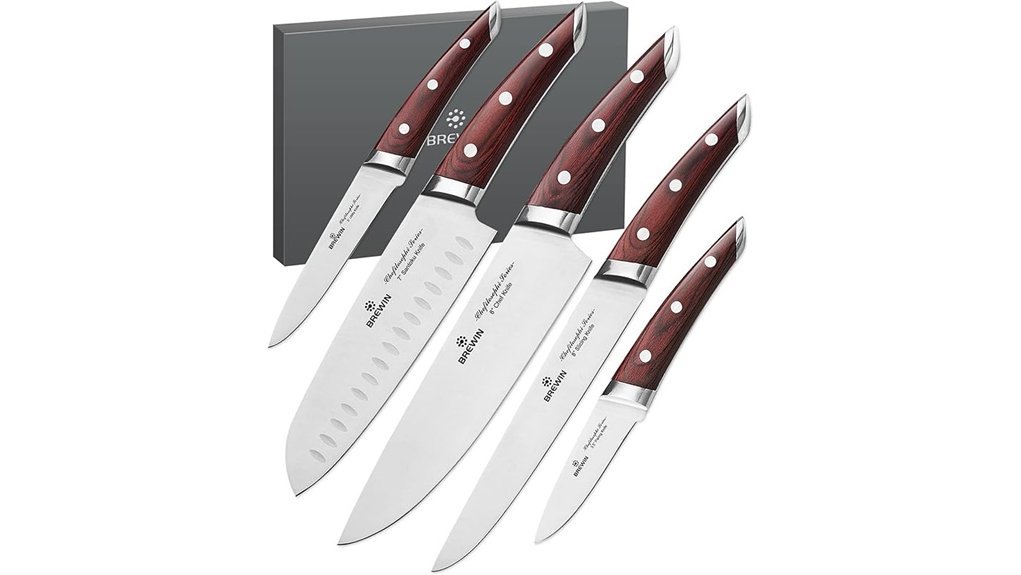
New cooks want tools that just work. I’ve used this five piece set for weeknight prep and it covers the bases like a Swiss Army knife. You get two 8 inch blades, a Santoku, a 5 inch utility, and a paring knife. I sliced onions and felt a clean glide. No drag. The red Pakkawood handles feel smooth and warm in hand. Grip stays steady even with wet fingers.
The steel is high carbon 1.4116 from Germany. You get rust resistance and solid edge life at 56+ HRC. I heard a crisp tap on the board with each cut. Feels controlled. Three anchor points lock the handle to the tang. Control stays tight. The box looks sharp and gift ready. Dishwasher use works, though I hand wash to keep the bite.
Best For: You want a complete and stylish starter set for daily cooking.
Pros:
- Five knives cover most kitchen tasks with ease
- German steel holds an edge and resists rust
- Pakkawood handles feel balanced and secure
Cons:
- Edge needs regular honing at this hardness
- Machine washing reduces long term sharpness
- No specialty blades for advanced prep
Quick Specs:
- Steel, 1.4116 high carbon stainless
- Hardness, 56+ HRC
- Set, chef knives Santoku utility paring
- Handles, red Pakkawood with triple anchors
- Care, dishwasher safe and hand wash preferred
KEEMAKE 8″ Kiritsuke Damascus Chef Knife
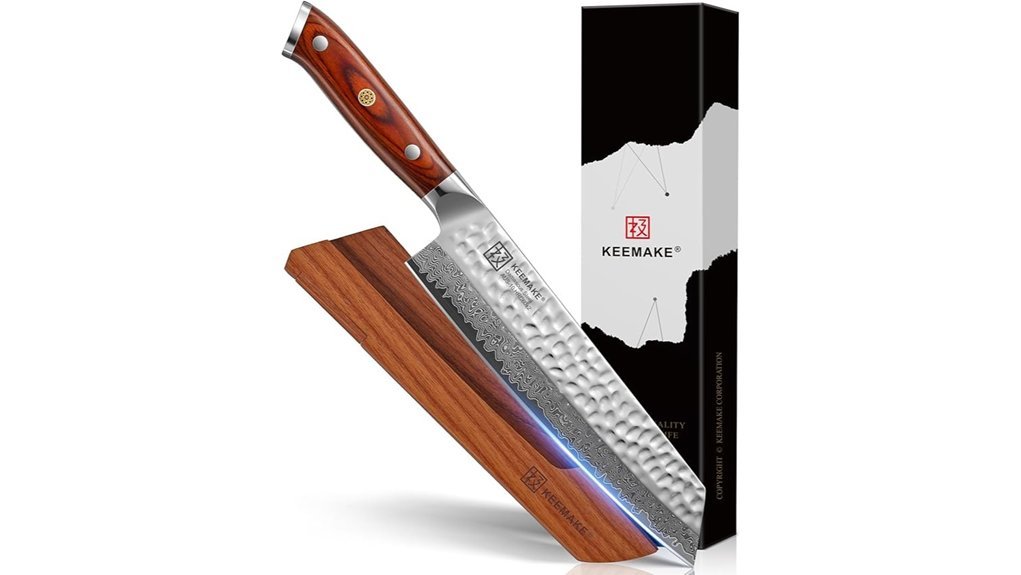
If you want a versatile entry knife, I keep reaching for the KEEMAKE 8″ Kiritsuke. It feels like a Swiss Army knife for your board. The blade flashes with a *67 layer Damascus pattern* that catches light and sheds food with ease. Onion slices fall away clean. Garlic smells stay crisp and fresh.
I tested it on squash, fish, and herbs. The *60±2 HRC edge* bites fast and glides smooth. You feel a soft whisper as it cuts. That sound tells you the grind is dialed in. The steel holds sharpness through long prep.
The *Pakkawood handle* sits warm in your palm. It feels smooth yet grippy. Balance lands right at the pinch. Your wrist stays relaxed during long sessions. The ash sheath adds a clean wood scent and keeps storage safe.
The *kiritsuke profile* gives you range. You can slice, chop, and mince with one tool. The tip works like a scalpel. The flat edge powers through herbs in a quick rhythm.
Best For: Home cooks and new enthusiasts who want a Japanese style knife with strong looks and steady performance.
Pros:
- 67 layer Damascus steel resists sticking and adds corrosion resistance
- Razor sharp edge at 60±2 HRC gives edge life with chip control
- Pakkawood handle feels balanced and reduces hand fatigue
Cons:
- Kiritsuke shape takes a few sessions to feel natural
- Hand wash and dry care keeps the blade bright
- Best suited for produce and proteins over hard bone work
It arrives in a gift ready box and looks sharp on display. I’d call it a solid first step into Japanese blades with a *unique* style and feel.
Factors to Consider When Choosing a Beginner Japanese Chef Knife
When I test a beginner Japanese chef knife, I start with the blade steel. It tells me how it will cut and how long it stays sharp. A good blade feels slick on an onion skin. It glides like butter.
Next I check edge sharpness. You should feel a clean bite on paper. A sharp edge gives control and saves effort. Dull steel feels like pushing a brick uphill.
Hardness matters too. Hard steel holds an edge longer. It also needs a gentle touch. Think of it like glass that can cut.
Now grab the handle. Your hand should settle in with ease. I like a light texture that grips when wet. You want comfort for long prep sessions.
Balance comes last. I pinch the blade and lift. The knife should feel alive in your hand. Too heavy feels like a hammer. Too light feels like a toy.
Keep these points in mind:
- Blade steel, look for high carbon or stainless blends
- Edge grind, thin edges slice clean
- Hardness rating, often shown as HRC
- Handle shape, oval or D shape feel common
- Weight and balance, aim for a natural feel
Pick one that fits your grip and your pace. Then get chopping.
Blade Material Quality
Blade Material Quality
Steel decides everything. I feel it the moment I slice. A good blade bites clean and whispers through food. Cheap steel drags and squeaks.
Go for high carbon stainless steel. You get sharp edges and rust resistance. It handles daily prep with ease. Your hands will feel the difference fast.
Check the Rockwell hardness. Aim for 56 to 62 HRC. This range keeps an edge longer. You still sharpen it without a fight. It hits the sweet spot, like butter on warm toast.
I have used Damascus steel on long prep days. The layered pattern looks *stunning*. It also adds strength you can feel. The blade glides and leaves smooth cuts.
Focus on steel mix. Carbon boosts sharpness. Chromium fights rust. That combo keeps performance steady.
Edge angle matters too. Stick with 15 to 18 degrees. The knife feels precise and quick. You get clean slices with less effort.
Quick specs to scan:
- Steel type, high carbon stainless
- Hardness, 56 to 62 HRC
- Edge angle, 15 to 18 degrees
- Finish, polished or layered Damascus
Pick the right steel and you set the tone for every cut.
Edge Sharpness Level
Because sharpness sets how the blade meets food, you feel it on the first cut. I notice it the moment steel touches a ripe tomato.
Japanese chef knives use edge angles around 13 to 15 degrees per side. You get clean slices with light effort. The edge bites like a hot knife through butter. *That smooth glide feels almost silent on the board.*
Some models go thinner at 10 to 12 degrees. You see finer cuts on herbs and fish. I get paper thin slices that almost stick to the blade.
Hand sharpening adds a keen edge. You feel a crisp bite and a soft whisper as it moves. That edge holds longer with good care.
Keep it honed often. A sharp edge tracks straight and feels steady in your hand. You stay in control and build skill fast.
Hardness And Durability
Hardness And Durability
Sharpness grabs you fast. Hardness keeps that bite alive. I check Rockwell hardness, you should too. You want 58 HRC or higher for daily cooking.
Higher HRC means longer edge life. You feel it on the board. The blade glides with a soft whisper. Less drag, more control.
Around 60 HRC hits the sweet spot. It stays sharp through piles of onions and tough carrots. You spend less time at the honing rod.
Steel choice matters in your hand. High carbon stainless steel gives strength and rust resistance. It feels solid and clean. No funky smell after slicing acidic food.
Build quality seals the deal. I trust forged knives for lasting performance. They feel dense and balanced. Stamped blades feel lighter and thinner.
Think of hardness like a backbone. Strong and steady wins the race.
Quick guide:
- 58 to 60 HRC, ideal range for home cooks
- High carbon stainless, easy care and long life
- Forged construction, better strength and balance
Pick a well hardened blade and you get years of smooth prep.
Handle Comfort Grip
Handle Comfort Grip
Edge retention keeps your knife sharp. The handle keeps you in control. I feel the difference the moment I pick it up.
An ergonomic shape fits your palm. It cuts fatigue fast. Long prep feels lighter.
A good handle guides each cut. You relax your grip. Control improves right away. Like a steady handshake.
Materials play a big role. Pakkawood feels warm and smooth. Resin wood feels dense and grippy. Both hold firm with wet hands. That texture adds bite like rubber on pavement.
Size matters here. A slim handle suits smaller hands. A thicker profile fills larger palms. You want a natural fit that feels *just right*.
Surface texture helps a lot. A non slip finish adds control. Each slice lands clean. Your wrist stays calm over time.
I notice sound too. A secure grip gives a soft thud on the board. No chatter or twist. Just clean contact.
You gain confidence with every move. The knife follows your lead. That *predictable feel* makes fine work easier.
Knife Balance Weight
Knife Balance Weight
The blade cuts. *Balance* guides every move. I feel it the moment I grip the handle. The knife either flows or fights back.
Knife balance weight shows how mass spreads from tip to handle. This affects control and fatigue. A good balance feels like a dance partner. It moves with you.
I test the pivot near the bolster. Most chef knives center here. That spot drives smooth rocking and clean slices. You hear a soft tap on the board. That sound tells you the motion stays steady.
Heavier blades bring force. You feel a firm push through carrots and squash. Lighter blades feel quick and lively. They glide through herbs with a whisper.
Your hand decides. I always say trust your grip like you trust your footing.
Try this in store or at home
- Hold a pinch grip at the spine
- Shift your fingers slightly
- Find the point where the knife rests level
- Slice a firm veggie and feel the feedback
A well balanced knife feels *neutral and responsive*. Your wrist stays fresh after long prep. That comfort keeps your cuts clean and precise.
Maintenance Requirements
Maintenance Requirements
I’ve used these blades daily, and they reward care like a loyal tool. Treat your knife right, and it stays *laser sharp* and smooth through food.
Hand wash your knife with warm water. Dry it right away so the steel feels clean and warm to the touch. Water left on the blade invites rust and dull spots over time. Dishwashers bring heat and harsh spray, so your edge loses bite fast.
Sharpening keeps the edge alive. I feel the difference with each slice. A whetstone gives a smooth glide through onions, while a ceramic rod brings back that crisp bite between sessions.
- Hone your edge often with a ceramic rod
- Sharpen on a whetstone every few months
- Use wood or plastic boards for a softer landing
- Store on a magnetic strip or in a blade guard
Acidic foods like citrus leave a faint smell and can mark the steel. Wipe the blade after each cut so it stays bright. Good habits act like oil in an engine, everything runs clean and easy.
Blade Length Choice
Blade length sets the tone from your first cut. I’ve tested dozens of chef knives, and length changes the feel right away. Steel glides or drags. Your wrist tells you fast.
Start with 8 inches. It feels balanced in your palm. You get clean slices through onions and herbs. It works across most kitchen tasks. Think of it as the sweet spot, like a well tuned engine.
Try 7 inches for lighter control. I feel quicker with it during fine work. The tip dances through garlic and shallots. Tight boards feel easier. You get a nimble rhythm.
Go 9 inches for big prep. Large cabbage and melon bow to the longer edge. The blade hums as it moves. You gain reach and power. Skill grows into it with time.
Balance matters as much as length. A good knife settles into your grip. The spine and handle share the load. Your wrist stays relaxed during long sessions.
Match the blade to your hand. Grip the handle and feel the weight. Your fingers should wrap with ease. The edge should track straight with each push cut.
Quick picks I trust:
- 7 inch, light feel, tight spaces, fine detail
- 8 inch, all purpose prep, daily cooking, steady balance
- 9 inch, large produce, long slices, strong momentum
Bottom line. Choose the length that feels alive in your hand. The right size turns prep into a smooth flow. Like butter on a hot pan.
Price Value Ratio
Price vs Value. What I’ve Learned From Real Use
Length gives you reach. Price decides how long that comfort lasts. I’ve felt cheap blades flex and scrape on the board. You want *steady steel* and a fair tag. That sweet spot feels like a glove on day one.
Pick high carbon stainless steel for edge life and easy care. Check hardness on the Rockwell scale. Higher numbers hold an edge longer. You’ll hear a crisp tap on the board with a good blade. It sounds confident.
Spend a bit more and you feel the jump. I’ve used hand forged blades that glide through onions. The cut feels smooth and quiet. Ergonomic handles sit right in your palm and cut fatigue. That matters on long prep sessions.
Think long term value****
A strong edge saves time and money. I sharpen less and cook more. That’s the goal. A solid knife earns its keep every day. Like a good pair of boots it just works.
Look at support and warranty too. Brands that back their steel give peace of mind. If something goes wrong you get real help.
Quick checks before you buy
- Steel type, high carbon stainless steel
- Hardness rating, aim for 56 to 60 HRC
- Handle feel, grippy and balanced
- Weight, light for speed or heavier for power
- Warranty, clear and simple
Match features, comfort, and lifespan with the price. You’ll feel the value in every slice.
Conclusion
You stand at the start of your knife journey. I’ve tested these blades on onions, herbs, and tough squash. Each one feels like a true entry into Japanese steel. Pick the knife that fits your grip like a favorite pen. It should feel light yet steady. The edge should whisper as it cuts.
You’ll notice the sound first. A soft tap on the board. Then the glide. *Clean slices with less force*. That’s where confidence builds. Like a good rhythm in music, your cuts start to flow.
I look for balance and edge feel. You should feel control at the tip. The handle should sit easy in your palm. A good beginner gyuto or santoku gives you that sweet spot.
Treat it right and it pays you back. Wash it by hand. Dry it fast. Hone it often. The steel will stay keen and ready.
In your kitchen, this knife becomes part of your hand. It guides your pace. It sharpens your focus. Like a compass for your prep, it keeps every cut on track.