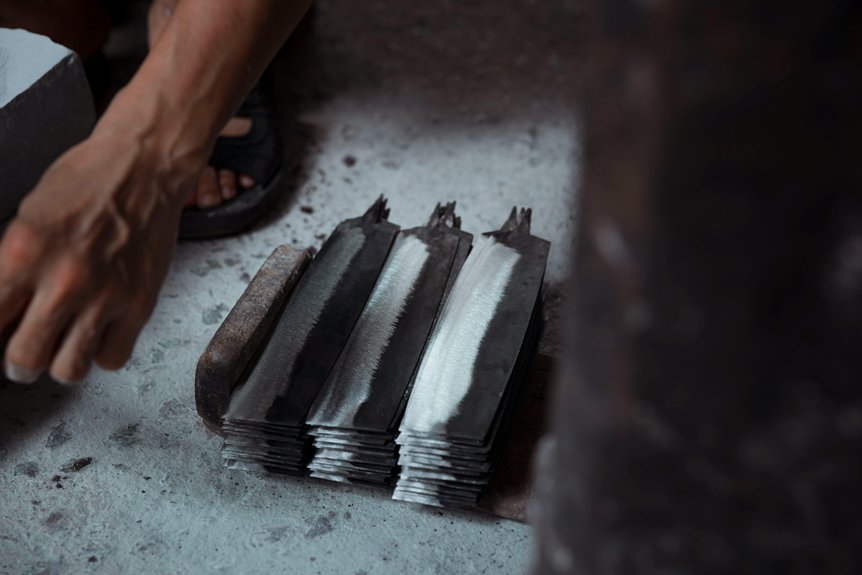
You want a clear winner. I’ve used both on busy prep days. Here’s the real feel.
Carbon steel knives bite hard.
They grab the tomato skin with a soft hiss. The edge feels alive in your hand. Like a race car on a tight track.
You get sharp edges that last.
You touch up the blade fast on a stone.
You feel total control with each slice.
Care takes effort.
Water leaves a metallic smell if it sits.
A quick wipe and oil keep rust away.
Best for you if you chase precision.
Think fine cuts and clean protein work.
Stainless steel knives play it safe.
They glide through onions with a smooth push.
The blade stays bright after a wet sink.
You get strong rust resistance.
You spend less time on upkeep.
Daily cooking feels easy and steady.
The edge holds well for home use.
Sharpening takes more time than carbon.
The feel stays solid and predictable.
Best for you if you want low care.
Think busy kitchens and quick cleanup.
Quick take. Pick your lane.
- Carbon steel, sharper feel, fast sharpening, more care
- Stainless steel, easy care, stain resistance, steady edge
I reach for carbon steel for detail work.
I grab stainless on rushed nights.
Two tools. One goal. Clean cuts every time.
PAUDIN 7″ Nakiri Knife High Carbon Stainless Steel
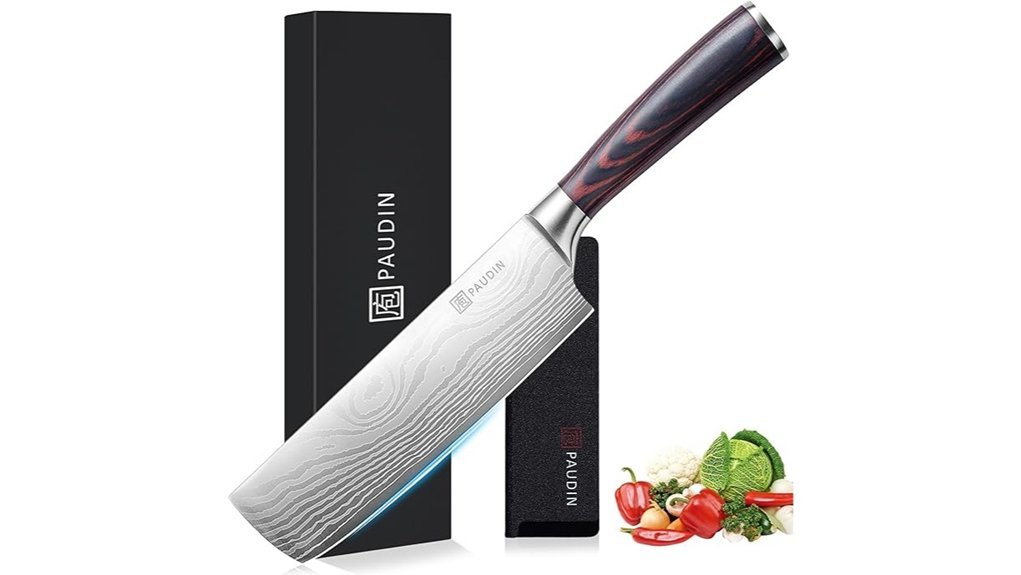
If you want a low maintenance start in the carbon vs stainless debate, I keep reaching for the PAUDIN 7 inch Nakiri. It feels like a steady workhorse in my hand. Think of it as a reliable sedan that starts every morning.
You get a 7 inch blade in 5Cr15Mov high carbon stainless steel with 56 plus hardness. I feel a smooth bite as it hits onions. The edge glides with a soft whisper through herbs. You gain a smart mix of edge life and rust resistance for daily prep.
The flat Nakiri profile shines on vegetables. I push cut carrots and hear a clean tap on the board. Food release stays decent with the waved finish. Cleanup stays quick and easy after dinner.
The pakkawood handle feels warm and secure. My grip stays relaxed during long prep. Balance sits right at the pinch grip which keeps control tight.
Best For: Home cooks who want a low maintenance vegetable knife with steady performance and easy care.
Pros:
- High carbon stainless steel gives a solid mix of edge life and corrosion resistance
- Sharp edge slices and dices with clean control
- Pakkawood handle feels comfortable and reduces hand fatigue
Cons:
- 56 plus hardness brings moderate edge life compared to premium steels
- Best use focuses on vegetables and boneless prep
- Waved pattern adds style and offers light food release
Quick Specs:
- Blade length: 7 inches
- Steel: 5Cr15Mov high carbon stainless
- Hardness: 56 plus HRC
- Handle: Pakkawood
- Finish: Waved pattern with rust resistant surface
This knife keeps things simple. I grab it on busy nights and it delivers every time.
PAUDIN 8-Inch Chef Knife High Carbon Stainless Steel
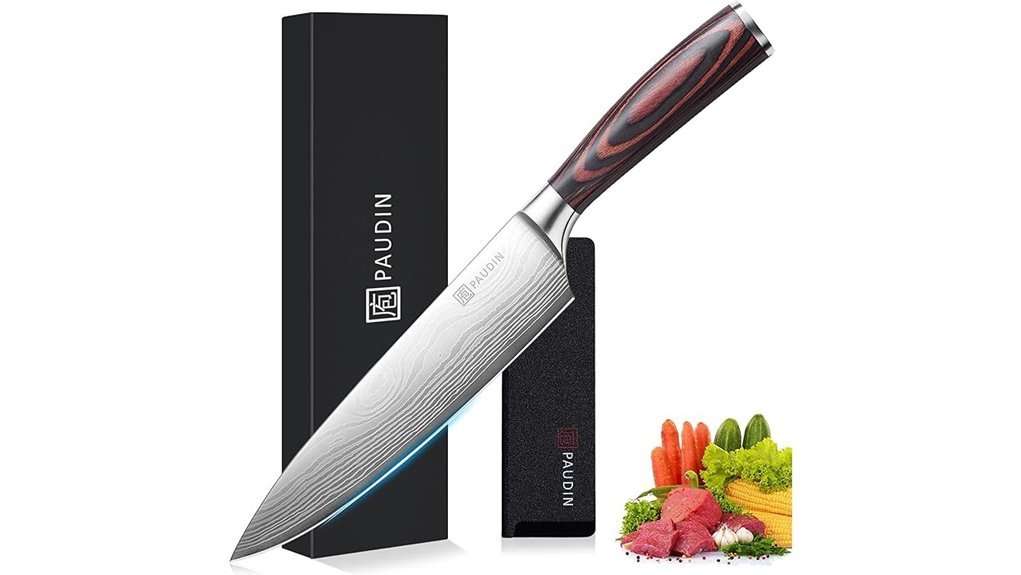
I’ve used this 8 inch chef knife through piles of onions and tough cuts of meat. It feels like a trusty workhorse that just keeps going. The blade glides with a clean whisper on the board. You get smooth slices and steady control every time.
The high carbon stainless steel blade holds a sharp edge well. I felt the bite right away on tomatoes and herbs. The waved pattern catches light and adds a *unique* look. It serves style more than function, though the cutting stays consistent.
You’ll notice the wood handle right away. It feels warm and smooth in your hand. I get a solid grip even during long prep. Balance sits right in the middle, like a steady handshake.
This knife fits daily cooking like a glove. You can chop vegetables, slice meat, and dice herbs without switching tools. It handles busy prep with ease and keeps pace in a home kitchen.
Best For:
Home cooks who want a reliable chef knife for daily prep with comfort and steady performance.
Pros:
- Versatile 8 inch blade covers chopping slicing dicing and mincing
- Sharp edge with strong edge life and smooth cuts
- Ergonomic wood handle gives comfort and control over time
Cons:
- Pattern adds style and gives visual flair
- Hand wash care keeps the blade in top shape
- Stamped build gives a lighter feel in hand
Specs at a glance:
- Blade length, 8 inches
- Steel, high carbon stainless steel
- Blade thickness, 2 mm
- Handle, ergonomic wood
- Warranty, 24 months
Support replies fast and helps within 24 hours. It feels like having a safety net in your back pocket.
Victorinox Fibrox Pro 8-Inch Chef’s Knife
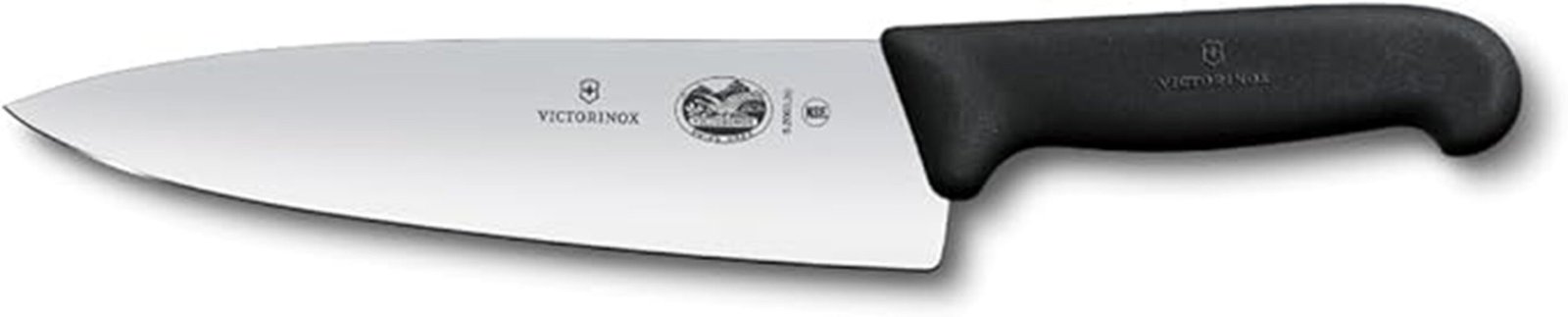
I’ve put the Victorinox Fibrox Pro 8 inch chef’s knife through real prep sessions. It feels like a workhorse from the first slice. Think of it as the pickup truck of your kitchen.
You get a Swiss made *high carbon stainless steel* blade. It feels smooth on onions and firm on carrots. The edge glides with a soft whisper. I saw clean cuts with less drag. You spend less time fixing rough slices.
The *tapered edge* moves fast through herbs and meat. I chopped parsley and it stayed neat and bright. You keep control with each stroke. That builds speed without stress.
Grip matters. The *ergonomic TPE handle* feels slightly grippy like soft rubber. Even with wet hands it stays planted. I felt steady during long prep runs. Your wrist will thank you.
Balance hits the sweet spot. The knife sits right between blade and handle. I worked for thirty minutes and felt fresh. It keeps your rhythm steady like a good song.
Cleanup feels easy. You can use the dishwasher. I still rinse and dry by hand for a longer life. A quick wipe and it’s ready again.
A *lifetime warranty* adds peace of mind. I like tools that stick around. Keep a honing steel nearby and you stay sharp day to day.
Best For: You want a durable all purpose chef’s knife with easy care and solid comfort.
Pros:
- *High carbon stainless steel blade* holds a keen edge and fights rust
- *Non slip TPE handle* feels secure and comfortable in hand
- *Balanced build* keeps fatigue low during long prep
Cons:
- Hand washing keeps the finish looking fresh
- Plain look lacks the shine of forged showpieces
- Regular honing keeps the edge in top shape
MOSFiATA 8″ Professional Chef’s Knife with Accessories
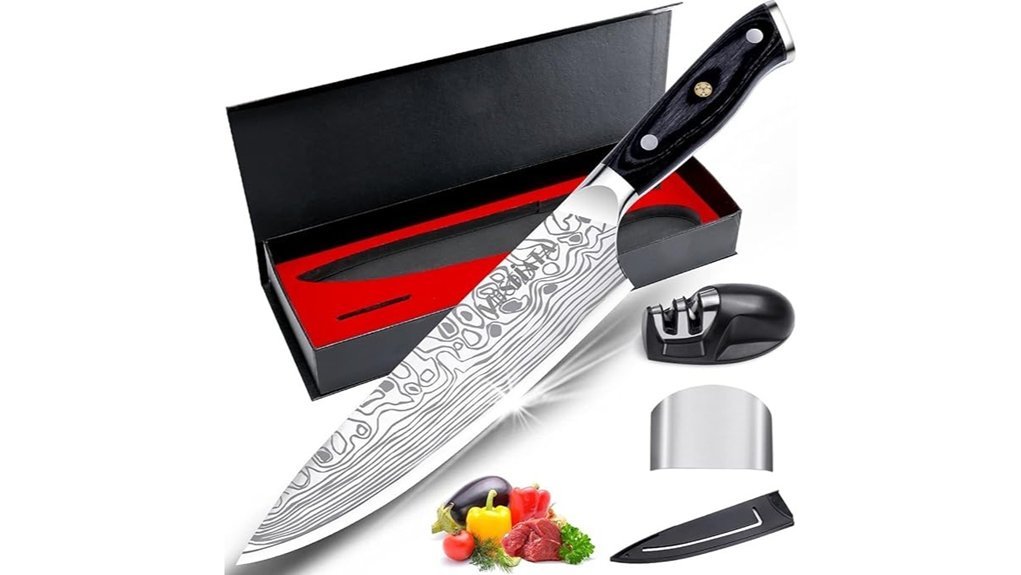
I’ve put this knife through busy prep sessions. It feels like a steady workhorse in your hand. You get an 8 inch blade in German EN1.4116 high carbon stainless steel. It resists rust and cleans fast. The 16° edge bites into onions with a soft whisper. Food releases with help from the laser pattern, it acts like a light glide.
The handle feels solid and grippy. I notice the full tang build right away. It keeps balance right where your pinch grip sits. The Micarta and polypropylene scales feel warm and secure. At 7.84 ounces it lands with control like a well tuned drum beat. Extras come in the box and add quick value.
Best For: You cook at home or run a tight budget kitchen. You want a reliable chef knife with useful add ons.
Pros:
- Sharp 16° edge cuts clean with German EN1.4116 steel
- Balanced full tang handle gives comfort and steady control
- Extra kit included with finger guard, sharpener, blade guard, and gift box
Cons:
- Pattern gives style and food release, it serves as a decorative finish
- Sharpener suits quick touch ups, enthusiasts may prefer premium stones
- Heft feels solid in hand, fans of feather light knives may want a slimmer feel
Specs at a glance:
- Blade length: 8 inches
- Steel: German EN1.4116 high carbon stainless steel
- Edge angle: 16° per side
- Weight: 7.84 ounces
- Handle: Micarta and polypropylene
- Build: Full tang with triple rivets
In daily use it chops herbs with a crisp tap. Garlic crush smells sharp and fresh. I reach for it often because it just works. Like a trusty skillet, it earns its spot.
HOSHANHO 8-Inch High Carbon Steel Chef’s Knife
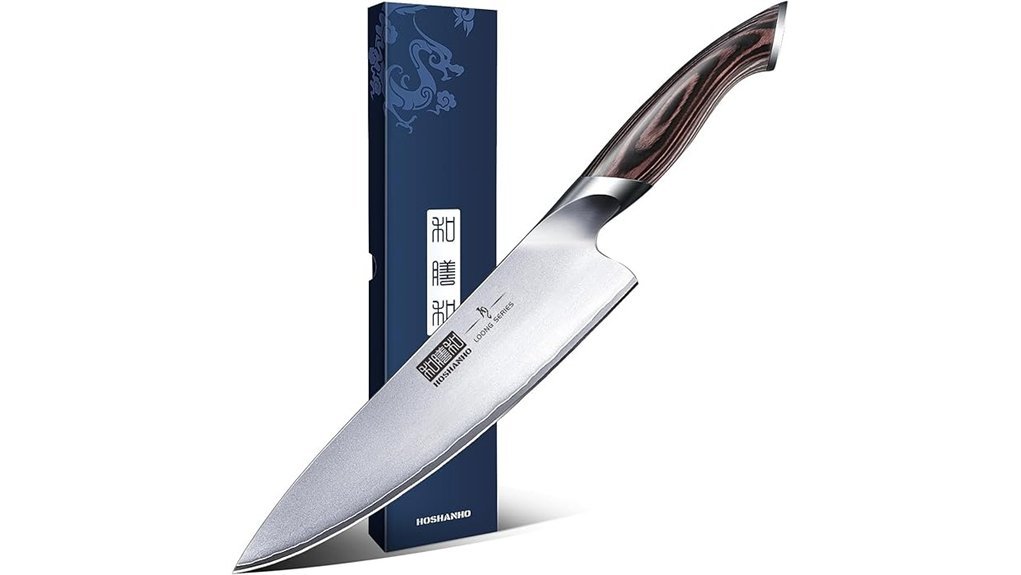
I’ve used this HOSHANHO 8 inch chef’s knife on weeknight prep and long Sunday cooks. It bites into onions with a soft crunch. The *13 degree edge* feels laser sharp. The blade glides like a hot knife through butter.
The steel matters here. You get 10Cr15CoMoV high carbon stainless steel with ice tempering. I felt steady performance across meat and root veg. The *60 HRC hardness* keeps that edge lively after many cuts.
Grip tells the real story. The *Pakkawood handle* feels warm and smooth in hand. My pinch grip stayed locked in place. The sloped bolster adds control like a seatbelt for your fingers.
Weight sits at 350 grams. I feel the heft on long prep. It adds power for dense squash and thick cuts. The matte finish looks clean and hides glare under bright lights.
Cleanup stays simple. The blade resists rust and moisture well. I still rinse and dry by hand for best edge life. It comes in a clean gift box that feels ready to give.
Best For:
Home cooks who want a sharp chef knife for daily slicing and chopping.
Pros:
- *13 degree edge* cuts fast and clean
- *60 HRC hardness* holds sharpness across sessions
- High carbon stainless steel resists stains and wear
- *Pakkawood handle* feels secure and comfortable
Cons:
- 350 gram weight feels heavy for fine detail work
- Dishwasher use can dull the edge over time
- Matte finish can pick up light scratches
8″ High Carbon Stainless Steel Chef Knife
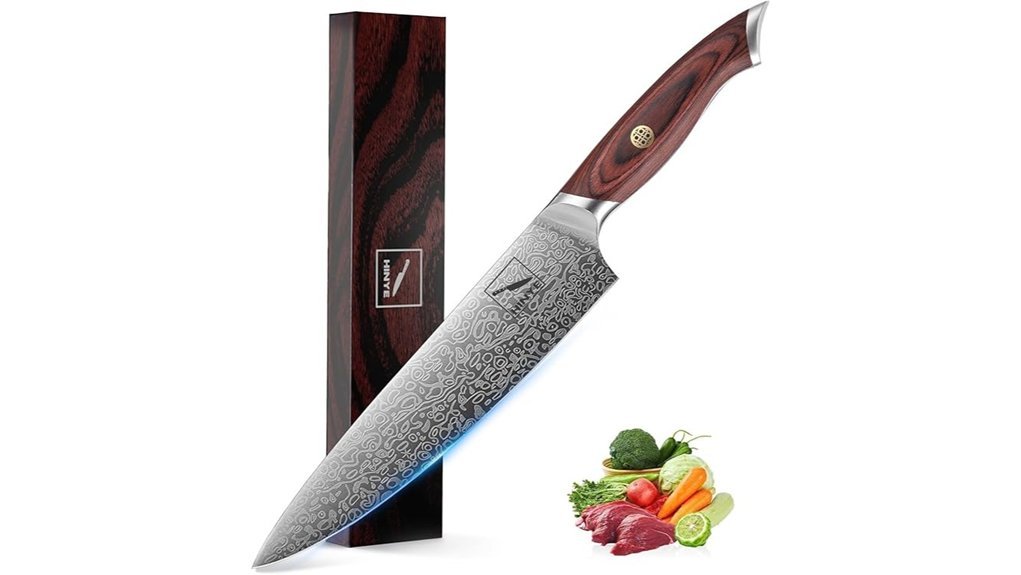
If you want low upkeep with keen sharpness, I’ve used this high carbon stainless chef knife and it delivers. It bites into onions with a soft crunch. It glides through meat like butter. The German 1.4116 steel holds a fine edge at 15°. You feel the control in every slice.
The etched wave pattern helps food release. Slices fall away instead of clinging. Think of it as a quiet assistant on your board. The rosewood handle feels warm and smooth. It fills your palm and eases wrist load during long prep.
Molybdenum adds corrosion resistance. Citrus juice and salt feel harmless here. You can use a dishwasher. Hand washing keeps the sheen richer and the wood happier. The Hinye W01RM arrives in a premium box. It looks gift ready right out of the lid.
Best For: You want a sharp daily chef knife with easy care and solid comfort.
Pros:
- German 1.4116 steel at 15° cuts clean with low effort
- Etched wave pattern helps reduce sticking during slicing
- Rosewood handle feels smooth and supports long sessions
Cons:
- Dishwasher use can soften the finish over time
- Features may feel extra for light kitchen use
- Wood handle benefits from occasional oil care
Quick take: I trust this blade for daily prep. It feels like a steady workhorse in my hand.
DDF iohEF 4-Piece Japanese High Carbon Knife Set
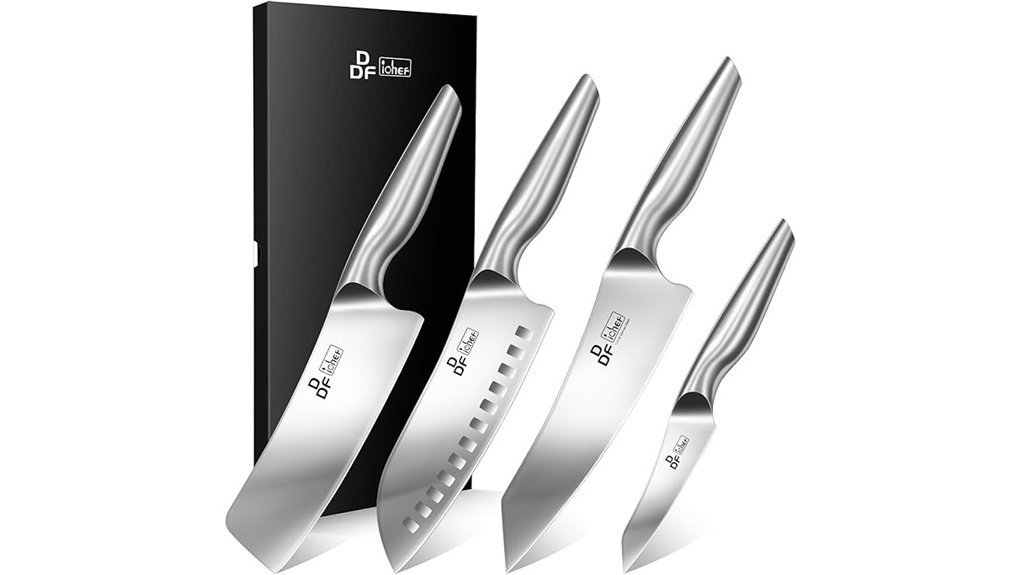
I’ve put this set through daily prep, and it feels ready right out of the box. The blades bite into onions with a soft whisper. You feel the edge grab and glide. It’s like a hot knife through butter.
What you get and how it performs
You get four workhorses that cover most meals. I reach for the chef knife for proteins. The santoku shines on quick chops. The nakiri sails through greens. The fruit knife handles detail work.
Each blade uses high carbon stainless steel with a 15 degree edge on both sides. You get clean slices with less force. The edge feels keen and consistent. Forged build adds strength you can feel in hand.
The stainless steel handles feel smooth and cool. Balance lands right at the pinch grip. Long prep stays comfortable. You hear a crisp tap on the board with each cut.
Cleanup stays easy since it’s dishwasher safe. I still prefer a quick hand wash for edge life. The brand includes a solid guarantee, which adds peace of mind.
Best For: Home cooks who want fast prep and sharp results with simple care.
Pros:
- Sharp 15° double edge for precise cuts and easy control
- Four core knives for daily cooking flow
- Balanced ergonomic handles that feel steady in use
Considerations:
- Smooth steel handles feel slick with wet hands
- High carbon steel rewards regular honing for peak bite
- Core set focuses on essentials rather than specialty shapes
Factors to Consider When Choosing Carbon Steel Knife Vs Stainless Steel Knife
When I pick between carbon steel and stainless steel knives, I focus on how each blade feels in real use. Steel choice shapes your whole cutting rhythm. Think of it like choosing between a sports car and a daily driver.
Start with _edge retention_. Carbon steel bites into food with a crisp sound. It holds a razor edge for long prep sessions. You feel the blade glide through onions like silk. Stainless steel stays sharp too, yet it favors steady performance over peak bite.
Next comes _corrosion resistance_. Stainless steel shrugs off moisture and acid. It suits busy kitchens and quick cleanups. Carbon steel develops a patina over time. That dark layer tells a story and adds character. You will smell a faint metallic note after use.
Sharpening matters in daily cooking. Carbon steel sharpens fast on a stone. You get quick feedback through your hands. Stainless steel takes more effort yet rewards you with a smooth finish.
Maintenance sets the tone for ownership. Carbon steel asks for care after each use. Dry it well and it stays happy. Stainless steel fits a low fuss routine.
Here is how I break it down in practice:
- Carbon steel, sharp feel, fast sharpening, hands on care
- Stainless steel, stain resistance, steady edge, easy upkeep
Choose based on your habits. I reach for carbon steel during focused prep. I grab stainless steel when time feels tight. Each blade earns its place on the board.
Edge Retention
Edge Retention
Edge retention decides how long your knife stays sharp in real prep. I feel it every time the blade bites into a ripe tomato. That clean glide tells the story.
Carbon steel leads the pack. It hits higher hardness, often above 60 HRC. You get longer edge life and crisp cuts. I notice a dry whisper as it moves through onions. Like a marathon runner, it keeps going.
Stainless steel sits lower, often 50 to 58 HRC. You gain toughness and chip resistance. You trade some edge life for durability. I hear a softer scrape on the board during long sessions.
Technique still matters. A steady angle keeps the edge keen. A honing rod brings back that bite fast. Steel sets the base, your hands shape the result.
For busy cooks, retention saves time. You cut cleaner and faster. You sharpen less and cook more. That rhythm feels smooth and controlled.
Quick take
- Carbon steel, higher hardness, longer edge life
- Stainless steel, tougher feel, more frequent touch ups
- Honing helps, sharpening resets the edge
- Best choice depends on your pace and workload
Pick your steel like you pick your shoes. Fit the job and enjoy the ride.
Corrosion Resistance
Corrosion Resistance
Water clings to a blade like a bad habit. Then corrosion calls the shots. I’ve seen carbon steel pick up rust spots after a damp prep session. You feel it too, a slight drag on the surface.
Carbon steel demands care. You dry it fast and store it right. Stainless steel feels easier in hand. Chromium forms a thin shield that blocks moisture. That layer keeps oxidation low and performance steady.
Some steels add molybdenum. You get extra strength in wet kitchens. I’ve used them during long shifts with constant rinsing. The blade stays smooth and clean to the touch.
Want a middle ground. High carbon stainless steel hits that sweet spot. You get edge strength with better rust resistance. It’s a practical blend for daily use.
Care still matters. Even tough blades react to grime and water. I rinse with warm water and wipe till the steel feels dry and cool. Then I store it where air can move.
Treat your knife like a cast iron pan, give it attention and it pays you back. Keep it clean and dry. You extend its life and keep that *fresh steel feel* every time you slice.
Sharpening Ease
Sharpening Ease
I’ve sharpened both types on wet stones, and carbon steel feels like butter on glass. You feel the grit bite, you hear a soft scratch, and the edge forms fast.
Carbon steel advantages
- Higher hardness, often above 60 HRC
- Finer edge with less steel removed
- Clean feedback through the stone
- Quick touch ups with light pressure
Each pass does real work. You set a 15 degree angle and the blade responds right away. Control stays tight. Results look crisp.
Stainless steel feels smoother and a bit slick. The stone sounds quieter and the edge takes longer to show bite. Hardness sits near 56 to 58 HRC, so it asks for more passes. That effort stacks up like pennies in a jar.
What you notice in use
- Carbon steel gives sharp feedback you can feel in your fingers
- Stainless needs more time to reach the same edge
- Angle control feels clearer on carbon steel
- Edge refresh stays quick and repeatable
I like carbon steel for learning. It teaches your hands fast. You read the stone like a road map, and each stroke points the way.
Maintenance Needs
Maintenance Needs
I’ve used both steels daily. You feel the difference fast.
Carbon steel asks for care.
You wipe it dry right away.
You add a thin oil film to block rust.
The blade smells faintly metallic after a rinse.
You’ll sharpen often.
The edge comes back fast on a stone.
A dark patina grows with use.
It feels like a well worn cast iron pan, earned over time.
*Think of it as a pet that likes attention.*
Stainless steel keeps life simple.
You rinse and move on.
Chromium fights rust and stains.
Water beads and slides off the blade.
The edge lasts longer between sessions.
A few passes on a hone keep it keen.
Many models handle a dishwasher, though I still hand wash.
*It’s the set it and forget it option.*
What you spend in practice
- Carbon steel
- More wipe downs
- More frequent sharpening
- Light oiling for storage
- Stainless steel
- Quick cleanups
- Occasional honing
- Easy day to day care
Bottom line.
You trade time for feel.
Carbon rewards hands on care.
Stainless saves minutes every day.
Cutting Performance
Cutting Performance
I’ve tested both on the board, you feel the edge right away. The edge does the work. Thin steel bites fast. You hear a clean whisper through onions. *That’s the sweet spot.*
Carbon steel takes a finer angle. You get a sharper edge with less force. Hardness sits around 58 to 65 HRC. The edge stays keen longer. I spend less time at the stone. It glides like a hot knife through butter.
Stainless steel leans on toughness. Hardness sits around 52 to 60 HRC. The edge rolls sooner in daily prep. You’ll reach for a rod or stone more often. Some alloys like high chromium need specific stones for a crisp edge. It still cuts well and feels steady in busy shifts.
You also feel surface drag. Carbon feels slick on proteins. It gives a soft feedback on herbs. Stainless feels a bit stickier on wet cuts. Corrosion resistance stays strong. Care keeps the feel smooth.
Quick take
- Carbon steel, finer edge, higher hardness, longer edge life
- Stainless steel, tougher feel, easier care, steady performance
If you want *effortless slicing* and tight control, pick carbon. If you want simple care with solid results, pick stainless. Either way, a sharp edge turns prep into a rhythm.
Price And Value
Price vs Value
Price starts it. *Value* seals it. I’ve used both on busy prep lines and quiet home kitchens.
Carbon steel feels alive on the board. You hear a crisp bite as it cuts. You pay less up front. You get razor sharp edges and long edge life. You also take on care. Dry it fast. Oil it now and then. Keep rust away. Think of it like a sports car, fast and fun with regular tune ups.
Stainless steel feels smooth and steady. The blade glides with a softer sound. You pay more at first. You gain strong rust resistance and easy care. Cook often and you’ll love the low effort. That higher price can turn into better long term value.
I’ve seen pricey carbon blades too. Hand forged pieces for precise tasks. They cost more for a reason. You get pro level performance.
Pick with your habits in mind. Your budget matters. Your patience for upkeep matters too. Like choosing shoes for a long walk, the right fit saves you over time.
Quick take:
- Carbon steel, lower price, top sharpness, needs care
- Stainless steel, higher price, easy upkeep, great durability
- Premium carbon, high price, specialty performance for pros
Conclusion
Carbon Steel vs Stainless Steel Knives, Quick Verdict****
I’ve used both on busy prep lines. I feel the bite and hear the clean slice. You want speed and edge life. You want ease and stain resistance. Pick your lane.
Carbon steel, pure cutting feel****
You get a screaming edge that glides through onions. The blade sings on the board. It forms a patina that smells faintly metallic. Think of it as a race car, fast and demanding.
- Edge sharpness, *very high*
- Edge retention, *high with care*
- Reactivity, *forms patina*
- Maintenance, *wipe and dry fast*
- Best for, *precision slicing and fine prep*
Stainless steel, easy daily driver****
You get steady performance that shrugs off acid. The blade feels smooth and quiet. It stays bright after tomatoes and citrus. It works like a pickup, reliable and ready.
- Edge sharpness, *high*
- Edge retention, *medium to high*
- Corrosion resistance, *excellent*
- Maintenance, *simple wash and dry*
- Best for, *busy kitchens and mixed tasks*
How to choose fast
I reach for carbon when I chase the cleanest cut. I grab stainless when I want low fuss. Match the knife to your habits and your prep style. Your board becomes your stage, and the blade sets the rhythm.