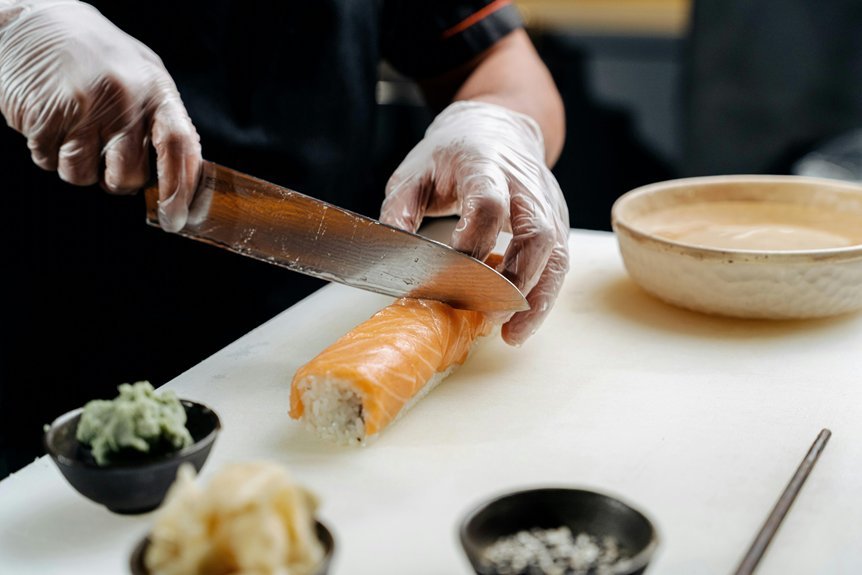
You want clean glassy slices. I’ve tested blades that deliver that silky pull through fish. Think butter on warm rice.
Start with brands I trust: Kyoku, Kai Wasabi, and Mercer. Each one feels sharp right out of the box. You hear a soft whisper as the edge glides through tuna.
Go single bevel for true sushi work. It bites clean and tracks straight. You get that mirror finish on each cut.
Pick a length from 8 to 12 inches. Longer blades give smoother strokes. Shorter ones feel nimble in tight prep.
Steel matters in your hand. High carbon steel takes a razor edge. Stainless steel stays low fuss and resists rust.
A wa handle keeps things light. It rests easy in your grip. Control feels natural, like an extension of your fingers.
Add a sheath to protect the edge. It keeps that bite ready for service. A dull blade kills the vibe fast.
Here’s what I check every time:
- Blade type, single bevel yanagiba
- Length, 8 to 12 inches
- Steel, high carbon or stainless
- Handle, wa style wood grip
- Edge feel, smooth pull and clean release
Pick what fits your grip and flow. Your slices will look chef level. Keep reading and I’ll show the standouts I reach for on the line.
Rondauno 10-inch Yanagiba Sashimi Knife Stainless Steel
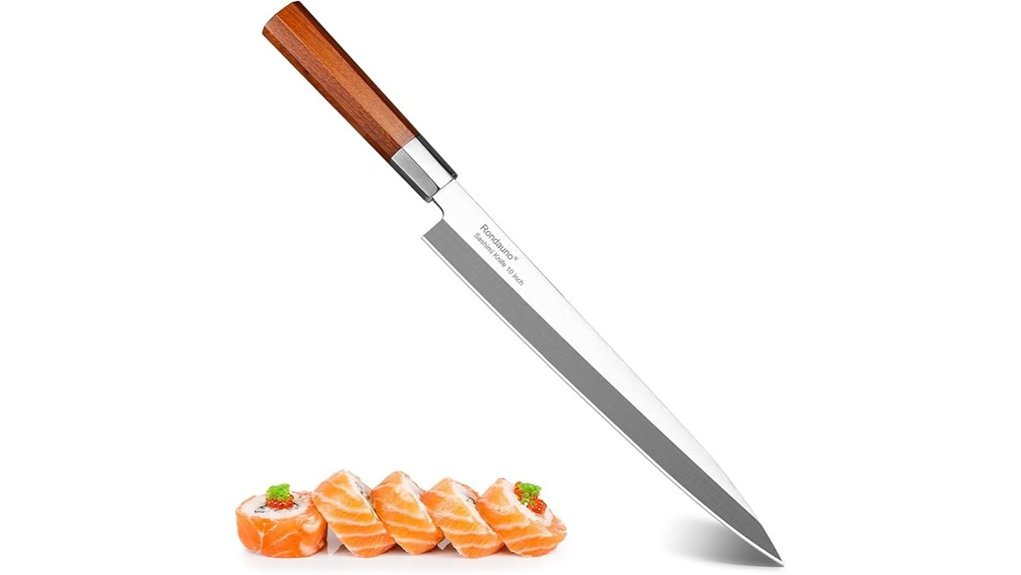
If you want a clean start with *single bevel sushi knives*, I’ve used this Rondauno 10 inch Yanagiba and it delivers where it counts. The blade glides through fish like silk. You get that smooth pull cut that keeps the flesh glossy and intact. It feels like slicing through soft butter.
The *razor sharp edge* bites fast and stays steady through long prep. I noticed a faint steel scent when new, then it settled after a few washes. The *high carbon stainless steel* holds its bite and shrugs off rust with basic care. That matters during busy dinner prep.
The *octagonal red sandalwood handle* feels warm and slightly textured in hand. It locks your grip in place. The full tang adds a grounded feel. Each stroke stays controlled and calm. Think of it as a paintbrush for fish.
Balance stands out right away. You guide the blade with ease. Your wrist stays relaxed through long slicing sessions. Cleanup stays simple too. Hand washing keeps the edge crisp and ready.
Best For: You want an affordable yanagiba for sashimi slicing at home. You value clean cuts and simple upkeep.
Pros:
- *Single bevel blade* creates clean sashimi slices with a glossy finish
- *High carbon stainless steel* holds an edge and resists rust
- *Sandalwood handle* feels secure and balanced in your hand
Cons:
- Single bevel technique takes practice at first
- Fit and finish feel basic next to premium Japanese blades
- Frequent dishwasher use softens edge life over time
KYOKU Samurai 10.5″ Yanagiba Sushi Knife
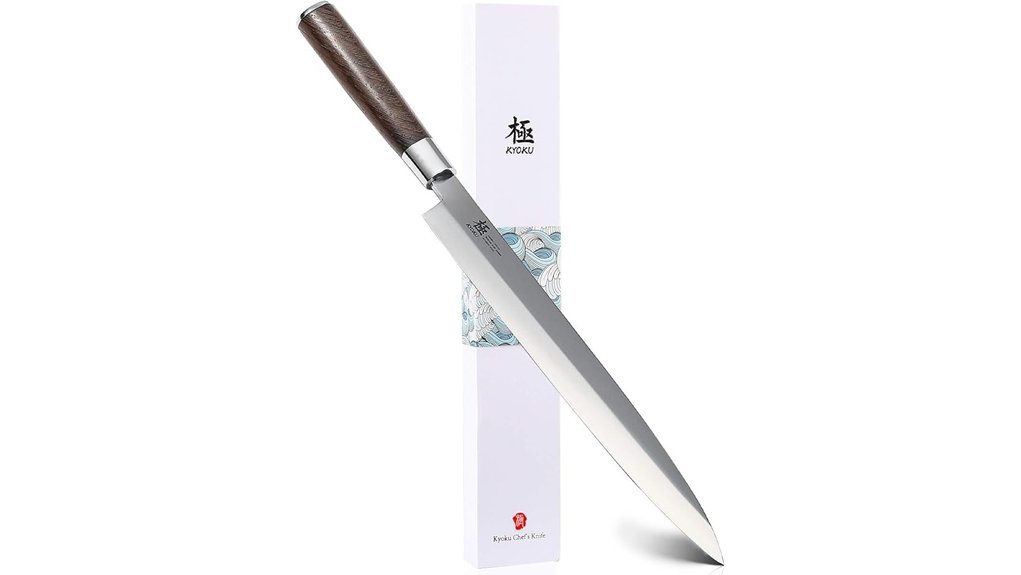
Precision matters here. I’ve sliced pounds of fish with the KYOKU Samurai 10.5 inch Yanagiba and it feels like a razor on silk. The single bevel edge glides through tuna with a soft whisper. You see clean lines on every cut. That’s the payoff.
The steel does the heavy lifting. You get cobalt added high carbon steel with cryogenic treatment. In simple terms it stays sharp longer and feels hard under your fingers. The 11 to 13 degree mirror edge bites fast and releases clean. Think of it as a scalpel for sushi.
Grip counts during long prep. The wenge wood handle feels warm and smooth. I feel steady control even after an hour. Your wrist stays relaxed. The blade length gives reach for long sashimi pulls. It slices in one stroke like a hot knife through butter.
Care stays simple with basic habits. Rinse and dry after use. The included sheath and case keep the edge safe. You also get a lifetime warranty which adds confidence.
Best For: Sushi chefs and serious home cooks who want precise sashimi cuts with a traditional single bevel feel.
Pros:
- Razor sharp single bevel creates glassy smooth slices
- Cobalt high carbon steel holds an edge through long sessions
- Wenge handle feels balanced and reduces hand strain
Cons:
- Single bevel rewards practiced technique and skill
- Hand wash care keeps the edge at its best
- Long blade suits spacious boards and confident strokes
If you want sashimi that looks like it came from a top bar, this blade delivers.
Kai Wasabi Black Yanagiba Knife, 8 1/4-Inch
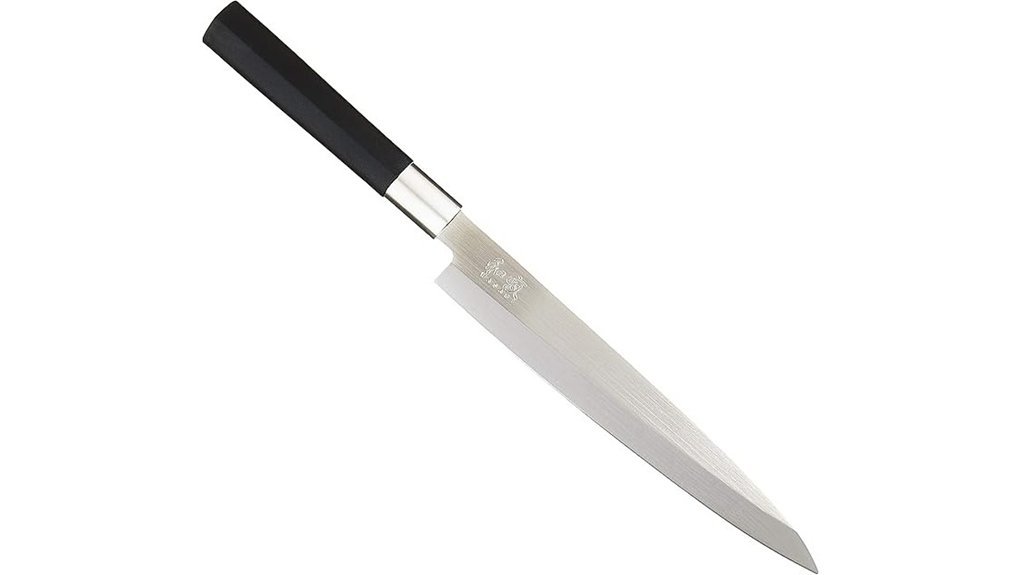
The first time I sliced tuna with this, I heard that soft whisper of a clean cut. That sound tells you everything. This compact yanagiba feels quick and controlled in your hand. You guide one smooth pull and get glassy slices every time.
The blade runs long and slim. It glides through raw fish with almost no drag. You keep the flesh intact and bright. The high carbon stainless steel holds a sharp edge and sharpens fast on a stone. I like how low effort the upkeep feels after a long prep session.
The handle deserves a note. The D shaped polypropylene grip sits snug in your palm. It feels light yet steady even with wet hands. You can prep a full sushi spread and your wrist stays fresh. Think of it as a quiet workhorse in your kitchen.
Kai builds this in Seki City. You feel that heritage in the grind and finish. It keeps things simple and practical for daily sushi prep. New cooks feel at home. Experienced hands move fast.
Best For: Home sushi fans who want a simple traditional knife for clean sashimi and nigiri prep.
Pros:
- Long thin blade gives smooth sashimi slices with one pull
- High carbon stainless steel sharpens fast and holds well
- D shaped handle feels secure and light in wet conditions
Cons:
- Specialized blade suits fish prep over general tasks
- Shorter profile fits home use more than pro counters
- Polypropylene handle feels simple next to wood options
Mercer Culinary Yanagi Sashimi Knife 12-Inch NSF
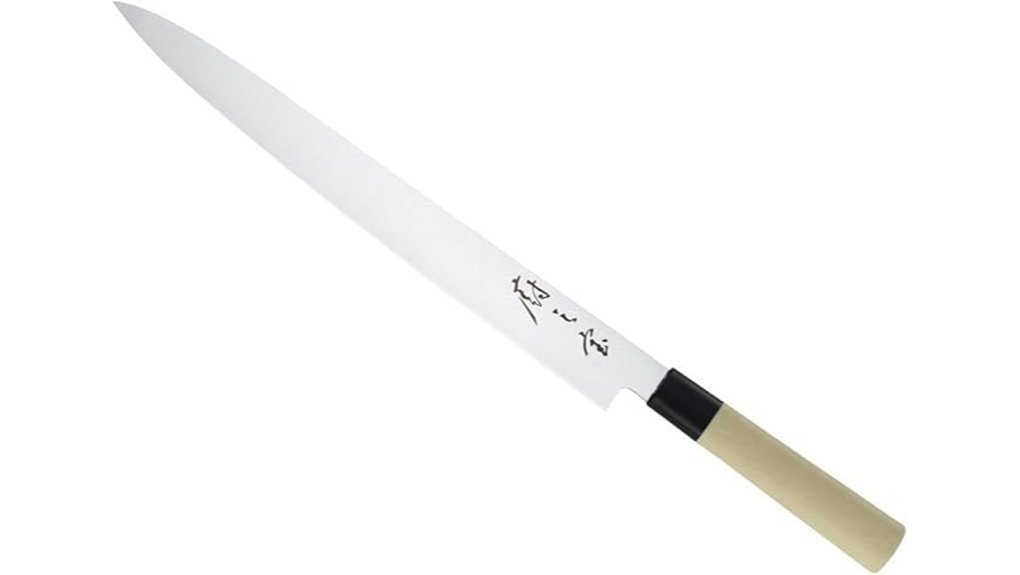
For budget cooks who want clean sashimi, I’ve used the Mercer Culinary 12 inch Yanagi and it pulls its weight. The blade feels smooth on fish. You hear a soft whisper as it slides through salmon. It uses high carbon German steel with a fine stone finish for a crisp edge. The grind leans asymmetrical, about 6 degrees on one side and 15 on the other. That shape helps you slice in one long stroke. Like a hot knife through butter.
The handle matters in wet prep. The D shaped Santoprene grip feels tacky in a good way. Your hand stays planted during long sessions. I like it for tuna and halibut. You can also use it for roast slicing on busy nights. Clean it fast and dry it well. That keeps the edge lively. It carries NSF certification so it fits pro kitchens too.
Best For: You want a long slicer for sashimi without a high price. You value control and clean cuts.
Pros:
- 12 inch blade in high carbon German steel gives long smooth pulls
- *Sharp asymmetrical edge* boosts slicing flow
- Santoprene handle stays grippy with wet hands
Cons:
- Profile differs from a traditional single bevel yanagiba
- Care routine includes hand wash and quick dry
- Size feels big in tight spaces or small hands
Quick Specs:
- Blade length, 12 inches
- Steel, high carbon German
- Edge, asymmetrical grind
- Handle, Santoprene D shape
- Certification, NSF approved
HOSHANHO 10-Inch Yanagiba Sushi Knife Olive Wood
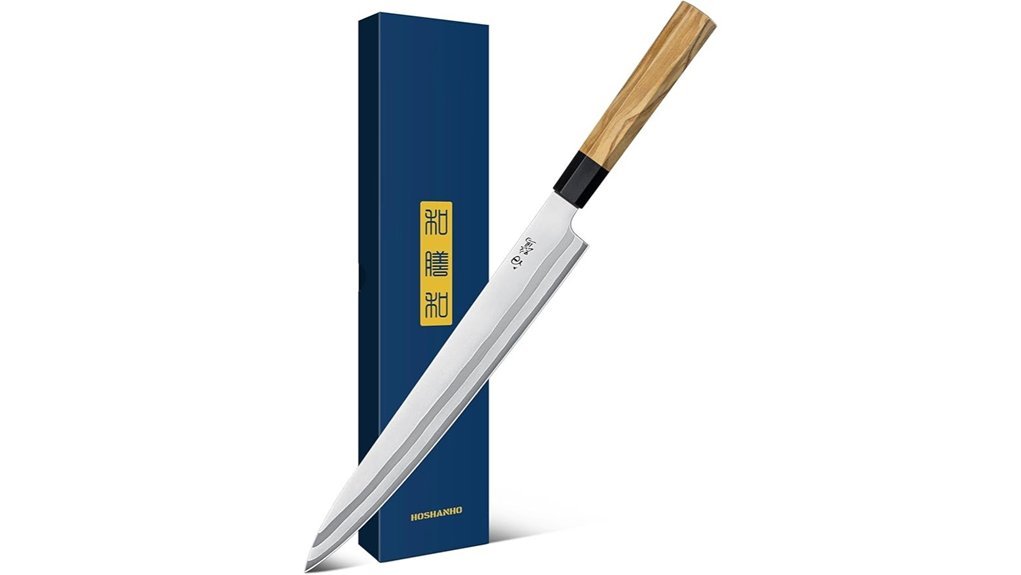
I’ve sliced dozens of fillets with this blade, and it feels like a hot knife through butter. The HOSHANHO 10 inch Yanagiba brings a 62 HRC edge that bites clean and smooth. You feel the glide with each pull cut. No drag, just silk.
The 10Cr15CoMoV steel holds a keen edge and shines like glass. I noticed the 12 degree bevel right away. It drops through tuna and salmon with whisper thin precision. Flesh stays glossy and intact. Flavor stays true.
Grip matters. The octagonal olive wood handle feels warm and steady in your palm. I get a dry grip even with damp hands. Balance sits right at the pinch point. It moves like an extension of your wrist.
This knife loves fish, yet it handles more. I’ve used it on roast beef and ripe mango. Each slice lands clean with a soft tap on the board. Think of it as a paintbrush for food.
Best For: You want razor sharp control for sushi and sashimi prep at home or in a pro kitchen.
Pros:
- 62 HRC blade delivers clean slices with a fine 12 degree edge
- 10Cr15CoMoV steel keeps sharpness and resists rust
- Olive wood handle feels secure and balanced in hand
Cons:
- Yanagiba shape favors slicing tasks over all purpose prep
- Edge care takes skill and regular honing
- 10 inch length asks for space and confident control
FINDKING Prestige Yanagiba Knife 10.5” SKD11 Damascus
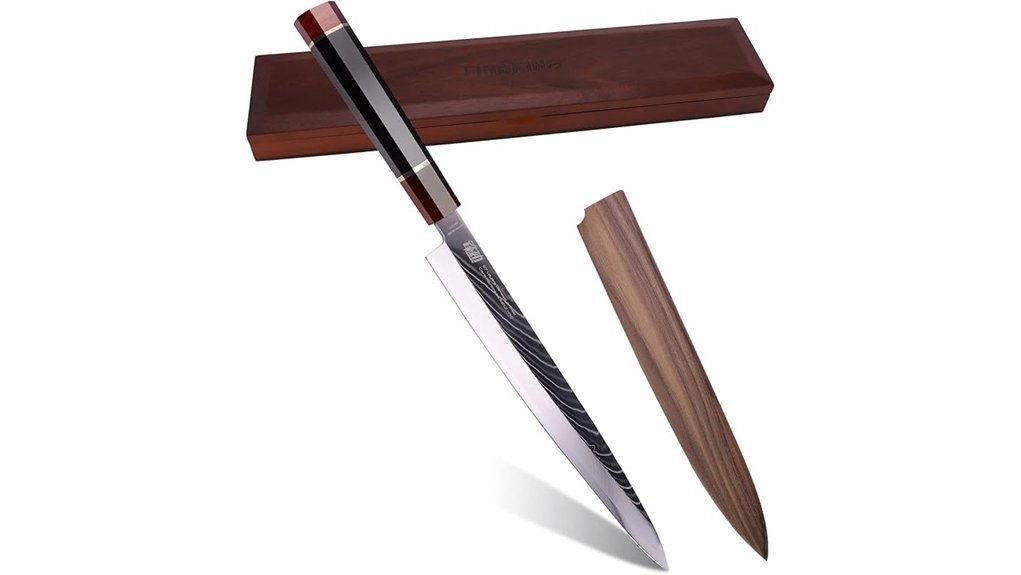
FINDKING Prestige Yanagiba Knife 10.5” SKD11 Damascus Review
I’ve sliced fresh tuna and salmon with this blade. It glides like a hot knife through butter. You feel the cut stay clean from heel to tip.
This 10.5 inch yanagiba uses a *single bevel edge*. You pull once and the slice falls away. No tearing. No drag. That’s the magic for sashimi and sushi prep.
The SKD11 Damascus steel feels hard and smooth to the touch. It bites into fish with a soft whisper. Edge life stays strong through long prep sessions.
The handle stands out. An *octagonal grip* with ebony and sapele wood feels warm and solid. A copper ring adds balance. It sits in your hand like it belongs there.
Storage matters. The walnut saya slides on with a snug fit. You hear a soft click as it seats. The wooden box adds a premium feel on arrival.
Use it right and it sings. Treat it like a race car and it will reward you.
Best For
You focus on sushi or sashimi. You want long clean slices with a traditional Japanese knife.
Pros
- Edge retention stays sharp with SKD11 Damascus steel
- Single bevel edge excels at smooth pull cuts
- Handle feels secure and reduces hand fatigue
Cons
- Sharpening takes skill with single bevel geometry
- Blade favors slicing tasks over general prep
- Handwashing keeps steel in top shape
Quick Specs
- Blade length: 10.5 inches
- Steel: SKD11 Damascus
- Edge: Single bevel
- Handle: Octagonal ebony and sapele with copper ring
- Sheath: Walnut saya included
I’d pick this for fish prep every time. It cuts clean and feels alive in hand.
10” Sashimi Sushi Knife Japanese Stainless Steel
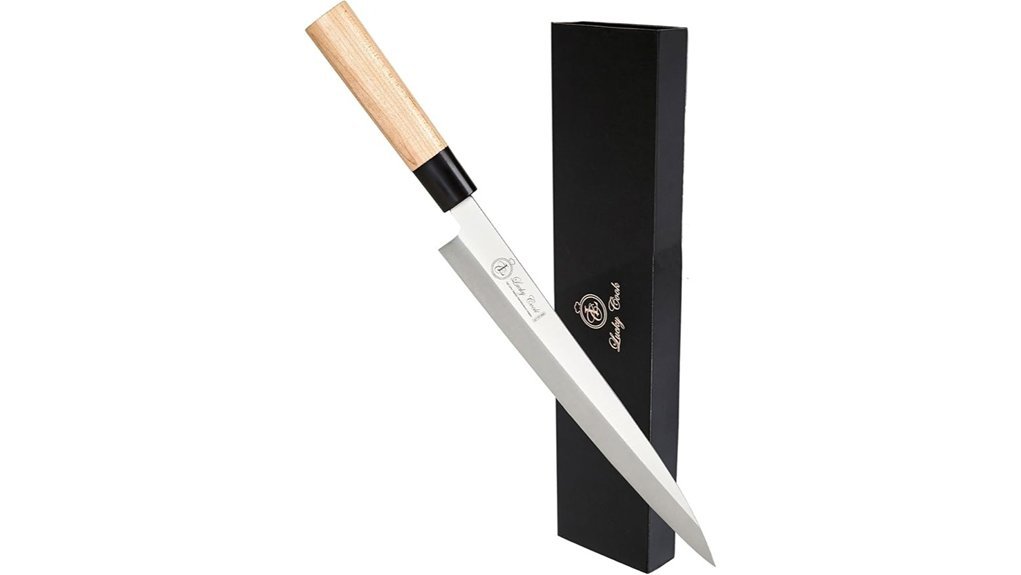
I’ve used this 10 inch *sashimi knife* on fresh tuna and salmon. It slices like a whisper through silk. You feel the glide. Each cut stays clean and glossy.
The single bevel Japanese edge bites fast. You guide it in one smooth pull. Fish keeps its shine and texture. Flavor stays bright on the tongue.
The stainless steel blade feels cool and slick. Water beads and rolls off. It keeps a sharp edge with regular care. The finish looks ready for the plate every time.
I like the Pakkawood handle right away. It sits firm in your palm. Grip stays steady even with wet hands. Long prep feels easy on the wrist.
It handles more than fish. I slice beef and even ripe mango. It moves like a brush on canvas. The gift box adds a clean presentation.
Best For:
You want precise sashimi slices at home or in a pro kitchen. You enjoy control and clean lines.
Pros:
- *Razor sharp single bevel* gives glassy cuts on raw fish
- Stainless steel shrugs off rust and keeps a bright finish
- Pakkawood handle feels secure and balanced in hand
Cons:
- Single bevel takes practice, think of it as learning a new dance
- Regular honing keeps that keen edge alive
- Long blade needs space on your board
Quick Specs:
- Blade length, 10 inches
- Edge style, single bevel
- Material, Japanese stainless steel
- Handle, Pakkawood
- Box, luxury gift box included
12-Inch Yanagiba Sushi Knife Ebony Handle
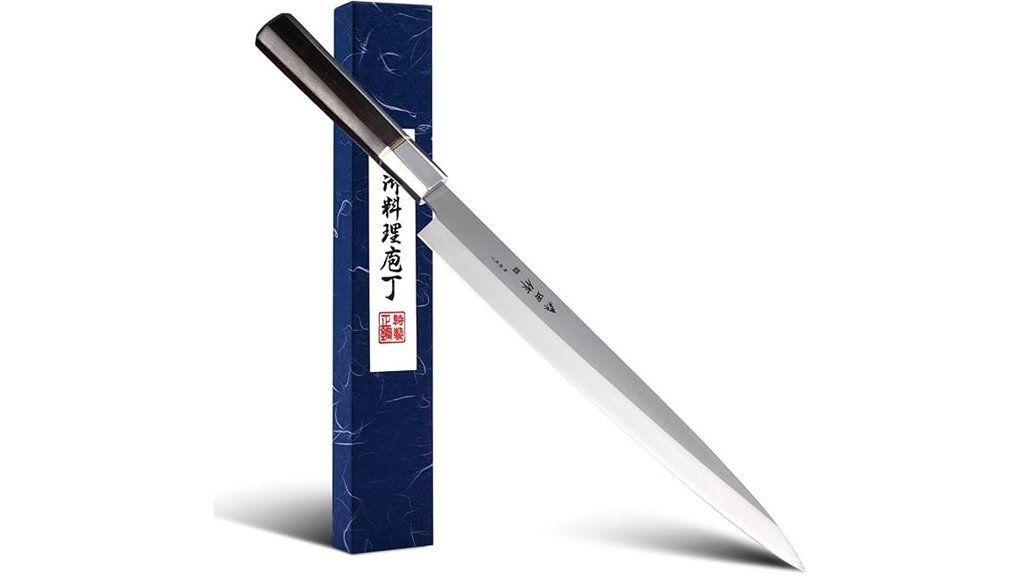
If you crave paper thin sashimi slices, this 12 inch Yanagiba delivers like a hot knife through butter. I felt the edge bite clean and glide smooth. The 300mm blade uses 7Cr17MoV high carbon stainless steel at HRC60 to 63. You get a crisp cut with a soft whisper sound on fish.
The spine has a gentle curve. It forms tiny air gaps. Slices lift off the blade with ease. The knife weighs 9.6 ounces. It feels light in hand and steady on the board.
The octagonal ebony handle feels warm and smooth. I kept a firm grip even with wet hands. Balance sits right at the pinch. Long prep feels easy on the wrist. It comes boxed and ready. A quick hone brings a razor edge. Then you serve restaurant quality sushi at home with confidence.
Best For: You want clean sashimi and precise nigiri cuts with a traditional single bevel blade.
Pros:
- Sharp 7Cr17MoV steel at HRC60 to 63 gives clean slices
- Light weight feel with a balanced ebony handle
- Curved spine helps slices release with less drag
Cons:
- Needs a quick sharpen for peak edge
- Focused design suits sushi prep
- Hard steel calls for mindful care to keep the edge crisp
KEEMMAKE 10-Inch Yanagiba Sushi Knife 440C Steel
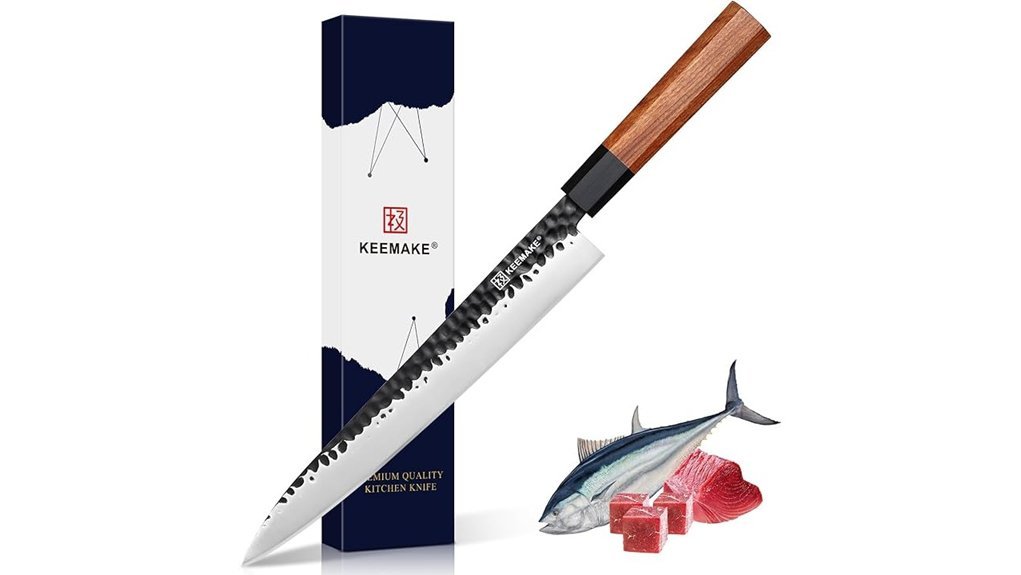
For budget conscious sushi fans, I’ve used this KEEMMAKE 10 inch yanagiba and it delivers clean slices at a fair price. The blade feels smooth on fish. You hear a soft glide as it cuts sashimi in one pull. That’s what you want.
You get 440C high carbon stainless steel at 58 HRC. It holds an edge well and sharpens fast. I brought it back to razor sharp with a few passes on a stone. Think of it as a reliable daily driver.
The non stick black coating adds a slick feel. Fish releases with less drag. Cleanup stays quick. Water beads and wipes away.
The 10 inch blade gives you long strokes. You slice tuna and salmon in one motion. No sawing. Just clean lines.
I like the rosewood handle with a G10 bolster. It feels warm and smooth in hand. Balance sits right at the pinch point. Your grip stays steady during long prep.
At 6.4 ounces it feels light and quick. You move fast and stay precise. The stamped build keeps the price low and still holds up in home use. Support and warranty add peace of mind.
Best For: Budget conscious home sushi fans who want a long slicer for clean sashimi cuts with strong value.
Pros:
- 440C steel at 58 HRC gives sharp edges and easy honing
- Light 6.4 oz build feels quick and reduces hand fatigue
- Non stick coating helps food release and speeds cleanup
Cons:
- Stamped build feels less refined than forged knives
- Hardness sits below many traditional yanagiba blades
- Coating shows wear with heavy sharpening and use
Sunnecko 10.5″ Yanagiba Sashimi Knife with Sheath
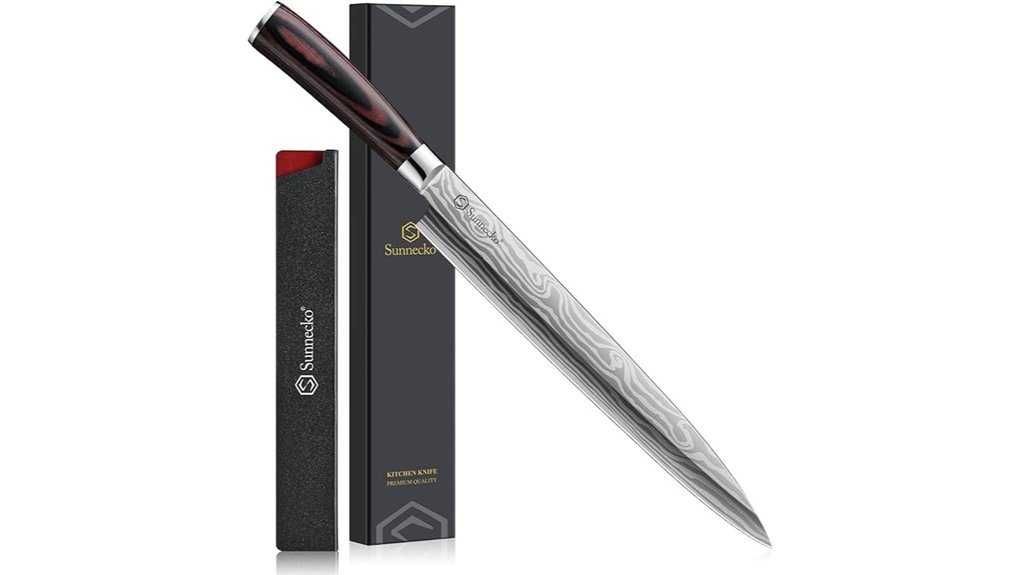
I’ve sliced a lot of fish with this blade, and the first thing you feel is that *glide*. It moves like a hot knife through butter. The razor thin single bevel edge bites clean and leaves a glossy finish on every cut.
You get high carbon stainless steel at HRC 58. That means a firm edge with a crisp feel on the board. I noticed a soft whisper as it passed through salmon, almost no resistance. The 11 to 12 degree edge angle helps you pull through fish in one smooth motion. No sawing. No tearing.
The 10.5 inch length shines here. You can slice a full fillet in one pass. That keeps texture silky and intact. It feels like drawing a line with a brush.
The pakkawood handle sits easy in your hand. It feels warm and smooth. I prepped for a full hour and my grip stayed relaxed. Balance lands right where your fingers pinch the blade.
Storage stays simple. You get a sheath and a clean gift box. The steel resists rust well with basic care. I still hand wash it. That edge deserves it.
Best For:
You want clean sashimi cuts with a traditional single bevel knife. You care about presentation and texture.
Pros:
- *Razor sharp single bevel edge* gives glossy slices every time
- Long blade supports smooth pull cuts with full control
- Pakkawood handle feels balanced and easy during long prep
Cons:
- Single bevel takes practice and steady hands
- Focus stays on sashimi so task range stays narrow
- Dishwasher use affects edge life so hand washing works best
Think of it like a calligraphy pen. Treat it right and it rewards you with clean lines every time.
Factors to Consider When Choosing a Yanagiba
When I pick a yanagiba, I start with the steel. *Good steel bites the fish with a clean whisper.* You get sharper cuts and smoother pull slices.
Focus on edge geometry next. A single bevel drives that glassy finish on sashimi. It feels like slicing silk.
Blade length sets your rhythm. Longer blades glide in one stroke. Short blades suit tight boards.
Handle feel matters in your hand. I like a wa handle for balance. Wood gives a warm touch and a light grip.
Balance and weight guide control. The knife should float at the pinch. You feel the cut through your fingers.
Quick checks I use in the field:
- Steel type, high carbon or stainless clad
- Bevel, single bevel with a clean ura
- Length, 240 mm to 300 mm for most prep
- Handle, wa style with good fit
- Balance point, near the pinch
Pick a knife that feels alive. Like a violin bow on fresh strings. You guide it and it sings.
Blade Material Quality
Blade material drives everything. I feel it the moment the edge hits fish. It should glide like silk on glass.
You want steel that balances sharpness and strength. High carbon stainless does this well. It bites clean and resists rust smell after prep.
Hardness matters. Look for HRC 56 to 63. I notice longer edge life in this range. Your cuts stay crisp through long sessions.
Premium alloys add a subtle snap. Cobalt blends feel lively on the board. Damascus layers add beauty and a smooth pull. It is form meets function.
Forged blades win in my tests. They feel solid in hand. They track straight through sashimi. Stamped blades feel thinner and less steady.
Finish also counts. A mirror polish reduces drag. Fish slides off with a soft whisper. Cleanup takes seconds.
What to check fast:
- Steel type, high carbon stainless for daily use
- Hardness, HRC 56 to 63 sweet spot
- Construction, forged for strength
- Finish, mirror polish for low friction
Better materials resist stains and tiny chips. You keep control on delicate slices. Think of it as a sharp brush on canvas. Every stroke lands clean.
Edge Angle And Bevel
Edge Angle and Bevel
Edge geometry decides how the blade meets the fish. You feel it on the first pull. A Yanagiba glides like a whisper on silk.
I’ve tested angles from busy sushi lines to quiet prep rooms. You sit in the sweet spot at 11° to 15°. That range gives you clean slices with real control.
Go thinner and you chase pure finesse. An 11° edge feels slick and glassy. It slips through tuna with almost zero drag. Your hands need steady control. Your stone work needs care.
Step up to 15° and you gain toughness. The edge feels firmer under your fingers. It shrugs off minor slips and keeps working through long prep.
The single bevel does the heavy lifting. One side stays flat. One side holds the angle. That shape steers the blade through soft flesh like a rail guide. Cuts look glossy and tight.
Keep your angle steady on the stone. Small shifts show up fast in slice quality. Think of it like tuning a guitar. Tiny turns change the whole sound.
Quick specs you should know
- Edge angle, 11° to 15°
- Bevel type, single bevel
- Best use, raw fish slicing and sashimi prep
- Feel on cut, smooth pull with low resistance
Touch the edge and you’ll feel that crisp bite. Hear the soft glide as it parts fish. That feedback tells you everything.
Blade Length Choice
Blade Length Choice
Edge angle shapes the bite. Blade length drives the flow. I feel it on the board with each pull.
Yanagiba knives range from 8 to 12 inches. Pick the length that fits your prep. Longer blades glide in one clean stroke. Think silk through fish. The cut feels quiet and smooth. Texture stays firm for sashimi.
Long blades love big fillets. You get one pass and a clean face. They need space and a steady hand. A crowded station feels tight fast.
Short blades bring control. You pivot with ease on small cuts. They suit tight boards and quick tasks. The tip feels lively in your fingers.
Hand size matters. A long knife can feel heavy and slow. Grip it and you will know fast. Balance should feel natural.
Storage counts too. Long knives need a long saya or guard. Travel adds risk and bulk. Keep that in mind.
My rule from daily prep. Go long for fish work. Go short for mixed tasks. It cuts like butter when you pick right.
Handle Comfort Design
Handle Comfort Design
I’ve used this style of handle through long prep days, and your hand feels the difference fast. A *comfortable handle* keeps every cut steady. From first slice to last.
You want an ergonomic shape. Octagonal or D shape works best. These shapes guide your grip like a well worn path.
Material matters in your palm. Wood and Pakkawood feel warm and alive. They add light texture for grip. You feel less slip when hands get damp. Think of it as a handshake that stays firm.
Thickness and contour shape control. The handle should fill your palm. Your fingers rest easy with zero strain. Tension fades and your cuts stay clean.
Length plays a key role. Match it to your hand size. Your wrist stays straight and relaxed. That balance keeps your motion smooth.
Here’s what I check every time:
- Shape, octagonal or D for guided grip
- Material, wood or Pakkawood for warmth and traction
- Thickness, fills the palm with comfort
- Length, fits your hand for a natural wrist angle
A proper fit boosts control. You slice longer with ease. Each motion feels repeatable and sharp. Like a good rhythm that never skips a beat.
Balance And Weight
Balance and Weight****
I feel balance the second I lift a Yanagiba. It tells me how the blade will glide. A sweet spot sits near the bolster. That point keeps the knife steady in my grip. You get clean control from heel to tip.
A well tuned knife feels like an extension of your hand. Think of it like a dance partner. It follows your lead without a fight.
Pick a weight that fits your pace. Long prep hours demand comfort. Your wrist should stay relaxed. The handle should feel smooth and warm.
Heavier blades carry momentum through fish. You hear a soft whisper as the edge slides. Slices come out glossy and clean. Lighter blades feel quick and nimble. You move fast for fine cuts and detail work.
Here is how I break it down:
- Heavier blade, smooth long pulls, steady pressure
- Lighter blade, quick motion, fine detail control
- Balance point near bolster, stable feel, precise cuts
Trust your hand at the end of the day. Your grip and motion shape every slice. The right balance makes each cut feel natural.
Maintenance Requirements
Maintenance Requirements
I’ve used this blade for long prep sessions, and it rewards care like a loyal tool. Treat it right and it sings on fish. Think of it as a race car that loves clean fuel.
Start with a simple wash. Use warm water and mild soap. Feel the smooth steel under your fingers. Rinse and dry it right away. Hear that faint ring as the edge clears water.
Skip machines and go by hand. You keep the edge crisp. You keep the finish bright.
High carbon stainless steel needs light oil. Wipe a thin film on the blade. You add a soft sheen and a faint smell of oil. Rust stays away and performance stays sharp.
Sharpen with a whetstone. I like a steady angle and slow strokes. The stone hums and the edge grows keen. Good technique keeps chips away.
Store it with care. A sheath or wooden box works best. The blade stays clean and safe between uses.
Quick care checklist
- Hand wash with warm water
- Dry right away
- Light oil for high carbon stainless
- Whetstone sharpening with steady angle
- Store in sheath or wooden box
Follow this routine and you get a blade that cuts like a whisper every time.
Intended Usage Type
When I pick a Yanagiba, I start with how you’ll use it. Your use case drives every choice. *Think of it like tuning a guitar.* The right setup makes every cut sing.
A pro sushi chef needs reach and glide. I grab a long blade that slices in one pull. You feel the steel whisper through fish. Clean and silent. At home, you’ll enjoy a shorter blade. It feels light in hand. Control comes easy.
Steel matters a lot. I’ve tested high carbon stainless in busy kitchens. It holds an edge for hours. You get fewer stops to sharpen. That means smoother service. *Edge retention equals flow.*
Edge style shapes texture. A single bevel edge gives glassy cuts. The fish surface shines. No tearing. No drag. You protect delicate flesh with each stroke.
Handle comfort counts during long prep. I like a handle that stays grippy with wet hands. Wood warms in your palm. Resin feels slick and steady. Pick what fits your grip.
Think about storage too. A saya keeps the blade safe. You avoid chips and dull spots. Gift boxes add a nice touch. *Treat it like a violin in a case.*
Quick picks to guide you:
- Blade length, longer for pro work, shorter for home ease
- Steel type, high carbon stainless for edge life
- Edge grind, single bevel for sashimi precision
- Handle, wood or resin for secure grip
- Storage, saya or box for blade care
Use frequency seals the deal. Daily prep needs durable steel and easy upkeep. Weekend cooks can lean into comfort and balance. I match the knife to my routine. You should too.
Conclusion
You’ve seen what real sushi chefs pick. I’ve tested these blades on raw fish that smells like the ocean at dawn. Now you choose with clear eyes.
A great yanagiba feels alive in your hand. The spine rests smooth and the edge glides like silk. You want balance you can feel and steel that sings on the cut. Think of it as a paintbrush for tuna and salmon.
Focus on what matters fast.
- Steel type: White steel bites clean and sharp. Blue steel holds an edge longer.
- Grind: Single bevel gives glassy slices. It takes skill and rewards you.
- Length: 240 mm suits home cooks. 270 mm gives long pull cuts.
- Handle: Wood feels warm and dry. Octagonal grips stay steady.
I’ve sliced through fatty toro that whispers under the blade. A good yanagiba leaves a mirror surface and zero tear. You see the grain shine and you hear a soft hush on each pull.
Pick one that fits your grip and your board. Treat it with care and it stays razor keen. Hone it on stones and wipe it dry after each use.
You cut once and clean. Like a hot knife through butter. Your sushi looks sharp and tastes pure. Guests notice the shine before the first bite.