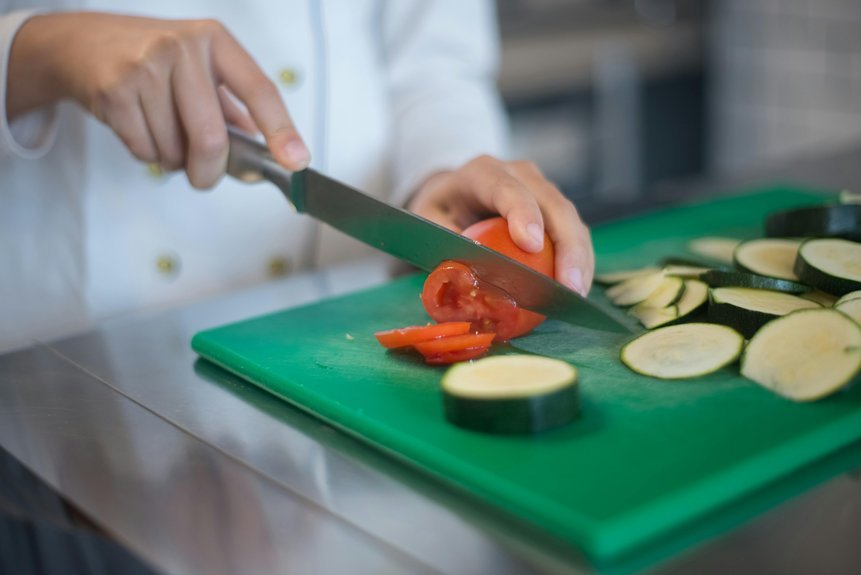
You want clean slices in one smooth pull. I’ve tested these blades on brisket and tuna and ripe tomatoes. A good sujihiki feels slick on the cut and whispers through protein.
Start with the *Yoshihiro VG10 Damascus 240mm*. It feels balanced in hand. The spine stays calm as the edge bites. Edge retention stays strong through long prep.
Try the *Kanngou 27cm* for paper thin cuts. I felt it glide like a hot knife through butter. Slices fall away with a soft tack on the board.
Consider *HOSHANHO 10 inch* or *KYOKU Samurai*. Both carry sharp 12 to 13 degree edges. You get that crisp bite on first contact. I hear a clean tap as the blade meets wood.
On a budget. The *KEEMMAKE* holds its own. Steel feels firm at touch. It keeps a keen edge for daily prep.
Pick a length that fits your station. I prefer 240 to 270mm for long draws. Aim for 56 to 62 HRC steel for edge life. Choose a handle that feels right in a wet grip.
Think of it as a scalpel for meat. Choose well and your slices look *restaurant clean*.
Yoshihiro VG10 Damascus Sujihiki Knife 240mm Rosewood
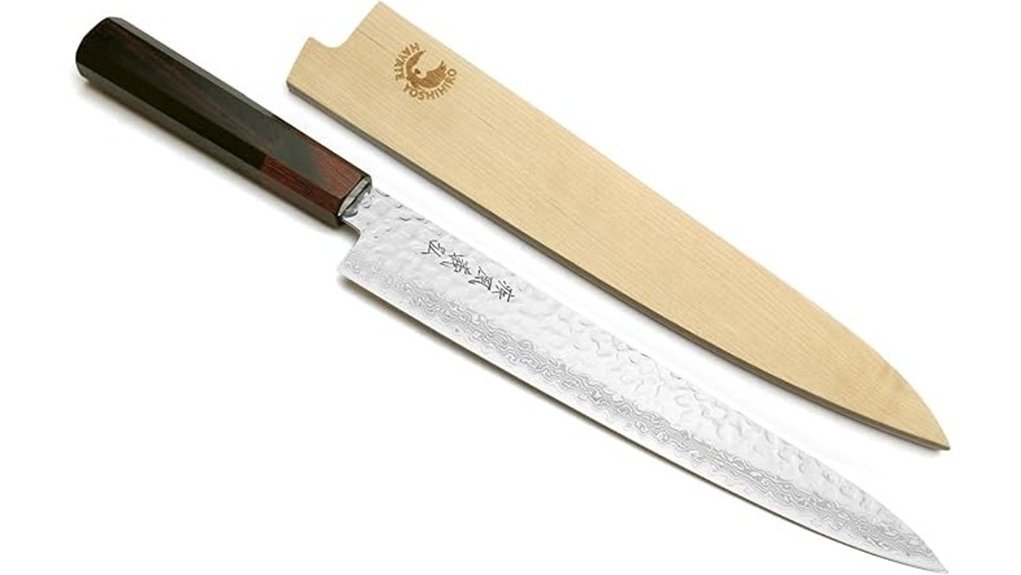
If you want a *precision slicer* that feels alive in your hand, I’ve used this Yoshihiro Sujihiki and it delivers. The 240mm blade glides like silk through roast beef. You hear a soft whisper as it cuts. That sound tells you the edge is keen.
The VG10 stainless steel holds a sharp bite at 60 HRC. I felt it grab tomato skin with ease. The 46 layer Damascus pattern adds strength and a unique ripple look. The hammered finish helps slices fall away clean. Think of it like a nonstick pan for meat.
The octagonal rosewood handle feels warm and smooth. I noticed balance right at the pinch grip. You stay in control through long carving sessions. It fits like a glove.
Care stays simple with good habits. Hand wash and dry right away. Use whetstones to keep that edge singing. Treat it well and it will *ensure* years of clean cuts.
Best For:
Home cooks and chefs who want clean slices and refined feel. This knife shines for roasts fish and fine prep.
Pros:
- Sharp VG10 edge at 60 HRC, cuts feel crisp and precise
- Hammered Damascus face, food releases with ease
- Rosewood handle, balanced grip and smooth touch
Cons:
- Needs regular whetstone care for peak edge
- Suits slicing tasks, shines away from bones
- Premium price reflects materials and finish
Quick Specs:
- Blade length, 240mm
- Steel, VG10 stainless core with 46 layers
- Hardness, 60 HRC
- Handle, octagonal rosewood
- Finish, hammered Damascus
This knife slices like a hot knife through butter. You feel it in every cut.
Kanngou 27cm Japanese Sushi Knife AUS-8 Sujihiki
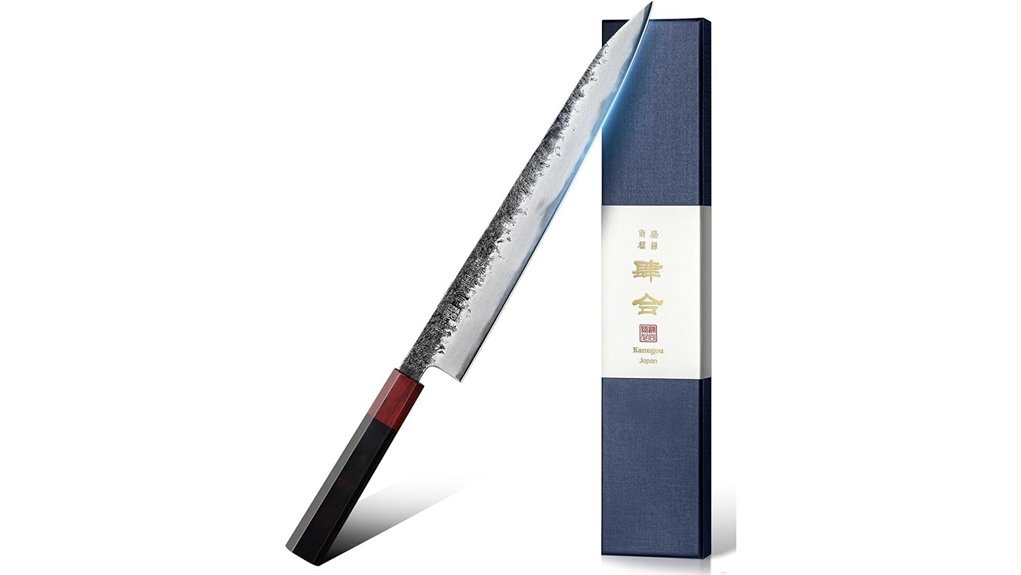
Precision slicing feels like second nature with this Kanngou 27cm Sujihiki. I’ve used it on brisket and tuna. It glides like a hot knife through butter. The razor thin blade slips through flesh with a soft whisper. You get clean single pass cuts every time.
The edge sits close to zero degrees. That means less drag on each stroke. The micro concave grind helps slices fall away. I noticed less sticking on salmon and even watermelon. The hammered finish adds a subtle texture you can feel.
The AUS 8 steel hits a sweet spot. It holds an edge and shrugs off chips. Hardness lands around HRC 59. You feel a firm bite on the board. The blackened Kurouchi Nashiji finish adds character and some rust resistance.
The handle feels warm and smooth in hand. Ebony meets red sandalwood for a solid grip. I felt steady during long prep sessions. Balance sits forward for slicing control. It arrives in a premium gift box that looks sharp on arrival.
Treat it with care and it will serve daily. Think of it as your go to slicer that sings on contact.
Best For: You want long clean slices on meat fish and sushi.
Pros:
- Razor thin edge gives clean single pass cuts
- AUS 8 steel blends sharpness and toughness
- Wood handle feels secure and comfortable
Cons:
- Hand washing keeps the finish fresh
- Long 27cm blade suits users with some knife control
- Regular honing keeps the edge keen
Specs at a glance:
- Blade length, 27 cm
- Steel, AUS 8
- Hardness, HRC 59 plus minus 2
- Finish, Kurouchi Nashiji with hammered texture
- Handle, ebony and red sandalwood
KEEMMAKE 10-Inch Yanagiba Sushi Knife 440C Steel
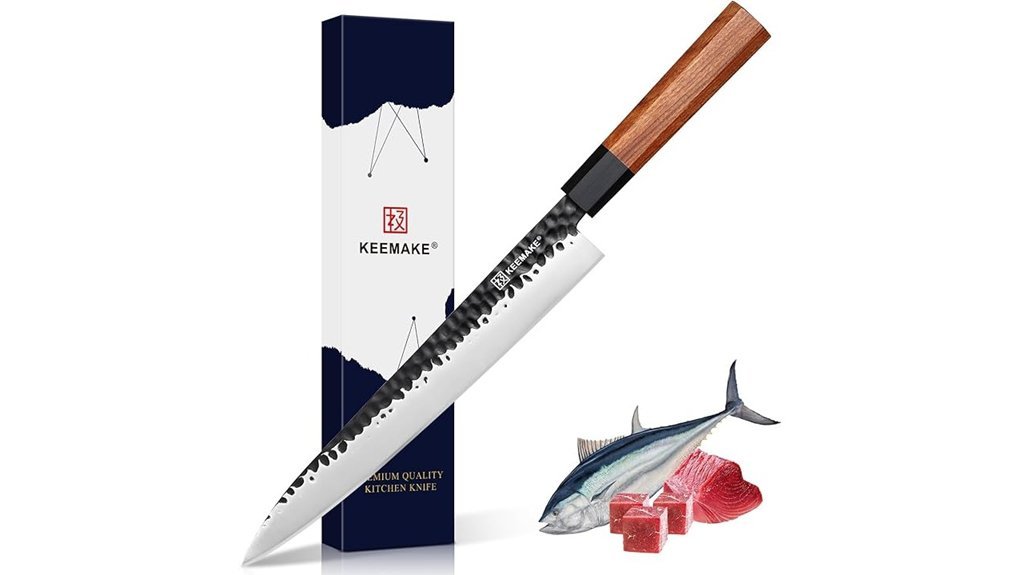
A *featherlight slicer* that glides like silk. I used this KEEMMAKE yanagiba on salmon and it felt like slicing air. The 10 inch blade uses 440C high carbon stainless steel at 58 HRC. You get smooth single draw cuts that leave clean edges and glossy surfaces. The black coating feels slick to the touch and food slides off with ease. Think of it as a paintbrush for fish.
The stamped build keeps weight at 6.4 ounces. Your hand stays fresh through long prep. The rosewood handle feels warm and slightly textured. I felt a steady grip at the pinch point. Balance lands right where you want it. It sharpens fast and holds an edge through several sessions.
Best For: Home sushi fans who want precise slices on fish and meat with low effort.
Pros:
- Razor thin 10 inch blade gives clean sashimi cuts with strong edge life
- Light 6.4 oz build keeps your wrist happy during long prep
- Non stick coating helps food release and speeds cleanup
Cons:
- Stamped build brings a lighter feel than forged knives
- 58 HRC steel favors easy sharpening over ultra hard edges
- Yanagiba shape focuses on slicing tasks in a focused way
Quick Specs:
- Blade steel: 440C high carbon stainless steel
- Hardness: 58 HRC
- Length: 10 inches
- Weight: 6.4 ounces
- Handle: Rosewood with G10 bolster
If you want sushi slices that shine, this knife hits the sweet spot. It feels like a scalpel in your hand and keeps prep smooth.
10 Inch Japanese Sashimi Knife Red Sandalwood Handle
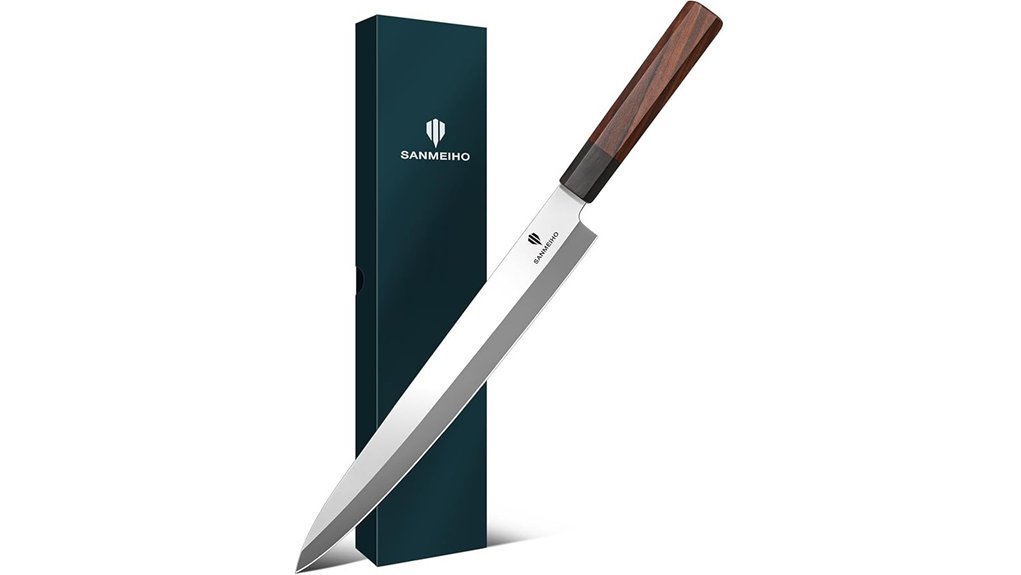
Serious home chefs and sushi fans will feel right at home with this 10 inch *Japanese sashimi knife*. I’ve sliced salmon and tuna with it, and it glides like a hot knife through butter. The blade feels light in hand. Each cut lands clean and quiet.
You get *Japanese stainless steel* at 57 HRC. It keeps a keen edge and shrugs off rust with ease. The 5Cr15Mov steel pairs with an ultra thin grind. A 12 degree edge angle bites into fish with zero drag. You see smooth glossy slices every time.
The *octagonal red sandalwood handle* feels warm and smooth. I like the grip during long prep sessions. It sits balanced in your palm like it belongs there. The full tang build adds control. Think of it as an extension of your hand.
Maintenance feels simple. A few passes on a whetstone bring the edge back. I’ve used it for sushi prep and light meat slicing. It handles fine detail work with grace. Like a paintbrush on canvas.
Best For
Home chefs and sushi lovers who want precision slicing and clean presentation.
Pros
- Ultra thin 12 degree edge creates clean slices with little effort
- 5Cr15Mov stainless steel resists rust and sharpens fast
- Full tang sandalwood handle feels balanced and reduces fatigue
Consider Before Buying
- 57 HRC favors easy sharpening over long edge life
- Thin blade suits careful slicing and fine cuts
- Best for fish and boneless meats for top performance
Quick Specs
- Blade length, 10 inches
- Steel, 5Cr15Mov stainless
- Hardness, 57 HRC
- Edge angle, 12 degrees
- Handle, red sandalwood octagonal
- Construction, full tang
If you want silky sashimi cuts and steady control, this knife hits the sweet spot.
KYOKU Samurai Series Yanagiba Knife Japanese Steel
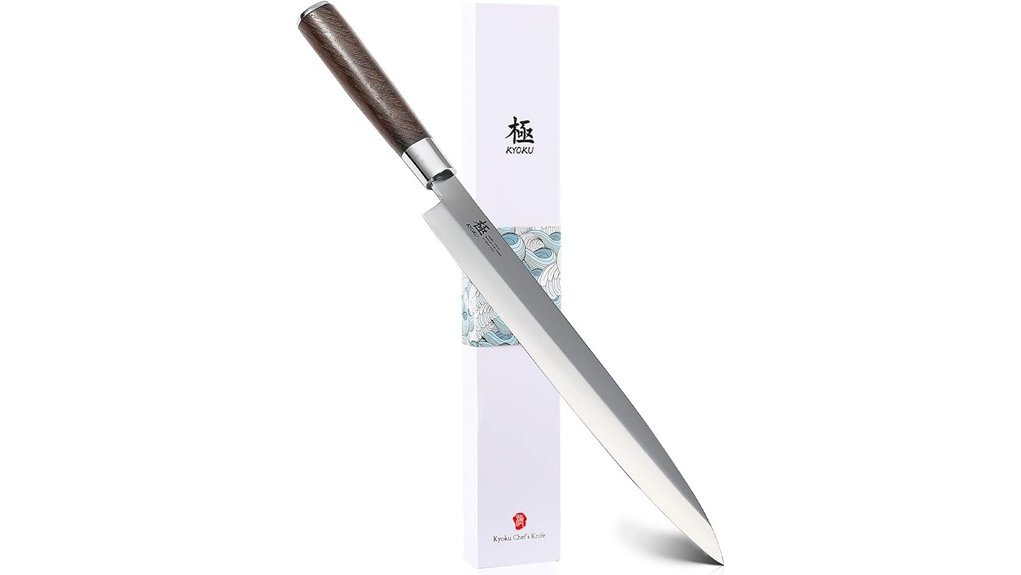
If you want *clean sashimi slices*, this yanagiba feels like a razor in hand. I tested it on raw salmon and it slid through in one pull. No tearing. Just glassy cuts that shine on the plate.
You get a 10.5 inch blade made from cobalt added high carbon steel. It feels cool and smooth at first touch. The edge bites fast and stays keen through long prep. Heat treatment lands at HRC 56 to 58, so you get solid edge life with less fuss.
That *mirror polished 11 to 13° edge* glides like a skate on ice. I noticed less drag and quieter cuts on tuna. The slight flex helps you guide each slice with calm control. Think of it as a paintbrush for fish.
The wenge wood handle feels warm and secure. It balances the blade well and keeps your wrist relaxed. I prepped for an hour and my hand stayed fresh. No hotspots.
You also get a sheath and case for storage. It keeps the edge safe between sessions. Hand washing keeps the steel lively and bright. KYOKU backs it with a lifetime warranty, so you have support if issues pop up.
Best For: Home chefs and sushi fans who want precise sashimi cuts with a classic single bevel feel.
Pros:
- *Ultra sharp 11 to 13° edge* gives clean slices in one pull
- Cobalt added high carbon steel holds an edge through long sessions
- Wenge handle feels balanced and easy on the wrist
Cons:
- Single bevel shape asks for practice and steady hands
- Hand washing keeps care simple and controlled
- Mid range hardness trades a bit of peak edge life for easier upkeep
Masamoto AT Sujihiki 270mm Japanese Slicing Knife
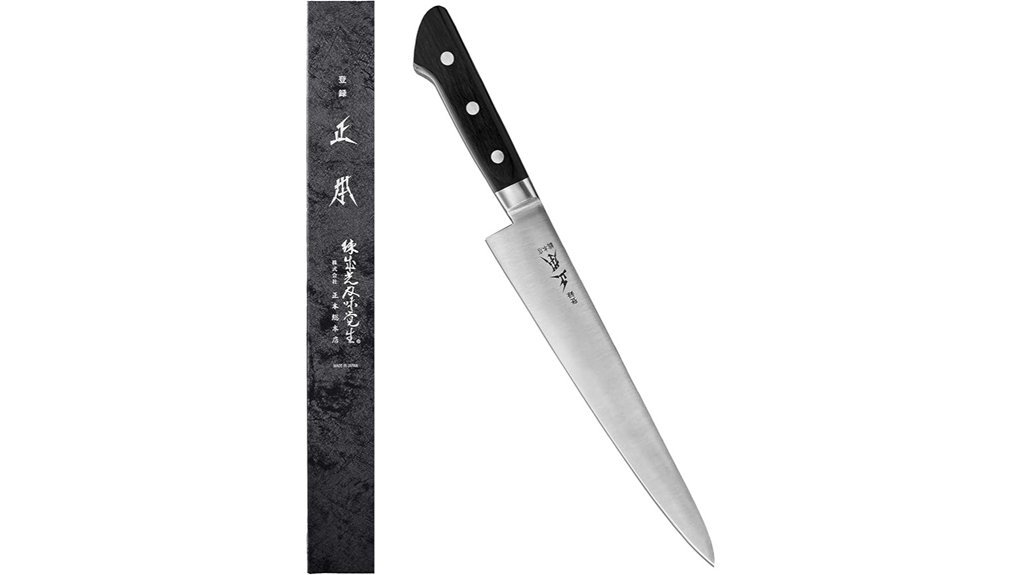
Masamoto AT Sujihiki 270mm Review
I’ve put this 270mm Masamoto AT sujihiki through long prep sessions, and it slices like a hot knife through butter. The long blade glides through brisket with a soft whisper. You get clean cuts in a single pull, which keeps juices where they belong.
The steel feels smooth on the board. It uses *molybdenum vanadium stainless steel* with a 57 HRC hardness. That means sharp edges with easy upkeep. I can bring it back to life fast with a few passes on a stone.
At 6.5 ounces, it feels light in hand. Think of it as a sports car for slicing. The stamped build keeps it nimble, so your wrist stays fresh. I’ve worked through fish fillets and roasts without strain.
The *pakkawood handle* feels warm and secure. It sits well in my grip even with wet hands. Balance stays right where you want it, which helps guide each cut with control.
Masamoto has history going back to 1866. That legacy shows in the fit and finish. It feels like a tool you reach for every day.
Best For
You want a precise slicer for brisket, fish, and fine carving. Home cooks and pros both get real value here.
Pros
- Long 270mm blade gives smooth slices with low drag
- Light weight keeps your hand fresh through long prep
- Steel sharpens fast and holds a keen edge for daily use
Cons
- Edge life sits at a good level for this hardness
- Hand washing keeps the finish looking clean
- Stamped build feels simple compared to forged knives
Quick Specs
- Blade length: 270mm
- Steel: Molybdenum vanadium stainless
- Hardness: 57 HRC
- Weight: 6.5 ounces
- Handle: Pakkawood full tang
If you slice often, this knife earns its spot. It moves through meat like a calm river through stone.
Suisin Inox 240mm Sujihiki Knife Sakai
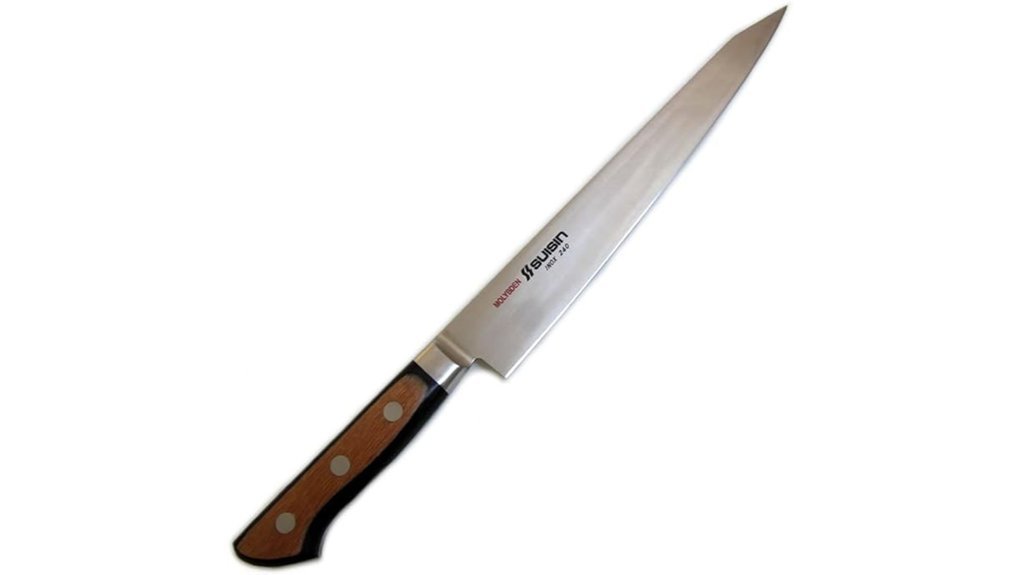
For chefs who want a reliable slicer with easy care, I reach for the Suisin Inox 240mm Sujihiki. I’ve used it on fish and roast beef, it glides like a hot knife through butter. The Sakai forged blade uses INOX AUS 8 stainless steel, you get strong rust resistance and steady sharpness. The edge feels crisp on contact, you can hear a clean whisper as it slices.
The honbazuke hand sharpening gives you a ready edge out of the box. I felt bite on the first cut. No prep needed. The 240mm length gives long draw cuts, each stroke stays smooth and even. The lightweight build keeps your wrist fresh, think of it as a feather that cuts steel.
The Western handle sits snug in your palm. I kept control during long prep, even with wet hands. It suits home cooks and busy lines alike. Sharpening feels quick and simple, the steel responds fast on stones.
Best For: You want a lightweight slicer with easy upkeep and strong rust resistance for daily protein prep.
Pros:
- INOX AUS 8 stainless steel, resists rust and stains
- Light feel, your hand stays relaxed over long sessions
- Honbazuke edge, sharp right out of the box
Cons:
- Edge life feels solid, higher end steels last longer between touch ups
- Western handle suits many grips, wa handle fans may want a different feel
- Maker marks it dishwasher safe, hand washing keeps the edge keen and the finish bright
HOSHANHO 10 Inch Japanese Sashimi Knife Olive Wood
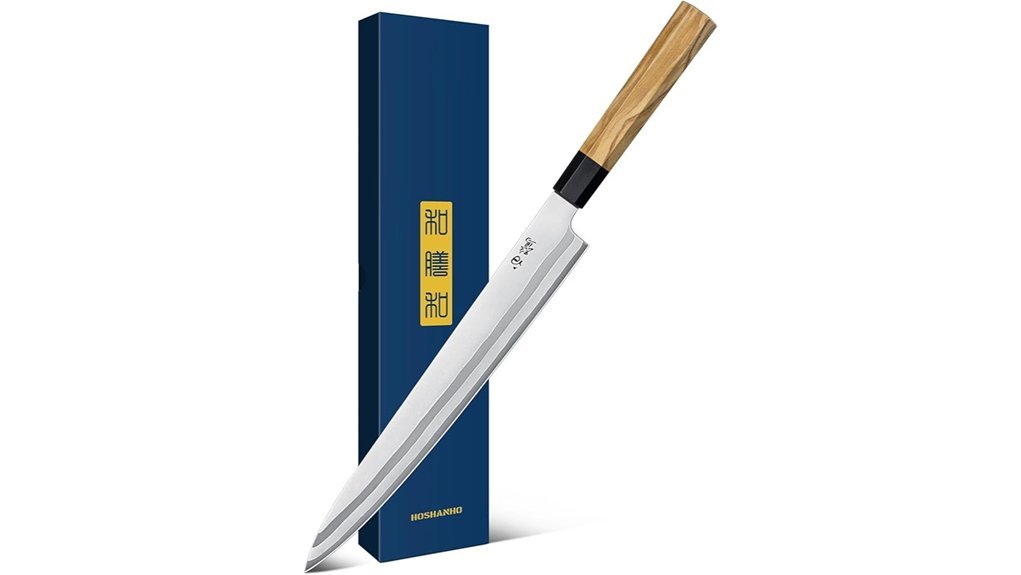
Serious sushi nights changed once I picked up this blade. The *HOSHANHO 10 inch sashimi knife* cuts like a whisper. You feel the razor sharp 12° edge bite and glide. Each slice falls clean like silk off fish.
The 10Cr15CoMoV high carbon steel holds a keen edge. I tested it on tuna and salmon. The flesh stayed glossy and smooth. Heat treat hits 62 HRC. That means firm steel with long edge life.
The mirror polished blade looks slick and feels slick. It slides through protein with barely a sound. Think of it like a hot knife through butter. The long yanagiba shape supports one clean pull. You get slices that look restaurant ready.
Grip matters during long prep. The octagonal olive wood handle feels warm and secure. I noticed the grain under my fingers. It stayed steady even with damp hands. Balance feels right in the middle so your wrist stays fresh.
This knife also handles more than fish. I sliced steak and soft fruit with ease. It brings a *unique* blend of style and function. It earns a spot on your counter.
Best For: You want clean sashimi cuts at home or in a pro kitchen. You value precision and tradition in one blade.
Pros:
- Extreme sharpness from a 12° edge and 62 HRC steel
- Strong edge retention from quality high carbon stainless steel
- Comfortable olive wood handle with solid balance
Cons:
- High hardness calls for careful use and storage
- Best performance shines on fish and soft proteins
- Premium build often carries a higher price point
HOSHANHO 10-Inch Yanagiba Sushi Knife
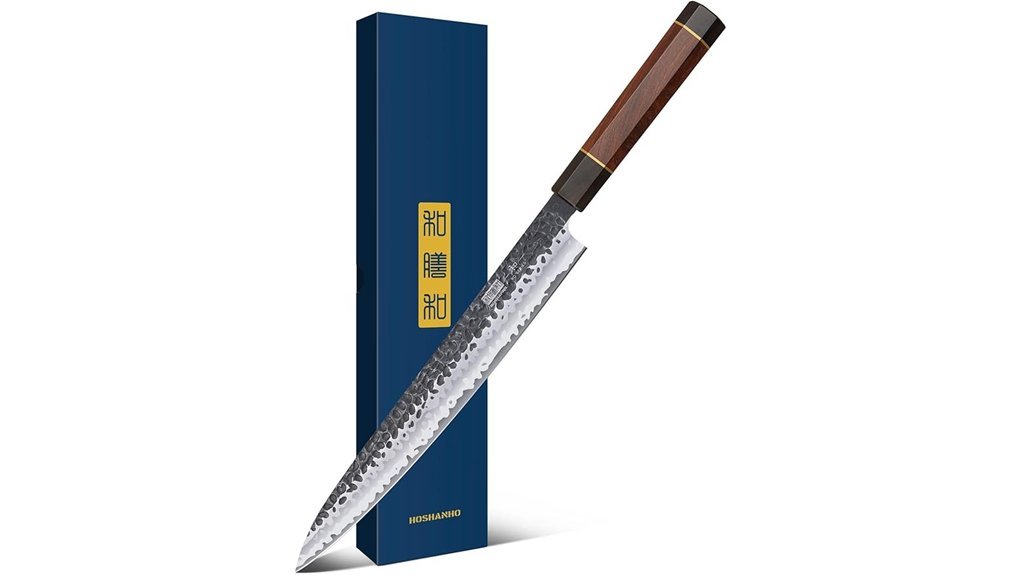
One standout for sashimi lovers, I’ve used this 10 inch HOSHANHO yanagiba to pull paper thin slices that look like glass. The blade glides and you hear a soft whisper on fish. It feels like a razor on silk.
You get a hand forged 10Cr15CoMoV blade with layered steel for strength and long edge life. The 12 to 15 degree edge bites clean and stays keen. A flat profile keeps texture intact in fish tofu and soft cheese. At about 60 HRC it holds an edge through long prep.
The octagonal rosewood handle feels warm and smooth in hand. Copper accents add a touch of weight and balance. I find control precise and fatigue low. At 232 grams it moves like a paintbrush.
Best For: You want ultra precise slicing for sashimi sushi and delicate ingredients.
Why it works: It cuts like a hot knife through butter.
Pros:
- Extreme sharpness, 10Cr15CoMoV steel with a 12 to 15 degree edge for clean cuts
- Long edge life, layered steel and about 60 HRC for lasting sharpness
- Great control, octagonal rosewood handle that feels balanced
Cons:
- Hand wash care, simple cleaning keeps the blade in top shape
- Focused design, shines on slicing tasks for fish and soft foods
- Skill friendly, benefits from steady technique and regular honing
Quick Specs:
- Blade length, 10 inches
- Steel, 10Cr15CoMoV layered
- Edge angle, 12 to 15 degrees
- Hardness, about 60 HRC
- Handle, octagonal rosewood with copper
- Weight, 232 grams
Takayuki Sakai Sujihiki Knife 9.4 Inch
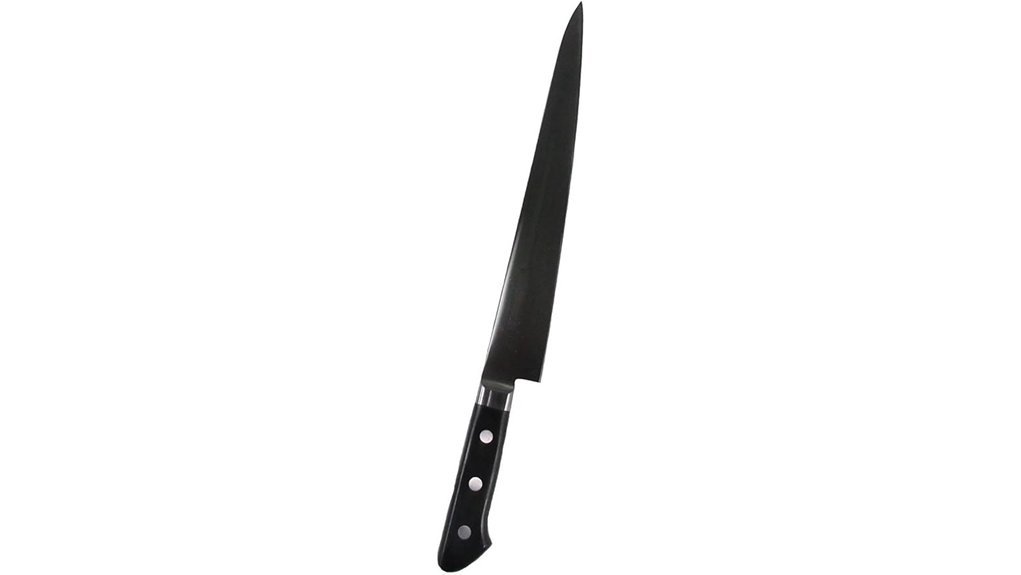
Precision slicing sets the tone with the Takayuki Sakai Sujihiki 9.4 inch. I used it on beef and fish and felt it glide like a hot knife through butter. You get a 24 cm *Japanese steel blade* that stays thin and sharp. The plain edge leaves clean cuts with a soft whisper on the board. At 180g it feels light in your hand and quick on the draw. The *alloy steel handle* feels solid and cool to the touch. It keeps a steady grip during long prep. It is *dishwasher safe* so cleanup feels easy. This Sakai Takayuki model hits a sweet spot for value. The 3.3 star feedback paints a mixed picture yet it still serves well for daily slicing.
Best For: You want a light slicing knife for proteins with strong value and easy care.
Pros:
- 180g weight keeps your wrist fresh and ready
- 24 cm blade gives long smooth slices on meat and fish
- Dishwasher safe care saves time after prep
Cons:
- 3.3 star rating shows varied user feedback
- Alloy steel handle feels simple in hand
- Edge life suits casual cooks over high end use
Factors to Consider When Choosing a Sujihiki Knife
Choosing a Sujihiki Knife****
I’ve sliced piles of brisket and tuna with these blades. You feel the difference fast. Steel matters most. A high carbon steel bites into meat with a clean whisper. Stainless feels smoother and shrugs off rust.
Hardness drives performance. A harder blade keeps a keen edge longer. It glides like a hot knife through butter. Softer steel sharpens faster and feels forgiving on the board.
Blade length shapes your cut. Longer blades sweep through roasts in one stroke. Shorter ones give you tighter control on small proteins. Think of it like picking a paintbrush. Size sets the flow.
Edge style changes the experience. A thin edge slips through fat with barely a sound. A slightly thicker edge adds strength for dense cuts. I like a laser thin edge for sashimi.
Handle comfort seals the deal. Your grip should feel locked in and natural. Wood handles feel warm and smooth in the hand. Resin handles feel slick and easy to clean after a long shift.
Quick specs to scan:
- Blade material, high carbon steel or stainless steel
- Hardness, measured in HRC for edge retention
- Blade length, often 240 mm to 300 mm
- Edge grind, thin or slightly thicker for strength
- Handle type, wa or yo style for grip feel
Pick a knife that fits your rhythm. Once it clicks, every slice feels effortless.
Blade Material Quality
Blade Material Quality
I start with the steel because it sets the tone. You feel it in the cut. A clean glide through meat feels like silk. A sujihiki shines with high carbon stainless steel. It holds a sharp edge and shrugs off rust.
Check the Rockwell scale. I look for 56 to 62 HRC. Higher numbers bite deeper and stay sharp longer. You trade some ease in sharpening. It’s a fair deal in my kitchen.
Now the build. This is where things get interesting. Damascus steel layers look stunning and feel lively. The blade flexes just enough and resists chips. It cuts like a hot knife through butter.
Edge shape matters. A 12 degree bevel gives whisper thin slices. A slight hollow grind helps food release. You hear a soft hiss as the blade moves. That sound tells me the edge is right.
Care counts. Some steels react to acid. You may catch a faint metallic smell after citrus. Rinse and dry right away. That habit keeps the blade keen for years.
Quick specs I watch:
- Steel type, high carbon stainless or Damascus
- Hardness, 56 to 62 HRC
- Edge angle, around 12 degrees
- Grind style, flat or slight hollow
- Maintenance needs, wipe and dry after use
Pick the right steel and you stack the deck in your favor.
Blade Length Choice
Blade Length Choice
I’ve used both sizes on busy prep lines. You feel the difference fast.
A sujihiki usually runs 240 mm or 270 mm. That is about 9.4 or 10.6 inches. Each size serves a clear role.
Go long for clean slices.
The 270 mm blade glides through meat in one pull. You hear a soft whisper as it cuts. Think of it like a paintbrush on a long stroke. Big roasts and whole fish feel easy.
Pick shorter for control.
The 240 mm blade feels quick in your hand. It turns fast on the board. You get tight control for sashimi and fine veg work. It feels like a paring knife that grew up.
Length shifts weight and balance. A longer blade carries more forward weight. Your wrist feels it after long prep. A shorter blade stays light and nimble.
Your space matters too. Tight counters reward a shorter knife. Open boards welcome a longer slicer.
Here is a quick guide:
- 270 mm, best for brisket, roasts, large fillets
- 240 mm, best for sashimi, trim work, small boards
- Longer blade, smoother draw cuts
- Shorter blade, faster handling
I reach for 270 mm for proteins. I grab 240 mm for detail work. Pick the one that fits your daily rhythm.
Edge Type Preference
Edge Type Preference
Blade length sets the feel. Edge type drives the bite. I feel it the moment steel meets fish.
Most sujihiki knives use a double edge. You can slice with either hand. It feels natural in a long pull.
Edge angles sit around 12 to 15 degrees. That gives a keen edge that glides. You hear a soft whisper as it cuts.
A plain edge stays standard. It slides through meat like silk. Think of it as a violin bow on a string.
Some blades add micro concaves. They help you guide ultra thin slices. I notice cleaner sashimi with less drag.
Hardness matters too. You’ll see 56 to 62 HRC.
- Lower HRC feels tougher and forgiving
- Higher HRC holds a sharper edge longer
- Mid range balances sharpness and care
Pick what fits your routine. I like a harder edge for clean proteins. You may prefer easier upkeep for daily prep.
Handle Comfort Design
Handle Comfort Design
I’ve tested knives for hours, and the handle decides your pace. The blade cuts, the handle keeps you going. *It should feel like a handshake that fits just right.*
Your hand wants a natural curve. An ergonomic handle follows that curve and cuts fatigue fast. You feel more control with each slice. Long prep feels lighter on your wrist.
Material matters the second you grip it. I like rosewood for its warm touch. Ebony feels dense and smooth. Pakkawood gives a sealed feel that shrugs off moisture. Each one brings a *solid, grounded* grip you can trust.
Texture seals the deal. A light grain gives traction when your hands get slick. You feel the handle bite back just enough. That small detail keeps the knife steady.
Balance changes everything. A well balanced knife feels lively in your hand. The weight sits right between blade and handle. You guide it with less effort and more precision. It’s like steering a car that hugs the road.
Shape adds the final layer. Octagonal handles sit firm in your palm. Traditional shapes suit different grips with ease. You switch angles and keep control through every cut.
What to check fast:
- Material feel, warm wood or sealed composite
- Grip texture, light grain for slip resistance
- Balance point, near the pinch grip
- Handle shape, octagonal or classic oval
You’ll feel less strain by the end of prep. Your slices stay clean and steady. That’s the quiet win of a great handle.
Hardness And Durability
Because edge life drives real performance, I start with hardness. I look for about 60 HRC. That level feels like a sweet spot in hand. The blade bites clean and keeps that bite through long carving runs.
Steel choice seals the deal. I prefer high carbon stainless steel. It feels smooth on the board and resists rust with ease. You get strong wear resistance and simple care. It sharpens well and holds a keen edge.
Edge geometry sets the feel. A thin double bevel glides like silk on protein. You hear a soft whisper as it slices. It trades a bit of toughness for speed. A thicker grind feels sturdier and shrugs off hard use. Think of it as a sports car versus a pickup.
Construction matters every day. I pick a full tang for balance and strength. The knife feels planted in your grip. Less flex shows up during long sessions. That stability builds trust cut after cut.
Quick takeaways
- Hardness, aim for ~60 HRC
- Steel, high carbon stainless for balance
- Edge, thin for glide or thicker for strength
- Build, full tang for control and durability
This setup keeps your edge keen and ready. It handles pro level prep without fuss. Like a reliable workhorse, it just keeps going.
Maintenance Requirements
Maintenance Requirements
A sharp edge fades fast without care. I’ve seen it happen in busy kitchens.
You should hand wash your sujihiki. Warm water feels smooth on the steel. Dry it right away so the blade stays bright.
Acid bites steel. Citrus leaves a faint metallic smell. Rinse soon after slicing.
Skip the dishwasher. Harsh spray hits hard. The handle feels rough after a few cycles.
Sharpen on water whetstones. You feel the grit grab the edge. That sound tells you the angle is right. I use light strokes for control.
Storage counts. A saya or blade guard keeps things safe. You avoid chips and cut fingers.
Use soft boards. Wood feels gentle under the edge. Rubber works well too. Hard glass sounds sharp and dulls fast.
Care builds habits. Like oiling a bike chain. You keep the glide smooth every time.
Quick care checklist
- Hand wash and dry fast
- Rinse after acidic foods
- Sharpen with water stones
- Store in a sheath or case
- Cut on wood or rubber boards
Stick with this routine. Your knife stays keen and ready for clean slices.
Conclusion
You’ve held these blades. You felt that clean draw through meat. Now you pick one.
I’ve used each sujihiki on brisket and fish. I hear the soft hiss as steel glides. I feel the balance settle in my grip. That moment tells you everything.
Steel matters. It sets edge life and bite. High carbon gives a crisp feel on the cut. Stainless gives easy care and steady shine.
Balance matters. Tip light feels quick. Handle heavy feels steady. Your hand will call the tune.
Intent matters. Long slices need a long blade. Thin grinds give glassy cuts. A good sujihiki lets proteins part like silk.
Choose with care. This tool will sit in your hand for hours. Each slice will speak. *Clean lines or rough edges.* That’s the proof in the pudding.