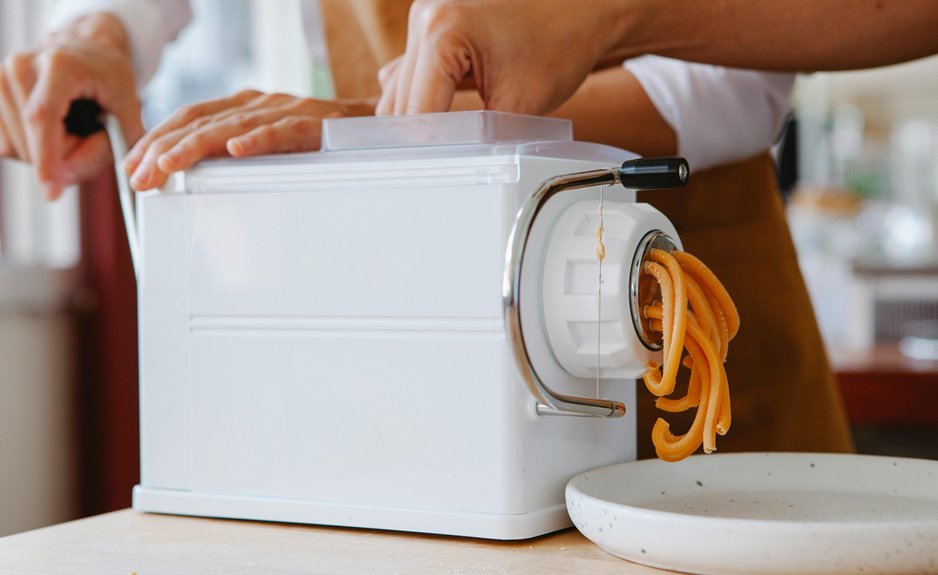
KitchenAid Pasta Press vs Roller, Quick Verdict
I’ve used both on busy nights and slow Sundays. Each tool shines in a different lane. Think of it like a fork in the road.
Go with the Pasta Roller if you want control****
You feel the dough glide through cool steel. The rollers hum with a steady rhythm. I get clean sheets every time.
*Why it wins for precision:*
- Multiple thickness settings for exact sheets
- Smooth stainless steel that feels solid
- Ideal for lasagna and ravioli
- Even texture with a soft bite
You adjust the dial and watch the dough change. It’s like tuning a guitar. You shape pasta with intent.
Pick the Pasta Press if you want speed****
You load the dough and press a button. Fresh noodles drop out in seconds. The smell of wheat hits fast.
*Why it wins for convenience:*
- Fast output for spaghetti and rigatoni
- Hands stay free during shaping
- Great for weeknight meals
- Fun to watch as it extrudes
It feels like a pasta faucet. Turn it on and dinner flows.
The trade off in real use
I reach for the roller when I want finesse. I grab the press when time feels tight. The press leaves more dough in the chamber. Cleanup takes a bit more effort. The roller wipes down with ease.
My bottom line****
You choose control or speed. The roller gives *precision and tradition*. The press gives *ease and quick noodles*. I keep both on hand since each fills a clear role.
KitchenAid KSMPSA Pasta Roller Attachment, Silver, 1′
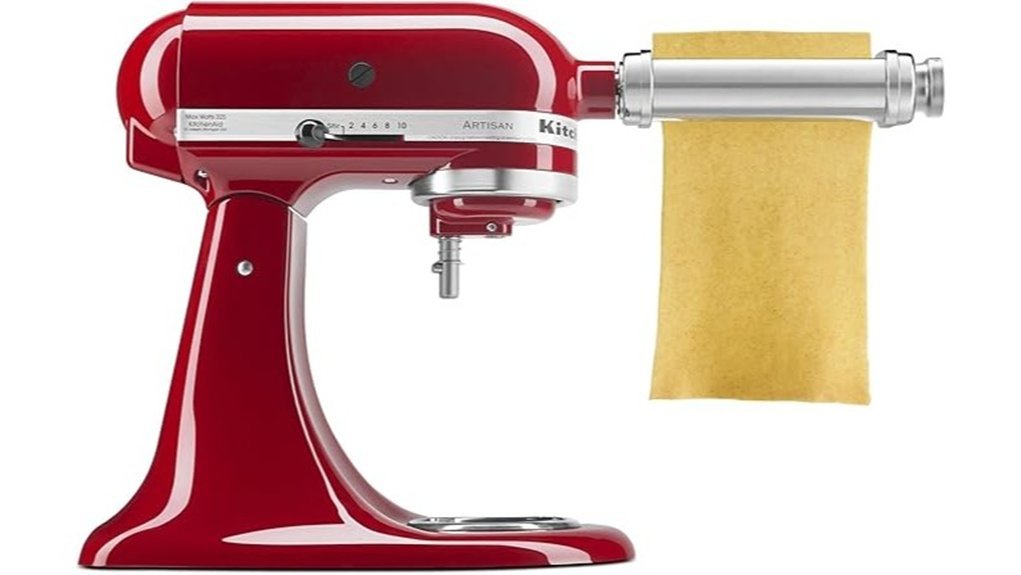
If you want tight control, I reach for the KitchenAid KSMPSA Pasta Roller every time. It feeds dough with a soft hum, and you feel the smooth pull through the steel. Think of it as a rolling pin with a motor, steady and sure.
You get clean 6 inch sheets with *8 thickness settings*. I dial thin sheets for lasagna, then go thicker for fettuccine. The mixer drives the rollers, so your hands guide instead of fight the dough.
The *stainless steel* feels cool and solid. It wipes clean with a brush, and it stores without fuss. At 2.4 pounds, it sits firm on the mixer and feels just right. The one year warranty adds peace of mind.
Best For: You own a KitchenAid stand mixer and want precise pasta sheets with repeatable results.
Pros:
- 8 thickness settings give you fine control
- Mixer powered rolling feels smooth and even
- Stainless steel build adds long life
Cons:
- Needs a KitchenAid stand mixer for use
- Hand cleaning keeps the finish in top shape
- Comes with a roller, you add cutters for shapes
Quick Specs:
- Width, 6 inch sheets
- Settings, 8 thickness levels
- Weight, 2.4 pounds
- Material, stainless steel
- Includes, roller and cleaning brush
- Warranty, 1 year
I’ve run batch after batch through this, and it sings like a well tuned instrument. You get consistent sheets, and your pasta game levels up fast.
HOZODO Pasta Press Attachment for KitchenAid Mixers
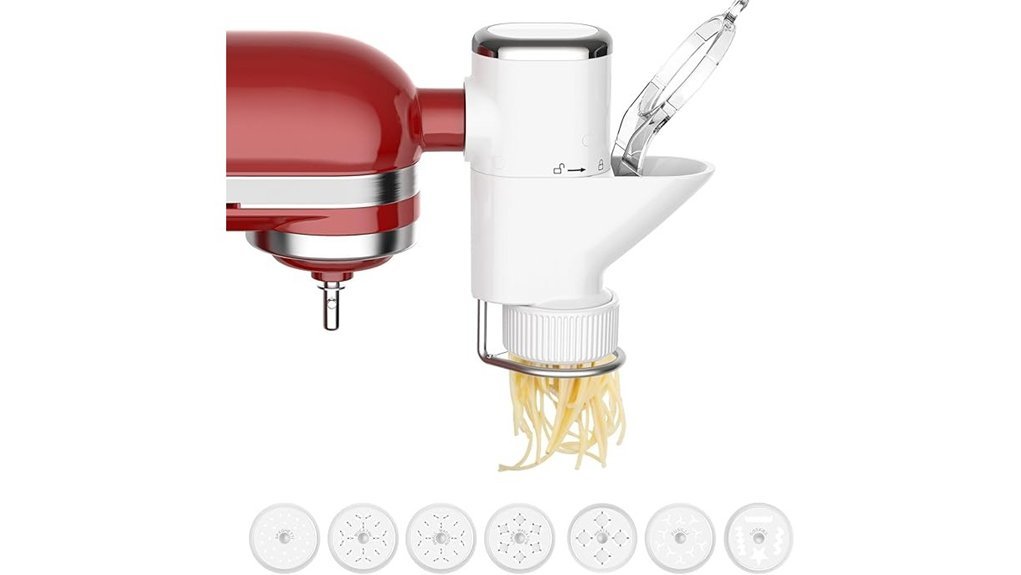
Extruded pasta changes the game. I ran this HOZODO press through real dough and it hums like a small workshop. You get *seven plates* for spaghetti and bucatini and rigatoni and fusilli and macaroni and cookies. Your KitchenAid becomes a *compact pasta lab*. The cutter snaps clean strands. The pusher bar keeps flow steady. I use a simple 2:1 flour to water mix. The dough feels firm like clay. I pinch walnut pieces and feed them in.
Fit stays tight on most KitchenAid models. Storage feels tidy in the case. Cleanup feels quick with the brush and removable parts. Plan hand washing after each batch. The 2.87 pound body feels solid in hand. Metal meets plastic with a smooth finish. The power hub drives everything with a low steady whir. Like a well oiled bike, it keeps pace.
Best For: You own a KitchenAid and want many extruded pasta shapes at home with one attachment.
Pros:
- Seven plates create diverse shapes and even cookies
- Fits most KitchenAid mixers and expands your setup
- Solid build with a compact case and simple cleanup tools
Cons:
- Hand wash routine after use
- Dough needs a firm texture and some prep time
- Focus stays on extruded shapes like tubes and twists only
3-in-1 Pasta Attachment for KitchenAid Mixer by Gvode
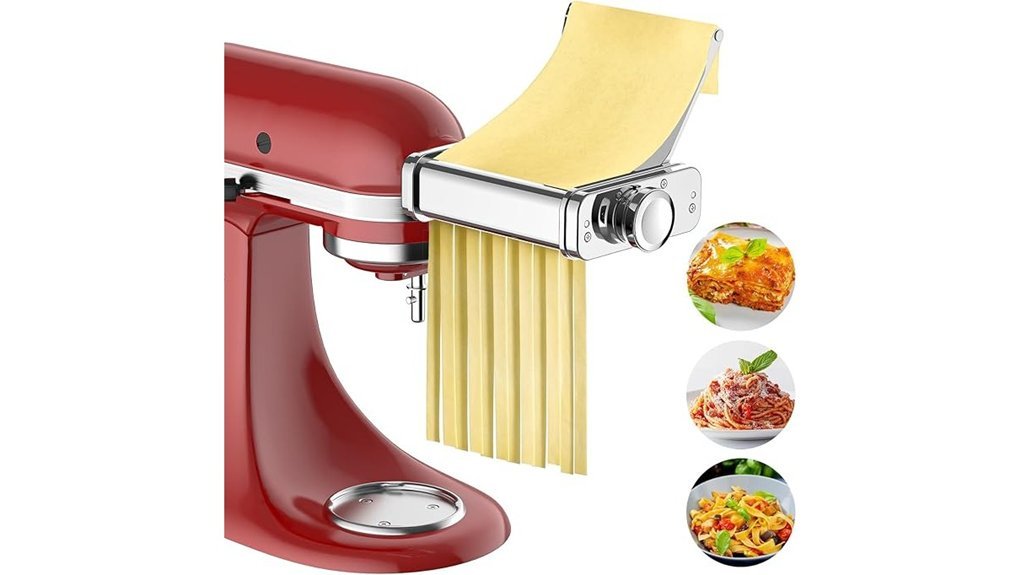
Gvode’s 3 in 1 pasta attachment feels like a workhorse the moment you snap it onto your KitchenAid. I’ve run batch after batch through it, and the solid alloy and stainless steel build gives a cool, steady touch. It hums with a low mechanical purr as dough feeds through. Everything stays in one unit, so your counter stays calm instead of chaotic.
You get a roller plus fettuccine and linguine cutters in one body. That saves time and cuts clutter. I like how the eight thickness settings click into place with a firm feel. You can dial sheets from paper thin to hearty lasagna. The polished rollers glide through dough like a hot knife through butter. Dough comes out smooth and even, ready for sauce.
A smart metal baffle keeps flour from flying everywhere. Your workspace stays tidy, and your hands stay safer. Cleanup feels quick with the included brush. A few swipes and you’re ready for the next round. Think of it as your pasta sidekick that pulls its weight every time.
Best For: Home cooks who want a durable all in one pasta maker that speeds up rolling and cutting with steady results.
Pros:
- Three tools in one, roller plus two cutters save space and time
- Metal build feels solid and lasts through heavy use
- Eight thickness settings give you control for many pasta styles
Cons:
- Heavier body adds a bit of lift during setup
- Fits KitchenAid mixers, so you plan around that setup
- Brush cleaning keeps things simple, yet takes a minute of hands on care
Gvode Stainless Steel Pasta Roller for KitchenAid Mixer
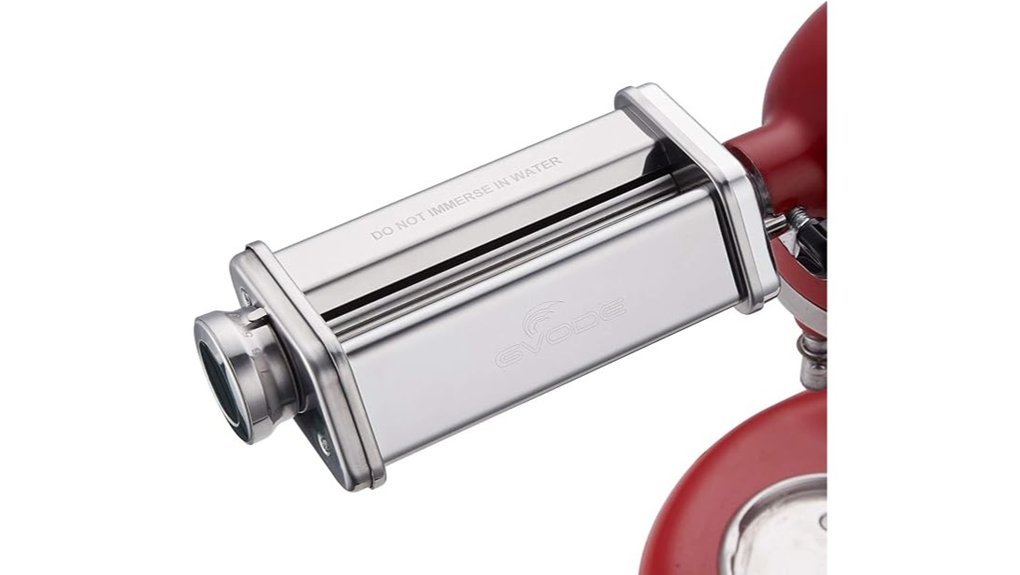
Gvode’s stainless steel pasta roller makes dough feel like silk in your hands. I’ve run batch after batch through it and the sheets come out smooth and even every time. You hook it to your KitchenAid mixer and let the motor do the heavy lifting. It hums softly while the rollers glide like a well oiled bike chain.
The SUS 304 stainless steel body feels cool and solid to the touch. It resists rust and keeps a clean shine after repeated use. You get an *eight position knob* that dials thickness from 0.4 to 2 mm. I switch settings fast and the clicks feel precise. Think lasagna sheets or dumpling skins that bend without tearing.
Cleanup stays simple. You use the included brush and wipe away flour dust. A quick rinse keeps things fresh and ready. It weighs 1.87 pounds so it stays steady during use. You also get clear instructions and a one year warranty for peace of mind.
Best For:
You want fast pasta sheets with a KitchenAid mixer. You like control without hand cranking.
Pros:
- *SUS 304 stainless steel* build feels sturdy and resists rust
- Eight thickness settings give you control for many recipes
- Mixer powered rolling saves time and effort
Cons:
- Hand cleaning keeps it in top shape
- Roller focuses on sheets rather than cutting shapes
- Works with KitchenAid mixers for this setup
If you want consistent sheets with less effort, this roller hits the sweet spot.
KitchenAid Gourmet Pasta Press Attachment with 6 Plates
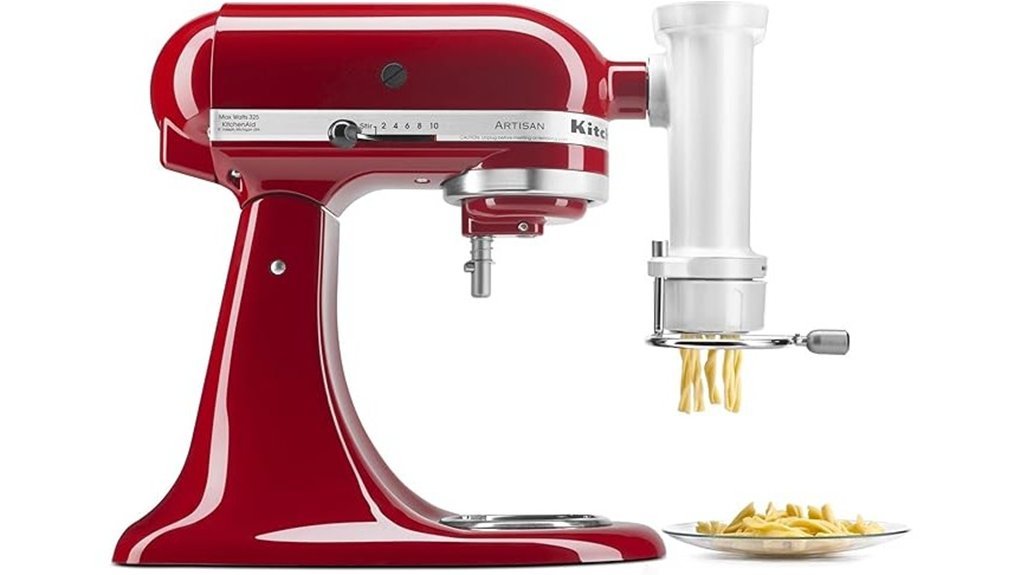
If you want fast pasta with almost zero effort, I reach for this press every time. I lock it into my KitchenAid and let the motor hum. The dough feeds through with a soft push. You hear a steady whirr. Fresh pasta drops out warm and smooth.
You get six plates for classic shapes. Think spaghetti and bucatini. Rigatoni and fusilli too. Large and small macaroni round it out. I swap discs in seconds and keep moving. It feels like a pasta factory in your kitchen.
The built in wire cutter gives clean edges. You snip to length on the fly. Each piece looks even and ready for the pot. No guesswork. No fuss.
It weighs 2.7 pounds and feels solid in hand. The case keeps parts tidy. Cleanup goes quick with the steel tool. Most parts go in the dishwasher and come out clean.
*Like turning a faucet, pasta flows on demand.*
Best For: Home cooks with a KitchenAid who want quick and steady pasta shaping with low effort.
Pros:
- Mixer powered extrusion for fast output with six shapes
- Wire cutter gives easy length control
- Storage case keeps parts in one place
- Dishwasher safe parts speed up cleanup
Cons:
- Needs a KitchenAid stand mixer sold separately
- Six shapes cover basics and keep variety focused
- Small holes in discs need a brief scrub with the tool
Key Specs:
- Model: KSMPEXTA
- Weight: 2.7 pounds
- Plates: 6 included
- Fit: All KitchenAid stand mixers
- Warranty: One year
Gvode Pasta Attachment Set for KitchenAid Mixer
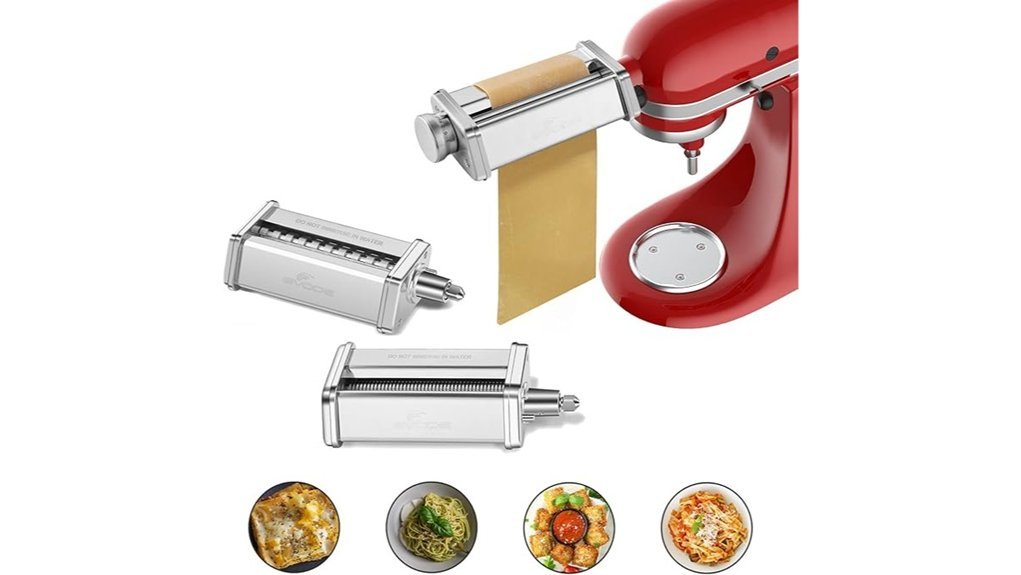
Serious pasta fans want control you can feel. I tested this full *roller and cutter set* on my KitchenAid. It hums with a steady motor sound. The rollers grip dough like a firm handshake. You get smooth sheets every pass.
The build feels solid in hand. It uses SUS 304 stainless steel with a clean Italian style. The metal stays cool and smooth. I saw no flex during use. It locks into the mixer and runs like an automatic pasta machine.
Dial in thickness with the 8 position knob. You set sheets from thin silk at 0.4 mm to hearty at 2 mm. Then switch to cutters. You get spaghetti at 1.6 mm and fettuccine at 6.3 mm. I ran eggs pasta and semolina dough. Both fed clean and cut true.
Cleanup feels quick. Use the brush and a dry cloth. The gears sound tight and steady. This set stands the test of time, like a trusty workhorse.
Best For: You use a KitchenAid and want fast consistent fresh pasta at home.
Pros:
- SUS 304 stainless steel body feels sturdy and smooth
- 8 thickness settings give fine control from 0.4 to 2 mm
- Three tools in one set, sheet roller plus spaghetti and fettuccine cutters
Cons:
- Hand cleaning with the brush keeps it in top shape
- Fits KitchenAid mixers only
- Cutter sizes focus on two classic widths only
KitchenAid Stand Mixer Pasta Roller Attachment Stainless Steel
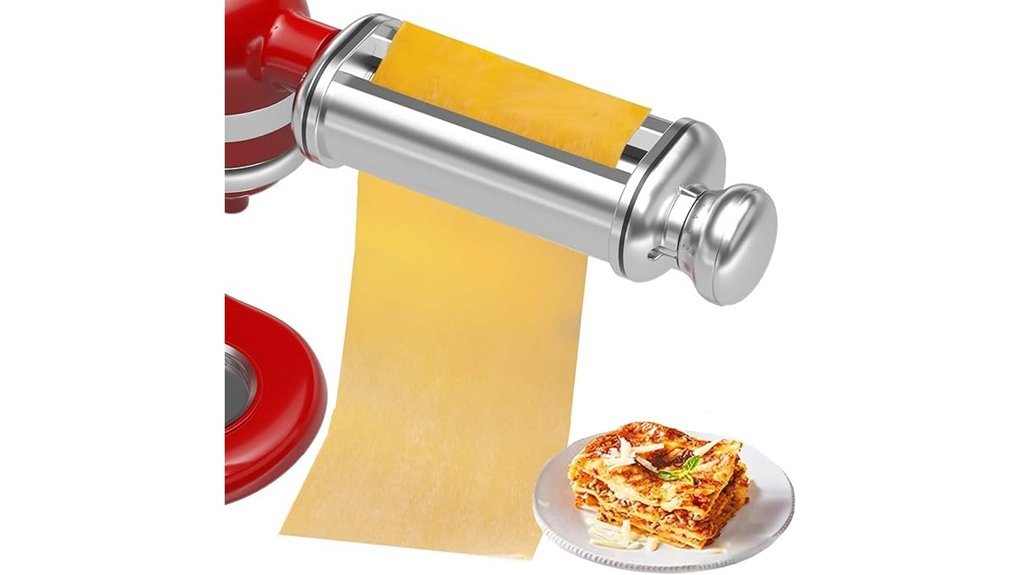
Home cooks who crave control will love this *stainless steel pasta roller*. I’ve run it through long dough sessions and it feels smooth in hand. You lock it onto your KitchenAid and feed the dough. The rollers hum with a soft metal whisper. Think of it as a rolling pin with a motor.
You get eight thickness settings. I start thick then step down. Settings eight to four give clean sheets that feel silky. Flour dust smells warm as sheets pass through. You’ll cut perfect strips for ravioli or lasagna.
The build feels solid and cool to the touch. Stainless steel fights rust and wipes clean with the brush. The gears spin with a steady purr. It keeps your sheets even every time, like a train on rails.
Cleanup stays simple. Use the brush and a dry cloth. Treat it like cast iron and it lasts. You also get a one year support plan. That adds peace of mind for busy kitchens.
Best For: Home cooks and pasta fans who want steady and custom dough thickness with a KitchenAid stand mixer.
Pros:
- Eight settings give precise and even pasta sheets
- Stainless steel build resists corrosion and feels sturdy
- Quiet gears and quick setup on KitchenAid mixers
Cons:
- Hand cleaning takes a bit of care
- Works with KitchenAid mixers only
- Dry cleaning routine adds a few extra minutes
Metal Pasta Press Attachment for KitchenAid Mixer
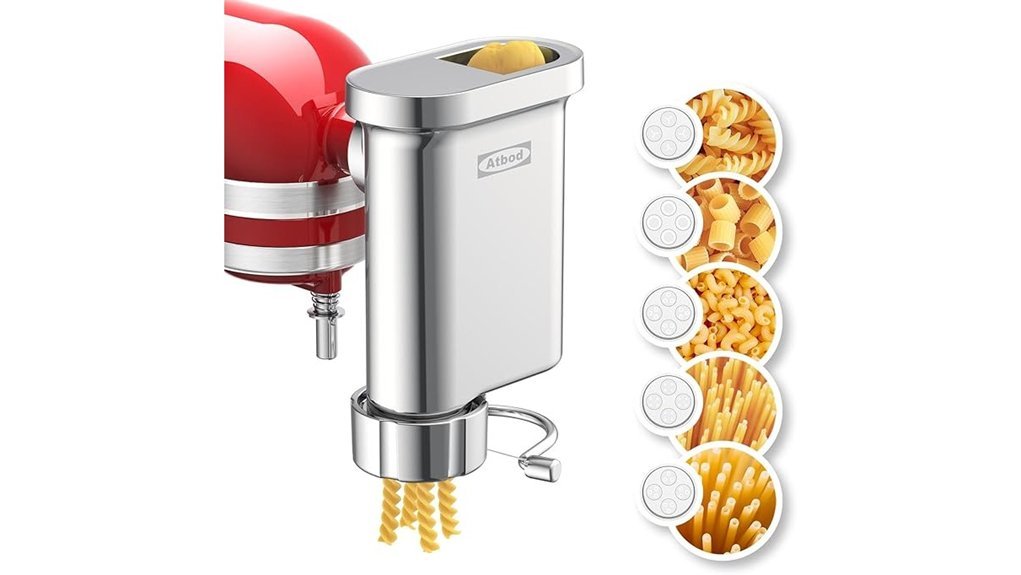
Choose a metal pasta press if you want fast extruded shapes with low fuss. I hooked this up to my KitchenAid in seconds. Dough feeds with a steady hum. Fresh pasta drops warm and slightly tacky to the touch.
The Atbod Metal Gourmet Pasta Press Attachment (PASTA-0004) locks in tight and feels solid in hand. The alloy metal body feels cool and dense. It handles pressure like a champ. You get clean strands every pass.
You can switch shapes in a snap. The five interchangeable discs cover spaghetti, bucatini, fusilli, and two macaroni sizes. Each disc clicks in with a firm feel. The output looks consistent and restaurant ready.
The built in wire cutter gives you control. Snip short or long with a quick flick. It feels like using kitchen shears mid air. Simple and satisfying.
Cleanup stays easy. I use the included pusher and small tool right after a batch. A quick wipe keeps the body clean. The case keeps parts tidy like a toolbox.
Operation stays hands on. You set mixer speed and feel the dough. It’s like driving stick, you stay in control.
Best For: Home cooks with a KitchenAid who want durable gear for fresh extruded pasta at home.
Pros:
- Alloy metal build feels strong and lasts through heavy batches
- Five discs cover classic shapes with even flow
- Wire cutter gives precise length control on the fly
Cons:
- Hands on use asks for steady feeding and timing
- Wipe clean care keeps the main body in good shape
- Focus stays on extruded pasta, sheet styles need a roller
3-in-1 Pasta Maker Attachment for KitchenAid Mixers
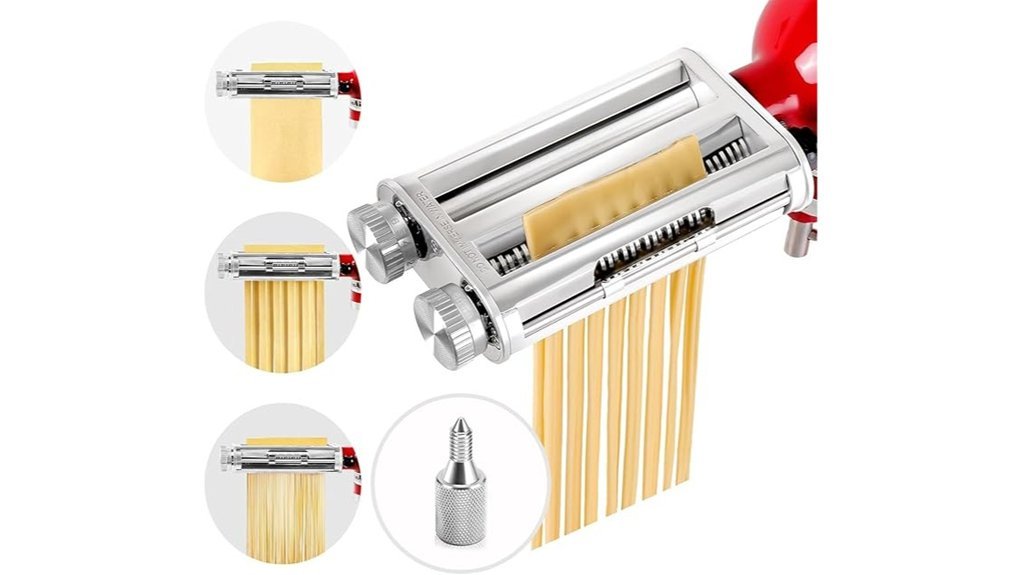
If you want one tool that does it all, I’ve used this 3 in 1 pasta attachment and it delivers. You mount it on your KitchenAid and feel a solid click. The metal feels cool and smooth in your hands. It rolls dough like a charm. Then it cuts clean strands with a soft, steady hum.
You get a roller plus two cutters in one body. That saves space and time. I like how fast I switch modes. It feels like a Swiss army knife for pasta.
The roller handles 5.7 inch sheets with ease. I feed in dough and watch it glide out silky and thin. The eight thickness settings give real control. You turn the knob and feel each step lock in. Thin sheets for ravioli. Thicker ones for hearty noodles.
Build quality stands out. The stainless steel housing feels sturdy and cool. Gears grip well and stay steady under pressure. No wobble. No chatter. Just a low mechanical purr.
Cleaning takes a light touch. I use the small brush and flick away dry flour. It keeps the gears happy and smooth over time.
Best For: You want a compact pasta maker for KitchenAid. You like quick swaps and clean results. You enjoy fresh pasta without clutter.
Pros:
- Three functions in one unit for fast workflow
- Eight thickness levels for precise dough control
- Solid steel build with stable gear action
Cons:
- Dry cleaning routine takes a bit of care
- Third party build rather than KitchenAid brand
- Two cutter widths limit shape variety
KitchenAid Stand Mixer Attachment, KSMPRA 3-Piece Pasta Roller & Cutter Set
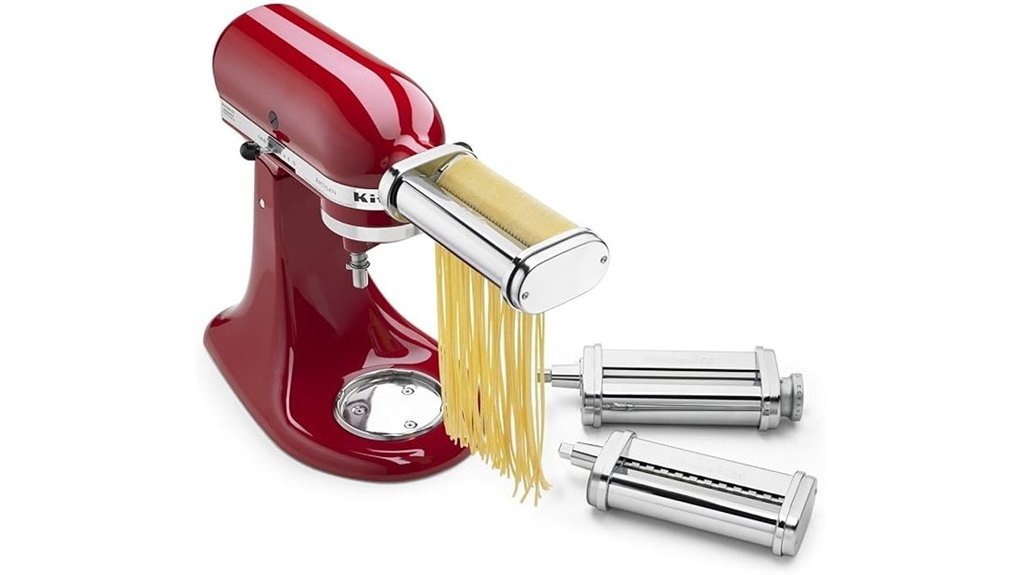
I’ve run pounds of dough through this set, and it feels like a pasta press in your own kitchen. The rollers grip the dough with a soft hum. You feel steady pull and smooth glide.
You plug it into the mixer hub and let the motor do the work. Your hands stay free to guide the sheet. It rolls clean six inch sheets with even thickness. No guesswork.
You get three tools in one box. A roller for sheets. A fettuccine cutter. A spaghetti cutter. Swap them fast and keep moving.
*Stainless steel rollers* feel cool and solid to the touch. They wipe clean with a quick brush. *Eight thickness settings* give you control from thick dough to paper thin sheets. I like setting one for lasagna, then dialing down for silky noodles. It hits the sweet spot.
The cutters slice with a crisp click. Strands fall like ribbons onto the counter. Light flour keeps them separate and airy. Fresh pasta cooks fast and smells rich.
Best For:
You want fast and consistent fresh pasta at home. You already own a KitchenAid mixer and want to use its power.
Pros:
- Uses the mixer motor for smooth rolling
- Three attachments expand your pasta options
- *Stainless steel build* feels strong and lasts long
- *Eight settings* give precise thickness control
Cons:
- Fits KitchenAid mixers only
- Shapes focus on long noodles
- Cleaning uses the included brush
Quick Specs:
- Roller width, 6 inches
- Material, stainless steel
- Settings, 8 thickness levels
- Attachments, roller, fettuccine cutter, spaghetti cutter
- Cleaning tool, brush included
Factors to Consider When Choosing a KitchenAid Pasta Press vs. Roller
Choosing between a KitchenAid pasta press and roller starts with one question. What shape do you crave?
I’ve run both through heavy dough. I felt the motor hum and watched flour dust rise. Each tool shines in its lane.
Think about shape and control.
The roller gives you flat sheets. You feed dough and feel the smooth pull. You set thickness with a dial. You stay in charge.
The press pushes out tubes. Think rigatoni and fusilli. You hear a steady push as dough extrudes. It feels like a playdough factory for adults. Fun and fast.
Ease of use matters.
I find the roller simple after one try. Feed and fold. Repeat. It clicks fast.
The press needs a steady dough mix. Too dry and it crumbles. Too wet and it sticks. Once dialed in it flows like honey.
Cleaning and care count.
Rollers wipe clean with a brush. Flour keeps it dry. Done in minutes.
Press dies need more care. Small holes trap dough. You pick and rinse. It takes patience.
Build and feel tell the truth.
Both feel solid in hand. Cold metal. Tight fit. KitchenAid keeps quality high. I trust them for years of use.
Quick takeaways
- Roller, best for lasagna sheets and fettuccine
- Press, best for penne and spaghetti shapes
- Roller, fast cleanup
- Press, more shape variety
Pick your tool like you pick your pasta at dinner. Follow your craving and you land on the right side of the fork.
Pasta Shape Options
Although both tools make fresh pasta at home, they feel very different in use. I’ve run dough through both, and the difference shows fast.
A pasta press pushes dough through metal plates. You hear a soft hum and feel steady pressure. Out comes spaghetti, bucatini, rigatoni, and fusilli with a firm bite. Many units add a wire cutter, so you set strand length on the fly. It’s like a play dough machine for adults. Quick shapes, clean cuts, less fuss.
A roller works another angle. You feed dough and turn a handle. The sheets come out smooth and cool to the touch. You dial thickness with a knob for fettuccine, lasagna, or filled pasta. Then you cut with add on tools. Think of it as a rolling pin with gears. Control first, shape later.
Here’s how I break it down in the kitchen:
- Press, fast output and tube shapes
- Roller, thin sheets and precise thickness
- Press, built in cutter for length control
- Roller, add on cutters for noodles and ravioli
Which should you pick?
Go press if you want speed and variety in one pass. Go roller if you want control over sheets for stuffed pasta. Your meals will tell you the answer.
Ease Of Use
Ease of Use
Speed matters at dinner time. You feel it in your hands and hear it in the steady push of dough.
A pasta press brings quick results. I feed in dough and the machine hums. *Soft strands slide out warm and smooth.* You get fast and even shapes with little effort. It feels like a faucet for pasta, turn and flow.
A roller gives you control. I crank the handle and feel the dough stretch. *The texture turns silky as it thins.* You set thickness with clear steps. Each pass builds skill. Then you cut sheets into noodles.
Here is how they compare in real use:
- Press: quick output, steady shapes, less hands on time
- Roller: hands on feel, adjustable thickness, more shape options
You want speed and ease, go with the press. You want control and craft, the roller fits.
Cleaning And Maintenance
Clean fast. Dry fully. I’ve used these pasta attachments for months, and this habit keeps them smooth and quiet like day one.
You wash rollers and presses by hand. Warm water feels right on the steel. A soft brush sweeps flour with a light scratch sound. The included brush fits the rollers well. Small tools clear the press plates with ease. Smooth stainless steel wipes clean in seconds. Fresh dough smell fades once you rinse.
Think of it like brushing teeth, quick daily care saves big trouble.
Take parts apart each time. You reach every corner and slot. Hidden dough bits change texture and slow the motor. Clean parts feel slick and look bright.
- Use the roller brush for flour
- Use press tools for plate holes
- Rinse with warm water
- Wipe with a soft cloth
Dry each piece fully. Air moves around spaced parts and pulls moisture away. I leave them on a rack and feel for any damp spots. Dry metal sounds crisp when tapped. Then you reassemble and store with confidence.
This routine keeps pasta sheets even and presses smooth. Your machine runs like a well oiled bike.
Build Quality Materials
Build Quality and Materials
I’ve run both styles through heavy batches of dough. You feel the difference right away.
Roller attachments use solid stainless steel. *Cold to the touch, smooth under your fingers.* You get steady pressure and even sheets. The rollers hum with a soft, clean sound. That all metal body lasts. It keeps alignment true after many sessions. Polished steel helps dough glide, so you move fast.
Press attachments mix metal with plastic. They feel lighter in hand. You get easier handling and a lower price. During long sessions I feel slight flex in the body. The mechanism clicks and turns with more noise. Fine for casual use, yet less steady under load.
Cleaning tells another story. Flour dust clings in tight corners on presses. You use the brush more often. Rollers wipe clean with a quick pass. Fewer crevices help here. Think of it like a cast iron pan versus a gadget with nooks, simple beats fussy.
What I look for
- Stainless steel rollers, for smooth sheets and long life
- Tight tolerances, for even thickness every pass
- Low crevice design, for fast cleanup
- Solid housing, for stable cranking feel
- Included brush, for quick maintenance
If you want speed and consistency, go roller. If you want shape variety in a small space, a press earns its spot.
Thickness Control Range
Thickness Control Range
I care about thickness first. It drives texture and cook time. It’s the steering wheel of your pasta.
With a roller, I feel the control in my hands. The knob clicks with a soft tick. You move through about eight settings. You go from roughly 2 mm down to 0.4 mm. That span covers lasagna sheets, fettuccine, and silky ribbons. Each pass feels smooth and even. Like tuning a guitar string, you dial it in.
You get repeatable sheets every time. That means even cooking and better bite. Your sauce clings just right.
A press works with fixed plates. You feed dough and get set thickness. The motor hums and pushes shapes out. It’s fast and steady. You still get clean strands and tubes. You get less say in thickness.
If you want range, pick a roller. If you want speed, a press feels easy. I reach for the roller when I chase that perfect bite.
Compatibility And Fit
Compatibility And Fit
I’ve locked both tools into the front hub and felt the click. It’s solid and clean. You get the same mount across KitchenAid stand mixers, so fit feels easy.
Rollers feed dough with a soft hum. You turn the knob and feel the change. Sheets come out smooth and thin. Presses push dough with steady force. Plates shape strands and tubes with a firm push.
Pick based on the pasta you crave. Think of it like choosing a paintbrush. Each tool paints a different plate.
Third party gear can feel rough at the hub. I’ve seen slight wobble and heard a grind. Check model fit before you buy. A tight lock keeps feed smooth and protects the motor.
Quick take
- Rollers, flat sheets and adjustable thickness
- Presses, shaped pasta with plate swaps
- Fit, all household KitchenAid mixers support these
- Third party, check fit for a smooth run
A secure fit keeps dough moving like silk. It keeps your mixer calm and steady. You get reliable pasta every batch.
Conclusion
You face a simple fork. Press or roller. I’ve tested both in real kitchens.
Pick the pasta press if you want shapes. Think rigatoni or fusilli. You hear a low hum as dough pushes through the die. It feels firm in your hands. The press gives you *bold texture* that holds sauce. Like a stamp on clay.
Choose the roller if you want sheets. Think lasagna or fettuccine. You feel smooth dough glide through steel. It turns silky and thin. The roller delivers *clean cuts* and even thickness. Like silk off a loom.
I use the press for quick dinners. I use the roller for weekend pasta. Both attach fast to a KitchenAid mixer. Both clean up with a brush.
Here’s the quick scan.
- Press, best for shaped pasta and thick sauces
- Roller, best for sheets and fine cuts
- Press, louder motor sound and firm push
- Roller, quiet glide and precise control
You turn flour and eggs into dinner magic. Pick what fits your flow. Then cook with confidence.