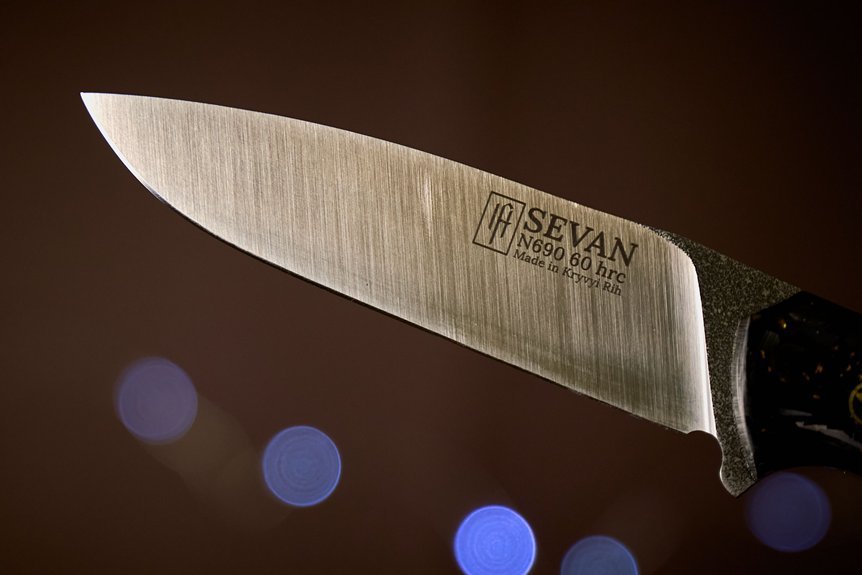
Kitchen Knife Steel That Delivers Razor Sharp Results****
I have tested dozens of blades on meat, herbs, and crusty bread. The right steel feels smooth and sounds crisp on the board. You want a blade that bites clean and glides like butter.
What actually matters
You need a smart balance of hardness, edge life, and rust control. Think of it like tuning a guitar. Too tight and it snaps. Too loose and it sounds dull.
High carbon stainless steel hits the sweet spot. I look for 56 to 60 HRC on the Rockwell scale. That range keeps a keen edge and still feels forgiving in hand.
How it performs in real use
I slice onions and hear a soft whisper. The edge tracks straight with zero drag. Proteins separate clean with no tearing. You feel less wrist strain after a long prep.
A quick hone brings the edge back fast. The rod gives a light rasp and the bite returns. Steel that responds well saves time every day.
Handle and build feel
Grip matters more than you think. A contoured handle locks in your palm. Wet hands still feel secure.
Balance sits near the pinch point so you guide each cut with ease.
What to look for
- High carbon stainless steel, 56 to 60 HRC
- Fine grain structure for sharpness you can feel
- Good corrosion resistance for easy care
- Comfortable handle with a stable pinch grip
- Balanced blade for precise control
Pick steel that fits your routine and your board. Do that and you get cleaner cuts with less effort. Sharp tools make light work, and your prep becomes almost fun.
Professional Carbon Steel Black Knife Sharpening Steel, Black 12 Inch
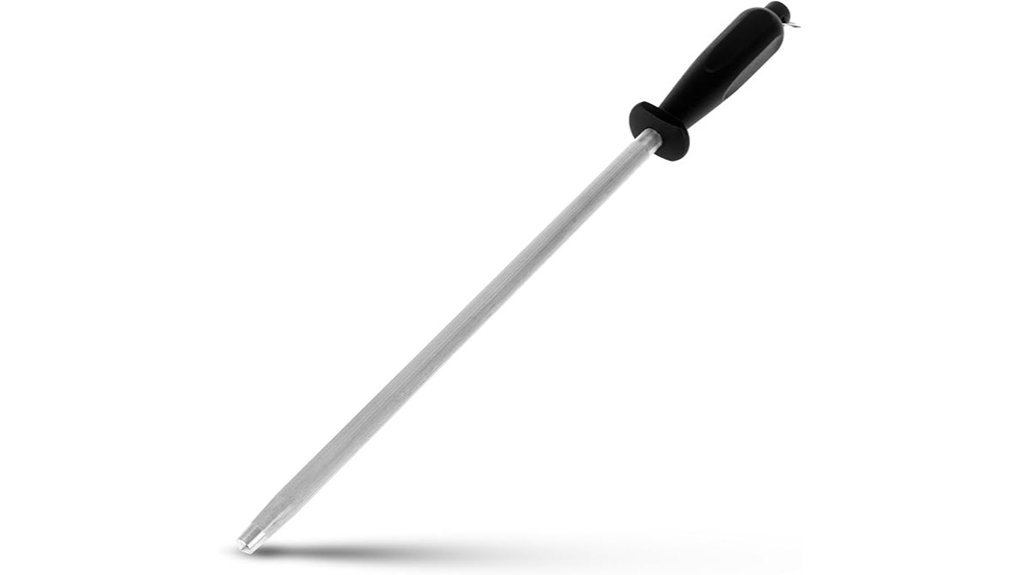
If you cook often, you feel a dull blade right away. I’ve used this rod before prep, and it keeps my chef’s knife gliding like butter. The Professional Carbon Steel Knife Sharpening Steel, 12 Inch focuses on *edge realignment*. That means your knife stays sharp with quick strokes and no fuss.
The rod feels cool and smooth in hand. You hear a soft whisper as steel meets steel. That sound tells you the edge lines up again. Think of it like tuning a guitar before a song.
The 12 inch length fits most Western chef knives. I find the balance at 340 grams steady and easy to control. The textured handle grips well even with wet hands. The anti slip tip plants firmly on the board, so you stay in control.
Best For
Home cooks who want fast daily edge care. You keep knives sharp without full sharpening each time. A stitch in time saves nine.
Pros:
- Hardened carbon steel realigns edges for smooth slicing
- Textured handle adds grip and control
- Anti slip tip anchors the rod during use
- Great for daily upkeep and longer knife life
Cons:
- Works best for maintenance and light touch ups
- Fits Western angles better than thin Japanese profiles
- No storage or extras included
You get a simple tool that does its job well. I reach for it before every prep, and it keeps my knives ready for action.
13-Inch Carbon Steel Knife Sharpener Honing Rod
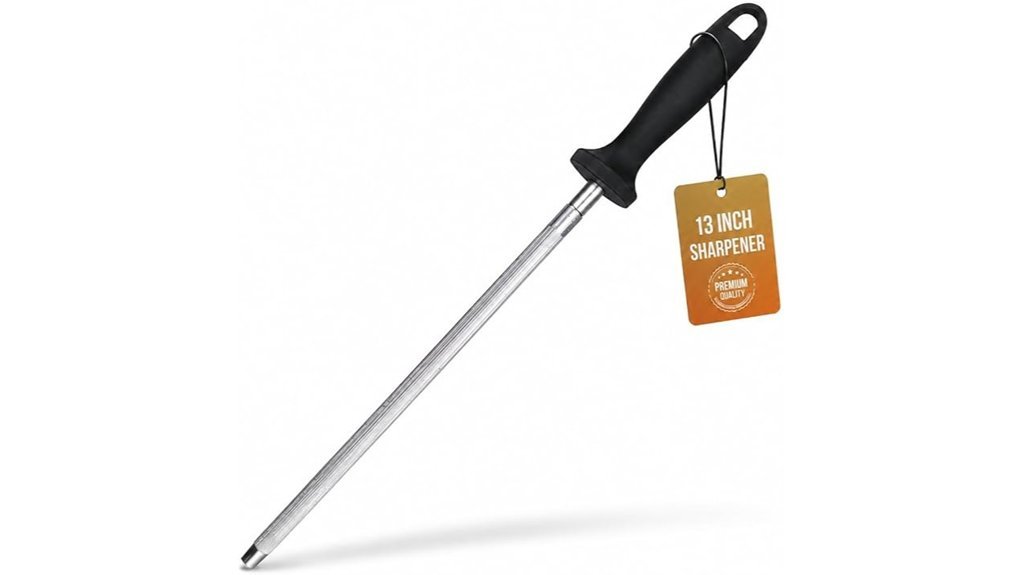
Serious cooks feel the difference fast with this 13 inch *carbon steel honing rod*. I ran it through daily prep and it stayed quick and steady. You get a light 3.2 ounce tool that sits right in your hand. It feels smooth and balanced. Like a baton in a tight rhythm.
The magnetized nickel chrome surface grabs fine metal dust as you hone. I heard a soft whisper as the blade slid. The rod stayed clean and bright. Rust never showed up. Your knives keep a fresh edge and a cleaner face.
You realign edges in a few strokes. The dense saw teeth bite just enough. I brought a chef knife back to life in seconds. Paring and fruit knives followed with ease. It is like tuning a guitar, quick turns and clear results.
Grip matters. The ergonomic non slip handle stays locked in your palm. I worked through a full prep block and felt zero strain. Control stayed sharp from start to finish.
This rod uses high hardness carbon steel. It holds shape and keeps performance day after day. I trust it for repeat use in a busy kitchen.
Best For: You want a light durable honing rod for fast edge care on daily knives.
Pros:
- Magnetized nickel chrome surface traps filings and keeps things tidy
- Light 3.2 ounce build feels nimble and easy on the wrist
- Dense saw teeth realign edges fast with a clean sound
Cons:
- This tool focuses on honing, full sharpening serves very dull edges
- The 13 inch length fills more drawer space
- Works best on straight edge knives for smooth results
Amazon Basics 8-inch High Carbon Chef’s Knife
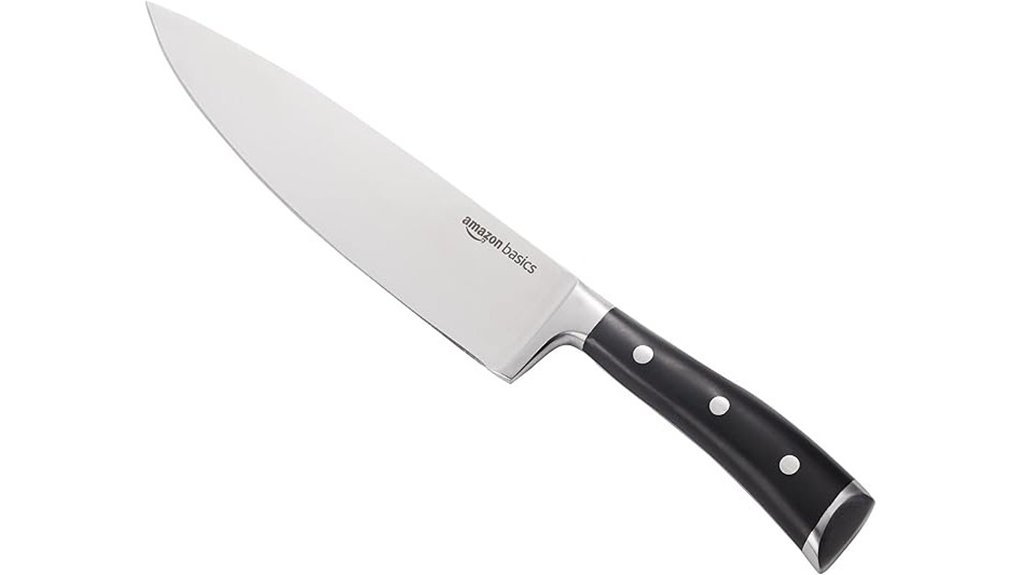
Budget cooks get real value from the Amazon Basics 8 inch *High Carbon Chef’s Knife*. I’ve used it on onions, herbs, and chicken, and it cuts clean with a soft whoosh. You feel a light, quick blade in your hand. Think of it as a reliable workhorse in your kitchen.
The *high carbon stainless steel* blade shrugs off stains and rust. You keep a sharp edge with simple honing. The *forged build* with full tang feels steady in your grip. I like the semi bolster since it opens the whole edge for slicing and sharpening. It moves like a well tuned bike.
At 8 inches, it hits the sweet spot for daily prep. You can chop, dice, mince, and slice with ease. The handle sits snug and smooth. You get control without wrist strain. It stays nimble during long prep sessions.
Best For: Budget cooks who want a dependable chef’s knife for everyday kitchen prep.
Pros:
- *High carbon stainless steel* fights stains and rust
- Full tang build gives balance and control
- Light feel keeps cuts quick and smooth
Cons:
- Hand wash keeps the satin finish bright
- Fit and finish feel basic next to premium knives
- Edge life suits daily use more than heavy duty prep
Specs at a glance:
- Blade length, 8 inches
- Total length, 13.28 inches
- Weight, about 0.23 kilograms
- Construction, forged with three rivets
- Care, hand wash for best results
Utopia Kitchen 12-Inch Knife Honing Rod
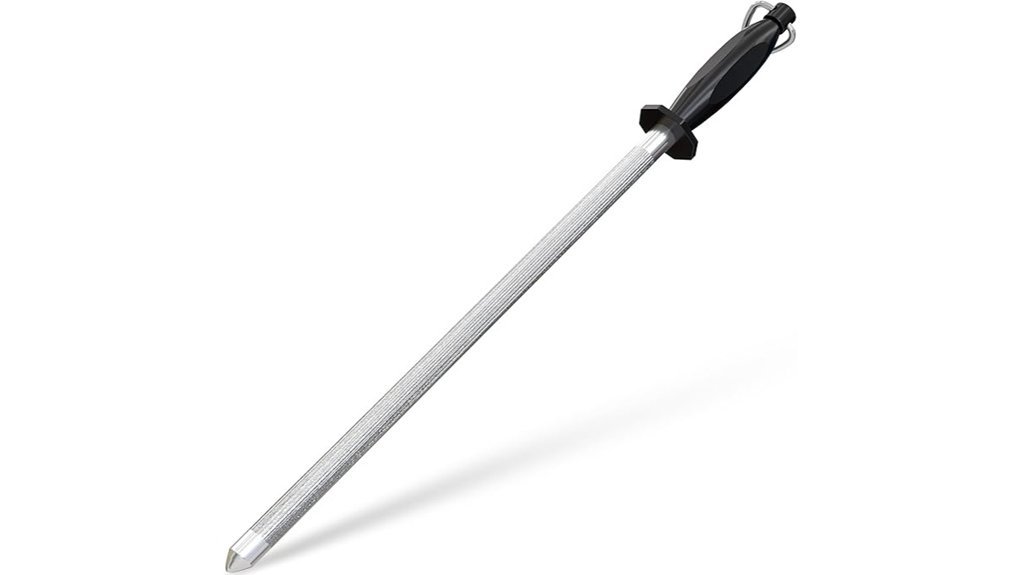
Home cooks want fast edge care. I’ve used this 12 inch *honing rod* daily and it feels like a steady drumbeat for your blade. The carbon steel core feels solid in hand. Nickel chrome plating adds a slick touch and a faint metallic sheen you can see under light. You glide the knife and hear a soft whisper. It keeps edges aligned for clean slices. You can tune kitchen knives and pocket blades with ease. Serrated edges respond well too. The non slip ergonomic handle sits secure in either hand. Grip stays firm even with damp fingers. A hanging loop keeps it within reach. Wipe it with an oiled cloth and it stays smooth and ready. Think of it as a quick tune up between cuts.
Best For: Home cooks and knife fans who want easy edge care across many knives.
Pros:
- Carbon steel core with nickel chrome plating adds strength and smooth contact
- Handles many knife types including serrated and pocket blades
- Ergonomic handle feels secure and the loop keeps storage simple
Cons:
- Works best for edge alignment, pair with a sharpener for very dull knives
- Technique shapes results, a short learning curve pays off
- Hand cleaning keeps the surface in top shape
Why it works in real use
I run a blade along the rod and feel light resistance. The sound is a soft hiss. That feedback guides your angle like a metronome. Edges come back to life in seconds. Tomatoes slice clean with less pressure. Herbs cut with a crisp snap. It’s a small tool that pulls big weight in daily prep.
Brewin 3PC Professional Kitchen Knife Set
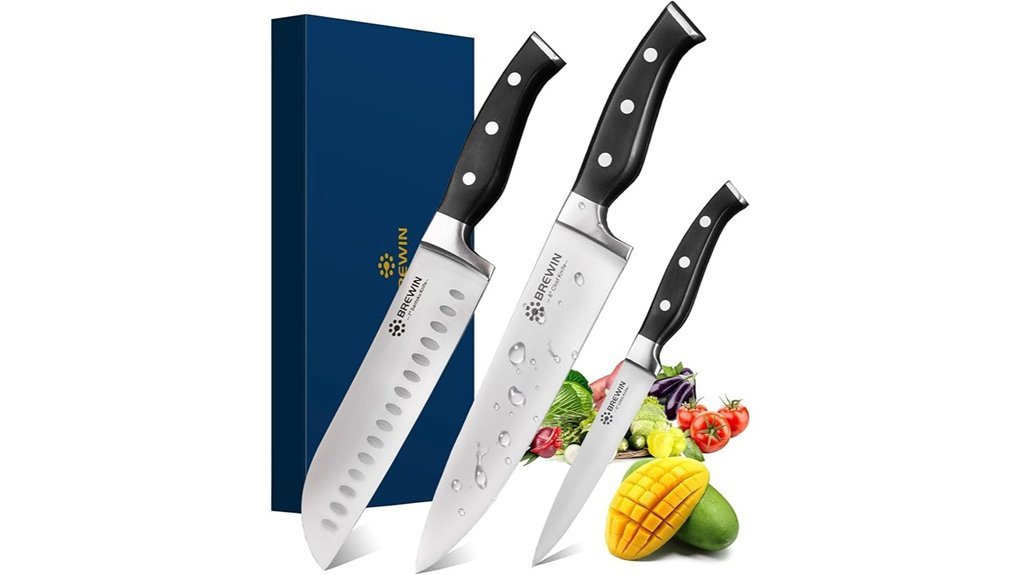
A three knife set that keeps prep smooth and simple. I’ve used this kit for weeknight rush and slow Sunday cooks. It feels like a trusty workhorse in your hand.
You get a chef knife, santoku, and utility blade. Each one handles slicing, chopping, carving, and mincing with ease. I hear a clean whisper as the edge meets onion. You feel a steady glide through ripe tomato.
The steel is German 1.4116 high carbon stainless. It holds an edge above 56 HRC. The edge comes hand polished at 14 to 16 degrees per side. That angle bites fast and stays keen.
Balance stands out right away. The full tang runs through the handle. The triple riveted ABS grip feels secure and smooth. The bolster and polished spine support a *safe pinch grip*. Think of it as a steady handshake that never slips.
Care stays simple. Wash by hand and dry right after use. Brewin backs the set with a solid guarantee and quick support.
Best For: Home cooks who want sharp German steel and easy control for daily prep.
Pros:
- Razor sharp 1.4116 steel with strong edge life
- Full tang build with comfy handle and good balance
- Three core knives cover most kitchen tasks
Cons:
- Hand washing keeps the edge happy
- Three pieces fit general prep more than niche tasks
- Mid range steel benefits from a quick hone over time
imarku 8-Inch Japanese Chef Knife HC Steel
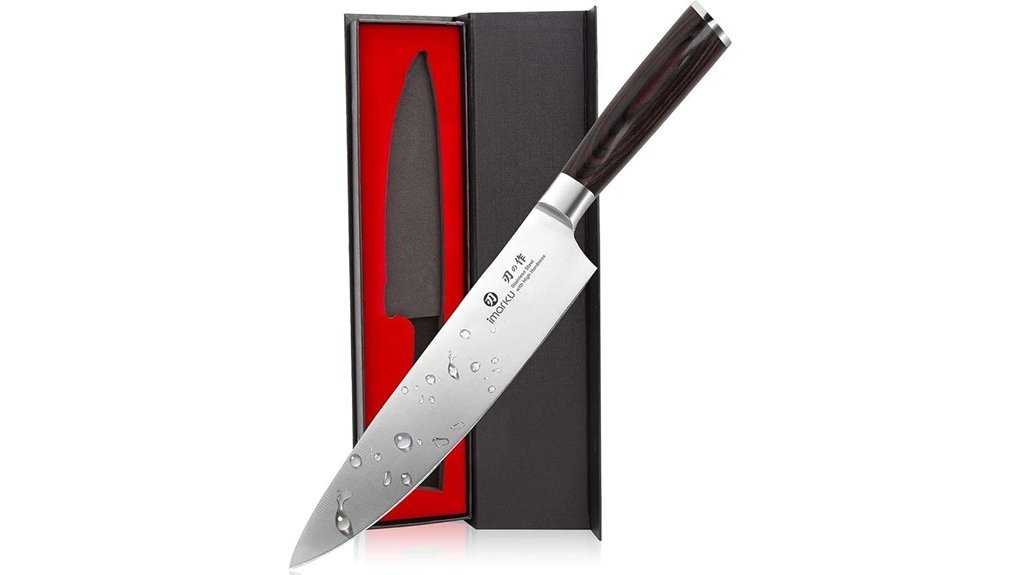
Serious cooks want a blade that feels alive in hand. I’ve used this high carbon stainless steel chef knife on onions and chicken and herbs. It bites clean and sounds crisp on the board. You get an 8 inch blade with 0.6 to 0.75 percent carbon and 16 to 18 percent chrome. That mix gives HRC 56 to 58 hardness and steady edge life. The glossy finish feels slick and shrugs off rust. The edge comes razor keen so you slice and dice with ease. It moves like a hot knife through butter.
I like the Pakka wood handle. It feels warm and smooth in the palm. The shape fits your grip and reduces fatigue. The balance sits right at the pinch grip. Weight stays light at 0.41 pounds so prep feels quick and controlled. You also get a lifetime warranty and a three month refund policy. That adds peace of mind for daily use.
Best For: Home cooks and pros who want a durable chef knife with steady edge life and easy handling.
Pros:
- High carbon stainless steel gives HRC 56 to 58 and consistent sharpness
- Light 0.41 pounds with an ergonomic Pakka wood handle for long sessions
- Corrosion resistance with a glossy finish and strong warranty support
Cons:
- Edge life sits below top tier Japanese blades so touch ups come sooner
- Regular honing keeps the edge keen and ready
- Simple look feels clean and practical rather than ornate
Quick take: You get a reliable daily driver that feels good and cuts clean. I reach for it often and it earns its keep on busy prep days.
Astercook 13-Piece Stainless Steel Knife Set with Guards
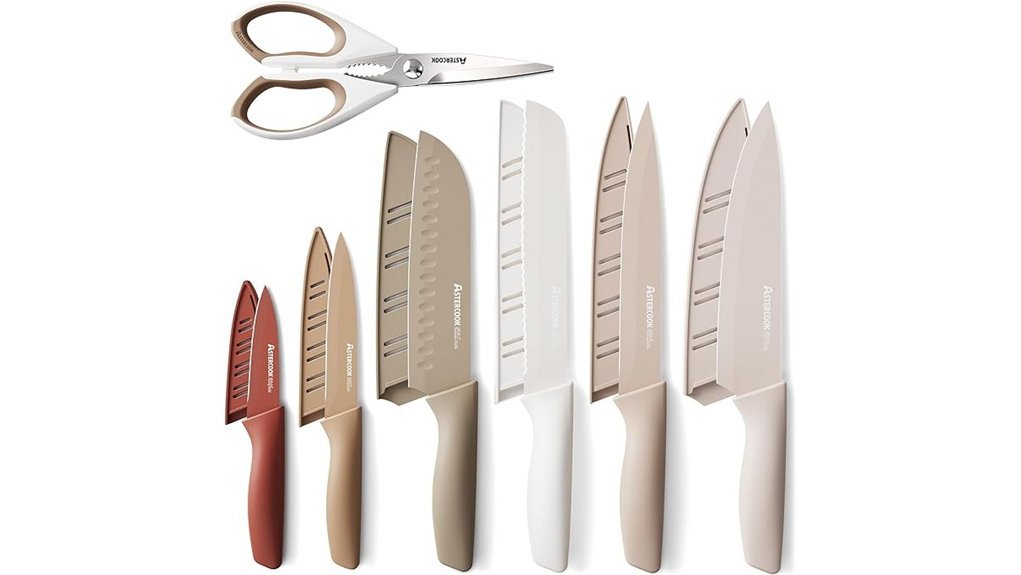
Busy nights call for tools that just work. I’ve used this 13 piece knife set in tight kitchens and on camping trips. It covers the basics without fuss. You get chef, slicing, Santoku, bread, utility, and paring knives. You also get kitchen shears and six guards.
The blades feel crisp on onions and herbs. You hear a clean slice with each cut. Forged high carbon stainless steel keeps a steady edge. An anti rust coating helps with easy cleanup. The set handles dishwashers with ease. Plastic handles feel light and grippy in wet hands. Think of it as your kitchen workhorse.
Storage stays simple. The guards snap on with a soft click. You can toss them in a drawer or pack them for an RV trip. The core knives sit at an 8 inch sweet spot. Balance feels steady in your hand. A lifetime warranty adds peace of mind. It’s a solid pick for daily prep or a gift.
Best For: Busy home cooks and beginners who want a versatile set with safe storage.
Pros:
- Full lineup of essential kitchen knives plus shears and guards
- Easy care with anti rust coating and dishwasher safe build
- Compact storage with guards for small kitchens or travel
Cons:
- Plastic handles feel less premium than wood or metal
- Edge suits daily prep more than fine precision work
- Coating shows wear with frequent dishwasher cycles
Factors to Consider When Choosing Kitchen Knife Steel
When I pick kitchen knife steel, I focus on balance first. Think of it like a tightrope walk. You want hardness for a crisp bite on tomatoes. You want *edge retention* so the blade stays sharp through a pile of onions. You want toughness so it shrugs off a hard squash with a solid thud.
I’ve felt blades that glide like butter. I’ve heard others scrape and drag on the board. That difference comes from steel choice. You also want corrosion resistance so the blade stays clean and bright after a rinse. Sharpening should feel smooth on the stone, not like grinding sand.
Get this mix right and your knife feels alive in your hand.
Steel Hardness Level
Steel Hardness Level
I’ve used blades across the full Rockwell scale. You feel the difference the moment steel meets board. It either sings or it thuds.
HRC explained fast.
Rockwell hardness measures how hard the steel is. Kitchen knives sit between 54 and 66 HRC.
Go harder and you get bite. Go softer and you get give.
Hard steel, 60 HRC and up.
I feel a crisp glide on onions. The edge stays sharp for ages. It feels like a razor on glass.
- Pros
- *Laser clean cuts*
- Holds an edge longer
- Tradeoffs
- Needs skill on stones
- Chips if you twist or hit bone
This is a sports car. Fast and thrilling.
Softer steel, 55 HRC and below.
I feel a softer touch on the board. The blade flexes a bit under pressure. It forgives rough use.
- Pros
- *Quick touch ups on a rod*
- Resists chips
- Tradeoffs
- Loses bite sooner
- Needs frequent honing
This is a pickup truck. Tough and steady.
What I recommend for you.
Match steel to your habits. Cook daily and want easy care, go softer. Chase razor slices and enjoy stones, go harder.
Why hardness matters in use.
Hardness affects edge life and chip risk. It also shapes how the knife handles stress in heavy cuts. I notice it most on squash and herbs.
Pick your lane and enjoy the ride.
Edge Retention Ability
Edge Retention Ability
I’ve put this blade through onions, rope, and cardboard. It keeps biting. That’s edge retention in plain terms. It’s the promise your knife keeps during real work.
Steel drives that promise. Hardness on the Rockwell scale tells the story. I see sweet spots around 56 to 58 HRC. Harder steel holds a crisp edge longer. It also feels slick on the cut, like a zipper through paper.
Composition seals the deal. More carbon boosts wear resistance. Smart alloys add strength at the edge. You feel less drag and hear a clean slice.
Angle matters more than most think. I like 14 to 16 degrees per side. It feels razor keen. It asks for care during use. Treat it right and it sings.
Daily habits stretch performance. Honing realigns the edge fast. You hear a soft whisper on the rod. Storage keeps the edge safe and ready.
Technique ties it all together. Smooth cuts save the edge. Heavy twisting chews it up. A steady hand wins the race, slow and steady wins the race.
Quick take
- Steel hardness, aim for 56 to 58 HRC
- Carbon and alloys, boost wear resistance
- Edge angle, 14 to 16 degrees per side
- Honing, quick realignment between sessions
- Storage, dry and protected
Bottom line
You want a blade that stays sharp through prep. This setup delivers. Treat it well and it pays you back every cut.
Corrosion Resistance
Corrosion Resistance
I’ve used blades in wet kitchens and salty air. Steel tells the truth fast. It either spots or stays clean.
You want *strong corrosion resistance*. That means fewer rust spots and less pitting. It also keeps that clean metallic smell instead of a sour note.
High carbon stainless hits a sweet spot. It blends edge bite with rust defense. Look for these specs:
- 0.5% to 1.2% carbon for edge strength
- At least 12% chromium for oxidation control
That chromium forms a thin shield. Think of it like a raincoat for steel. Water beads and slides off.
Some knives add nickel chrome plating. I’ve felt that slick surface. It slows wear and keeps stains away longer.
Your kitchen plays a role. Humid air speeds reactions. Acidic foods like tomatoes bite fast. You can hear a faint drag on a neglected edge.
Care keeps things simple. Wash right after use. Dry with a soft towel. Add a light oil coat for storage.
Pick the right steel and you keep daily performance sharp. Clean habits and smart materials carry you far.
Ease Of Sharpening
Ease of Sharpening
I’ve sharpened a lot of blades and you feel steel feedback right away. Some glide on the stone. Others feel like sand on glass.
Lower Rockwell around 52 to 56 sharpens fast. You get a burr quickly. You feel that soft whisper as the edge forms. Great for busy home cooks.
High carbon stainless hits a sweet spot. It keeps bite yet sharpens without a fight. You spend less time at the stone and more time cooking.
Softer steels like 440A respond to basic tools. A simple pull through or entry stone works. You hear a light scrape and see quick results.
Harder steels like VG 10 need care. Use finer stones and steady angles. The edge rewards patience with a clean crisp bite.
Geometry matters a lot. Thin blades need fewer passes. They feel slick on the stone and slice like a hot knife through butter.
Hone often with a rod. You realign the edge and keep that fresh feel. It cuts paper clean and bites tomato skin with ease.
Quick takeaways:
- Rockwell 52 to 56 means fast sharpening and easy upkeep
- High carbon stainless balances edge life and effort
- 440A suits simple tools and quick touch ups
- VG 10 likes fine stones and steady hands
- Thin edges sharpen faster and cut cleaner
- Regular honing keeps performance sharp between sessions
Blade Toughness
Blade Toughness
I feel toughness the second steel hits a hard carrot. The blade gives a dull thud instead of a sharp ping. That sound tells you a lot.
You want a knife that shrugs off chips. You want it to ride through bone and dense squash. Think of it like a shock absorber for your edge.
Tough steel keeps the edge whole. It stays keen through real prep. I notice less drag and fewer touch ups.
High carbon stainless hits a sweet spot. It blends strength with edge bite. Your cuts stay clean and smooth.
Rockwell hardness around 56 to 58 works well. You get edge hold with some flex. That balance saves you from cracks.
Steel mix shapes performance. Chromium fights wear and rust. Vanadium tightens grain and boosts strength.
Here is what I check fast:
- Rockwell rating, 56 to 58 for daily kitchen work
- Steel type, high carbon stainless for balance
- Alloy elements, chromium and vanadium for strength
- Edge feel, smooth glide with a soft thud on contact
A tough blade feels alive in hand. It bends a touch and springs back. Like a good pair of boots, it takes a beating and keeps going.
Dial this in and prep feels easy. You slice, chop, and repeat with confidence. Your knife stays ready for the next round.
Maintenance Requirements
Two habits shape your knife life. I’ve tested this in busy kitchens. Stay consistent, or the edge slips fast.
Hone often. Feel the bite.
A honing rod sings with a light ring as steel meets steel. I use it daily. You should too. It keeps the edge straight and eager. High carbon stainless blades love this rhythm. A few passes bring back that clean glide through an onion.
Wash smart. Dry fast.
Warm water feels slick on the blade. Soap lifts off food and smell. I wash by hand right after use. I dry at once with a soft cloth. This routine keeps rust away and the edge crisp.
Oil when needed.
High carbon steel can take on a gray patina. A thin coat of food safe oil adds a soft sheen. I wipe it on before storage. This step slows oxidation and keeps the blade smooth to the touch.
Know your steel.
Softer steel feels forgiving on the board. It needs more frequent sharpening. Harder steel holds a keen edge longer. It asks for careful use. Pick your pace and match your routine.
Store with care.
Blades click and scrape in a loose drawer. That sound means wear. I use guards or a magnetic strip. Edges stay sharp and ready.
Treat your knife like a trusted tool. A stitch in time saves nine. Keep the routine tight, and every cut feels clean and confident.
Steel Composition Type
Steel Composition Type
Steel sets the feel the moment you grip the knife. I feel the cool spine and hear a clean bite on the board. Think of it as the engine under the hood.
You want a smart mix of carbon and chromium. Carbon drives sharpness and strength. Around 0.5 to 1.0 percent carbon gives a keen edge that bites fast. It also keeps that edge through long prep.
Chromium fights rust and stains. About 12 to 14 percent keeps the blade bright and low fuss. I notice less smell after cutting onions. Cleanup feels quick and smooth.
Additives fine tune performance. Vanadium boosts hardness and edge life. Molybdenum adds wear resistance and stability under heat. These small elements act like seasoning in a good dish.
Hardness tells you how the blade behaves. Use the Rockwell scale as your guide.
- 56 to 58 HRC feels tough and forgiving
- 59 to 62 HRC holds a razor edge longer
- Higher HRC brings crisp cuts and more chip risk
Balance wins the day. I pick steel that matches how I cook and sharpen. A chef who chops herbs all day wants edge life. A home cook may favor easy care.
Check the label before you buy. Look for carbon percent and chromium percent. Spot vanadium or molybdenum if you want extra bite. This simple read keeps you from chasing a shiny claim.
In short, steel is your knife’s heartbeat. Choose it like you would a good pair of boots. It should feel right from the first step.
Intended Knife Use
Pick the right knife for the job. I’ve felt the bite of a sharp edge and the drag of a dull one. It matters fast.
Match steel to task. It’s the difference between a clean slice and a torn mess. Think of it like shoes for a run.
High carbon stainless steel gives a sweet spot. You get a crisp feel on the board. It stays sharp and shrugs off rust in daily cooking. I like it for most home kitchens.
For heavy cuts, go harder. Aim for 56 to 58 HRC. The blade feels firm and steady in your hand. It pushes through meat and dense veg with a solid thud. Edge stays true under pressure.
For fine work, go lighter and softer. You get smooth control and less wrist strain. Herbs release a fresh green smell with each stroke. Long prep feels easier.
Hard steel needs care. The edge can chip with rough use. Soft steel sharpens fast. It loses bite sooner yet comes back quick on a stone.
Quick guide I use:
- 56 to 58 HRC, tough feel for meat and squash
- High carbon stainless, balanced pick for daily prep
- Softer blades, easy control for herbs and detail work
Your cooking style leads the choice. Pick what feels right on the board. A good knife should feel like an extension of your hand, like a well worn glove.
Conclusion
You feel the difference the moment steel meets board. I’ve tested both carbon and stainless in real kitchens, and the feedback tells the story. The blade sings with a clean slice. Food falls away with a soft whisper.
Carbon steel bites hard. It takes a razor edge fast. You get that crisp push cut that feels like slicing air. It asks for care. Wipe it dry. Keep it oiled. Treat it like a trusty old friend.
Stainless steel stays steady. It shrugs off rust and acid. You spend less time on upkeep. The edge holds well for daily prep. It feels like a reliable workhorse.
Pick based on how you cook. Fast prep or slow craft. Heavy use or weekend meals.
Focus on what matters in hand:
- Edge retention, how long it stays sharp
- Toughness, how it resists chips
- Maintenance, how often you hone and clean
- Grip feel, how it sits in your palm
I’ve found the right steel turns prep into rhythm. Like a good song that keeps time. Choose with intent. Your knife becomes a quiet partner that earns its place every day.