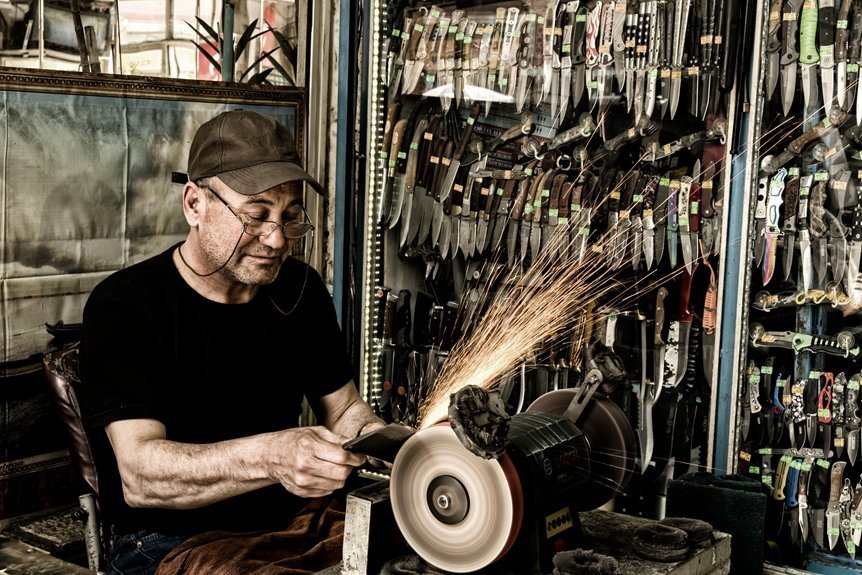
You want razor edges that bite clean. I’ve tested these stones on carbon and stainless blades. The feel tells the truth.
Top picks I trust
– *Shapton Kuromaku 1000 and 5000*
Fast cutting feel. Hard surface with a crisp sound. You feel each pass like sand on glass.
– *Yoshihiro 10000 grit*
Silky polish stage. The blade glides like it skates on ice. You see a mirror that pops.
– *KEENBEST 1000 and 6000 kit*
Budget win. Softer stone with a muddy slurry. Great feedback for new hands.
– *Kota Japan 1000 and 6000*
Solid starter set. Balanced soak and steady wear. It gets you sharp without fuss.
How I build the edge
Start at 1000 grit. This stage shapes the bevel and sets the bite. You hear a steady scratch that evens out.
Move to 3000 or 6000. The edge refines and grabs less. The sound softens and the feel turns smooth.
Finish higher if you want shine. A 10000 grit gives a clean polish for push cuts. Think of it as tuning a guitar string.
What to look for
- *Aluminum oxide grit* for consistent scratch pattern
- *Even binder* so the stone wears flat and true
- *Soak behavior* that fits your pace, splash and go or short soak
Tools that boost results
Grab a flattening stone. Flat stones cut faster and feel right. Add a leather strop for a final kiss of sharpness.
I’ve seen dull knives wake up in minutes. Pick the grit that fits your steel and your style. Then enjoy that clean slice.
MITSUMOTO SAKARI 1000/3000 Grit Whetstone Knife Sharpener
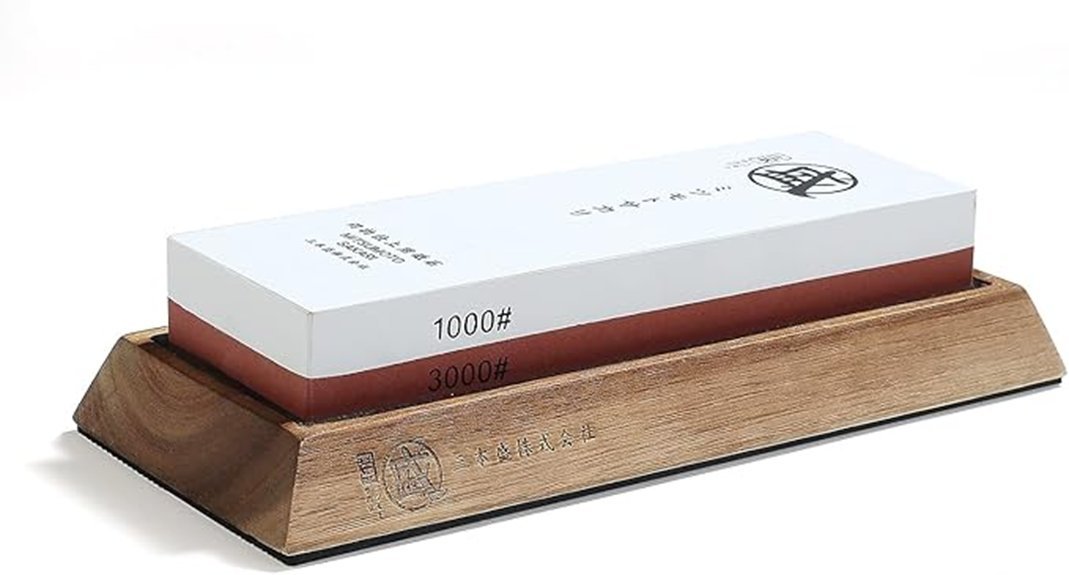
If you want a versatile, beginner friendly whetstone, this one earns its spot on your counter. I’ve used it on dull chef knives and felt the edge come back to life fast. It cuts like a hot knife through butter.
You get a dual grit surface that handles real kitchen work. The 1000 grit bites into dull edges with a gritty feel. Flip it and the 3000 grit smooths things out with a silky glide.
The white corundum feels solid and slightly chalky in hand. Water beads on the surface as you soak it. The wooden base grips the counter and stays put while you work.
Angle control feels natural after a few strokes. I keep it around 15° and let the stone do the work. You’ll hear a soft scratch as steel meets stone, that’s your cue you’re on track.
Best For: Home cooks who want a simple stone that sharpens and refines kitchen knives.
Pros:
- 1000 and 3000 grit combo covers sharpening and polishing
- White corundum build delivers steady cutting feedback
- Wood base with rubber grip keeps things stable and safe
Cons:
- Needs a short soak before each session
- Surface will wear and needs flattening over time
- Works best on standard dull edges rather than deep chips
Intelitopia Knife Sharpening Stone Set with Strop
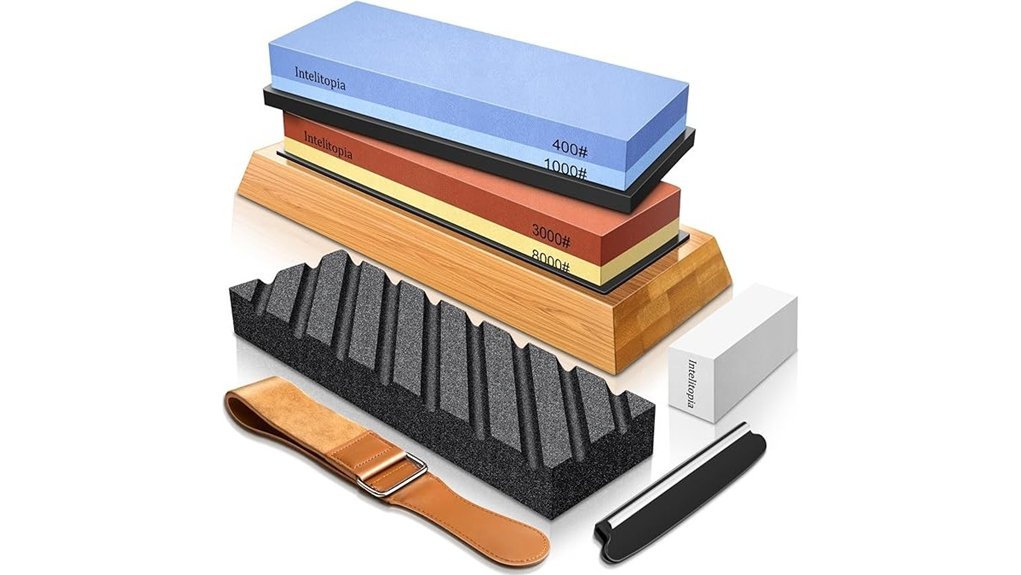
Home cooks who want a complete sharpening kit will like the Intelitopia set. I’ve used it on dull chef knives and the change feels instant. The stones feel dense and slightly gritty in hand. You hear a soft scrape as steel meets stone. It’s like tuning a guitar, small moves bring big results.
You get dual grit whetstones at 400 and 1000 plus 3000 and 8000. Start coarse for chips and tired edges. Move up for a smooth polish that bites into food. The leather strop feels supple and pulls off the last burr. Edges come out clean and keen.
The flattening stone keeps things level over time. That matters since flat stones cut true. The bamboo base grips the counter well. Rubber holders add extra stability. The angle guide helps you hold a steady edge. Think of it as training wheels that actually teach you.
I’ve sharpened chef knives and santoku blades with ease. Hunting knives respond well too. Even scissors improve with care. It’s a beginner friendly system that grows with you. You also get a 30 day return guarantee for peace of mind.
Best For: Home cooks and beginners who want a full kit that handles repair and fine polishing with control.
Pros:
- Full kit with stones strop flattening stone and accessories
- Wide grit range from 400 to 8000 covers repair and polish
- Stable setup with bamboo base rubber grips and angle guide
Cons:
- New users face a learning curve at first
- Stones need flattening to stay true
- Electric units feel faster for quick touch ups
Shapton K0702 Blade, #1000, Medium, Orange
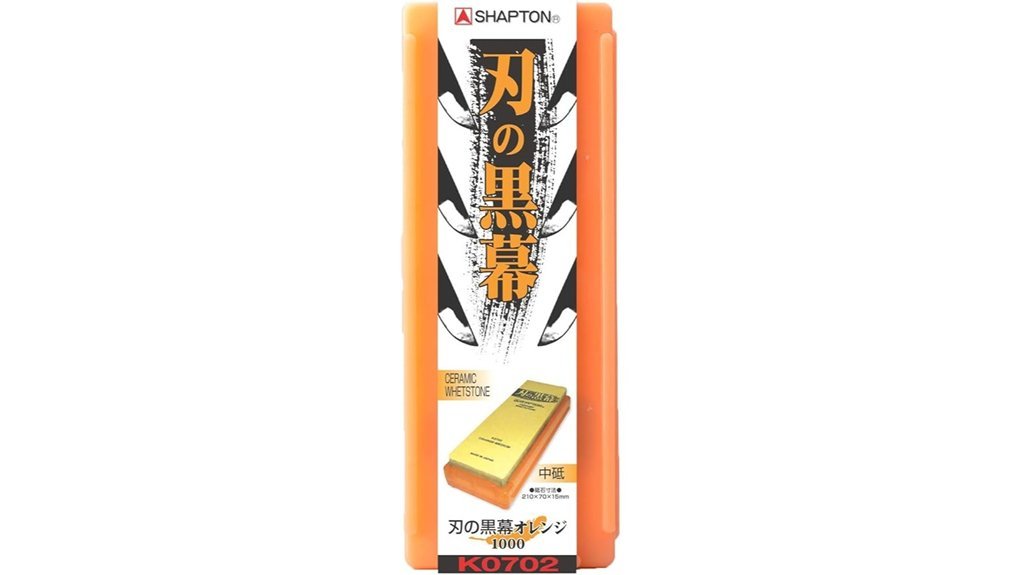
Sharpening with the Shapton K0702 feels crisp and direct. I hear a clean hiss on the stroke. The stone grabs steel like a steady handshake. You get a consistent #1000 grit that keeps edges keen with ease. This is a medium whetstone that balances speed with control. It works like a well tuned engine.
The Black Shade Series adds feel you can trust. I sense the edge through the stone. Feedback guides your angle in real time. It suits many blade steels and styles. Think of it as a road map for your hands.
Size matters in daily use. The 8.3 by 2.8 inch surface gives room for full strokes. The slim body stores fast in a drawer. The surface stays flat for a long time. Water beads then spreads with a faint mineral smell.
Shapton build quality shows on day one. I see steady results across sessions. The stone wears slow with regular work. It keeps a true face like a straight ruler.
Best For: You want a reliable medium grit for routine knife care and edge touch ups.
Pros:
- Fast #1000 grit with smooth control
- Clear feedback that teaches your hands
- Durable body with steady results
Cons:
- Suits light repair and daily upkeep best
- Slim profile favors gentle pressure
- Premium price reflects brand quality
Yoshihiro Professional Toishi Japanese Whetstone 10000 Grit
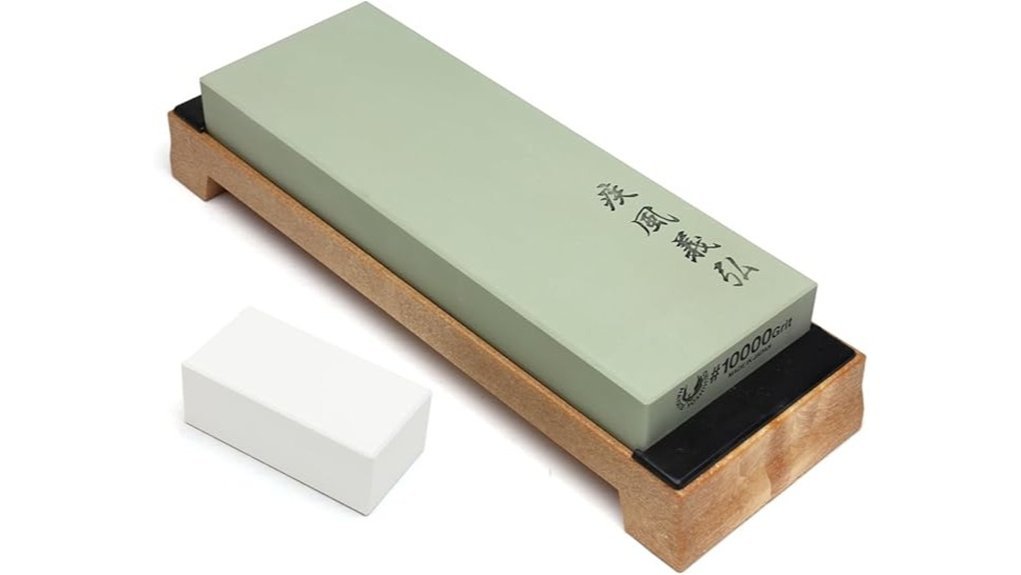
Serious cooks chasing a *mirror polish* will love this 10,000 grit Yoshihiro finishing stone. I felt the glassy surface grab the blade with a soft whisper. You finish here and watch the edge turn to a *razor sheen*. It glides through fish like silk on ice.
The stone measures 8 by 2.9 inches. You get *precise control* on long chef knives. The 0.9 inch thickness feels solid in hand. It keeps its shape through years of light honing. Yoshihiro makes it in Japan. You also get a nagura stone for slurry prep. That slurry feels creamy and smells faintly mineral.
Use light pressure. Keep strokes smooth. Let the stone do the work. Think of it as polishing a lens until it shines.
Best For: Serious home cooks and pro chefs who want a mirror polish and peak slicing feel.
Pros:
- Ultra fine 10000 grit leaves a polished edge with low drag
- Wide 2.9 inch face gives better control on long blades
- Nagura stone builds slurry for consistent results
Cons:
- Works as a finishing step with lower grit stones used first
- Fine grit cuts slowly on very dull edges
- Learning curve feels steep for new sharpeners
Shapton Kuromaku Ceramic Whetstone Set 1000/5000 Grit
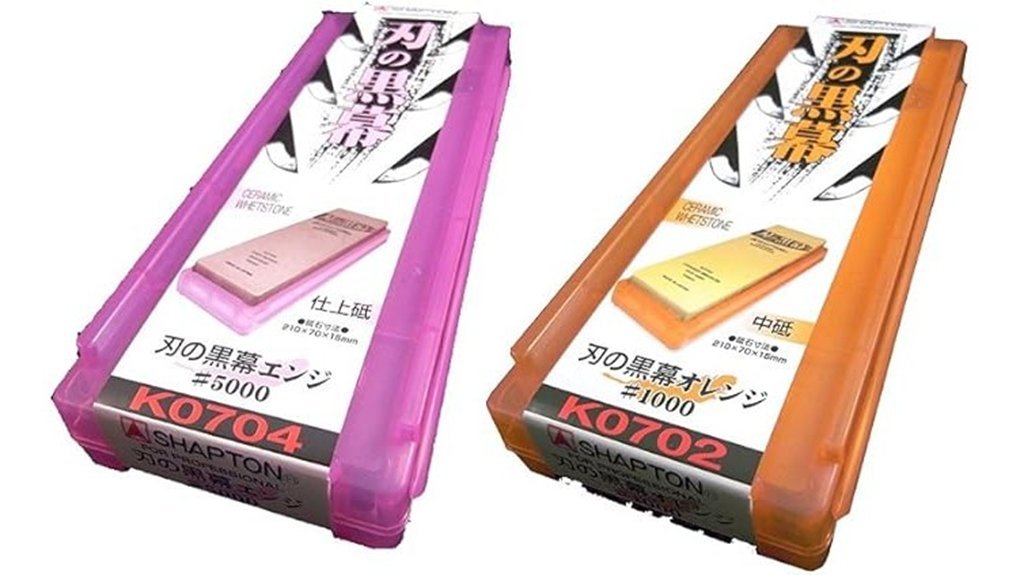
Precision cooks will love the Shapton Kuromaku 1000/5000 set for fast and clean sharpening. I felt the ceramic bite the steel with a crisp whisper. You get a #1000 stone that shapes the edge with speed. You get a #5000 stone that leaves a smooth polish and keen bite. The surface feels hard and glassy to the touch. It cuts fast and stays flat for many sessions. Think of it as a two step dance for your blade.
You will notice the color coded stones right away. The plastic cases click open with a hollow snap. Each case works as a steady holder on the counter. Water beads on the surface and spreads with a light rub. Size feels just right in hand at 210 by 70 by 15 millimeters. Weight sits firm at 3.1 pounds. It is a daily driver that earns its keep.
Best For: Home cooks and pros who want fast and reliable sharpening with a simple two step system for razor sharp kitchen knives.
Pros:
- Fast cutting ceramic that stays flat for longer use
- Balanced grit pair for shaping and polishing edges
- Ventilated cases act as stable holders on the bench
Cons:
- A coarse stone would expand repair work on very dull edges
- Price sits in the premium tier for whetstones
- Technique brings out the full potential of this high performance surface
Specs at a glance:
- Grits: #1000 and #5000
- Material: ceramic whetstone
- Size: 210 x 70 x 15 mm each
- Weight: 3.1 pounds set
- Use: kitchen knives, sushi knives, fine tools
This set gives you speed and feel in one package. It keeps your edge keen like a fresh razor.
KING 1000/6000 Grit Whetstone Starter Set
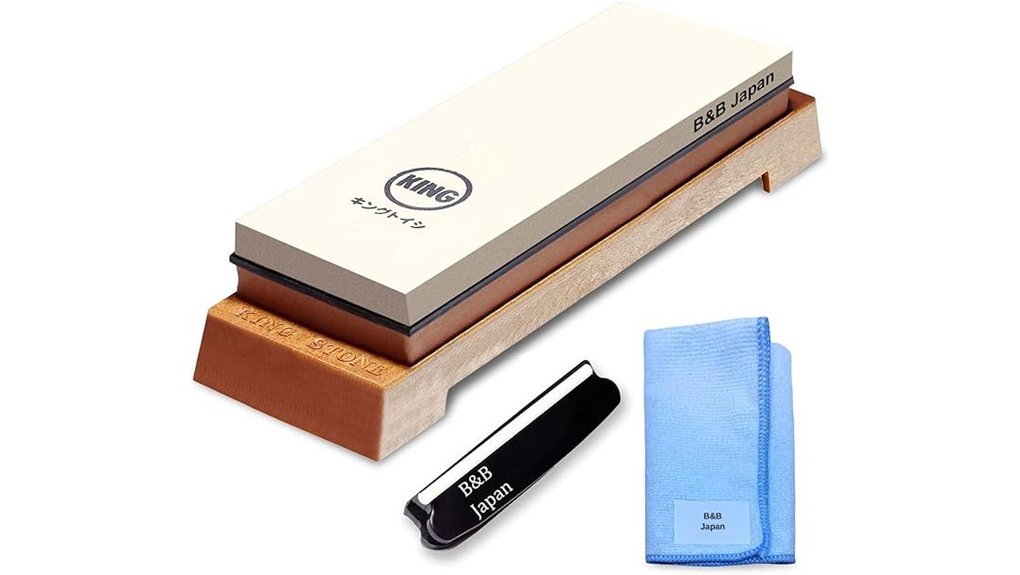
Home cooks, this kit feels like training wheels that actually teach you balance. I’ve used this all in one 1000 and 6000 grit set on dull chef knives and light paring blades. The stone feels smooth yet slightly gritty under your fingers. You hear a soft scratch as steel meets stone. That sound tells you the edge is forming.
Start with the 1000 grit. It bites into tired edges fast. Flip to 6000 grit. You’ll feel a silky glide as the polish builds. The edge comes back clean and bright. Like turning a rough sketch into a finished line.
The dual sided stone sits firm on the base. No slipping. The angle holder guides your hand with ceramic rods. It keeps your angle steady so your strokes stay true. I found it helpful on day one. You build muscle memory without guesswork.
Made in Japan, this whetstone holds up well with regular use. It suits stainless kitchen knives and small carving blades. The cloth soaks water and wipes slurry with ease. Cleanup feels quick and simple. A satisfaction guarantee adds peace of mind right out of the box.
Best For: Home cooks and beginners who want a simple kit with guided angle control.
Pros:
- 1000 and 6000 grit cover sharpening and polishing in one stone
- Helpful extras, angle holder, stable base, absorbent cloth
- Made in Japan with reliable build for daily kitchen use
Cons:
- Angle holder feels limiting as your skills grow
- Suits light to medium wear, heavy chips need a coarse stone
- Needs soaking and basic care for best results
HMPLL 4-Sided Whetstone Knife Sharpening Set
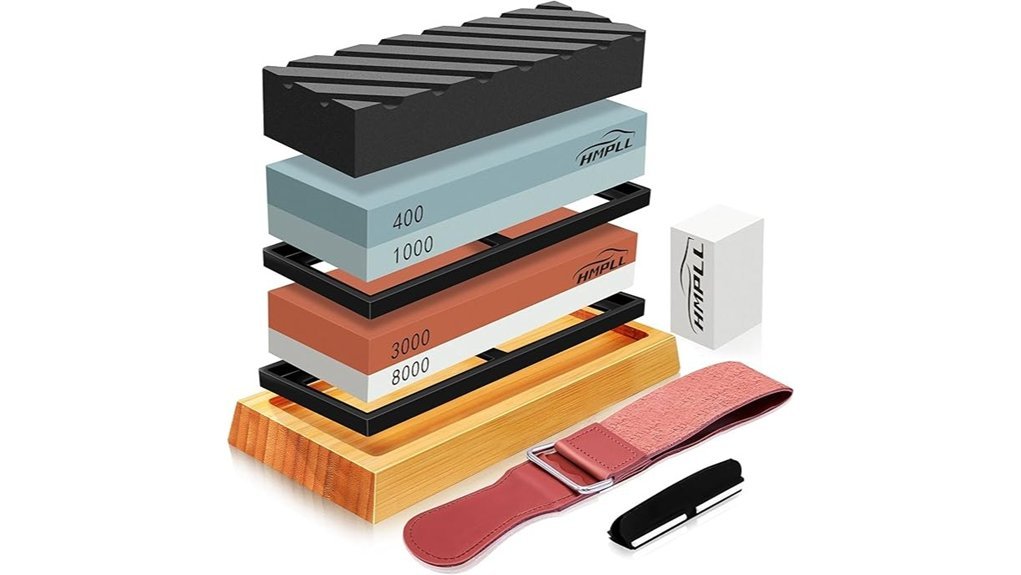
A full 4 grit progression gives you control at every stage. I’ve used this set on dull chef knives and chipped edges. It bites fast at 400 and 1000. It refines smoothly at 3000 and 8000. You feel a creamy glide as the slurry builds. The sound shifts from gritty to a soft whisper. That’s your cue. *Like a well tuned engine.*
The white corundum cuts clean and stays cool. You keep feedback through each pass. The bamboo base grips the counter. The rubber feet hold firm. The silicon holder locks the stone in place. Water beads on the surface and carries swarf away. Setup feels solid in hand.
Extras round it out. The leather strop adds a slick finish. The flattening stone keeps faces true. The angle guide steadies your wrist. You get repeatable results fast. You can sharpen kitchen knives and chisels. Scissors and razors respond well too.
Best For: Home cooks and DIY users who want one kit for repair and polish.
Pros:
- Full set 400 1000 3000 8000 for each stage
- Stable base with bamboo and rubber grip
- Helpful extras with strop and flattener and guide
Cons:
- Soak stones before use and build skill with practice
- Plan a longer session than electric tools
- Maintain flat surfaces with periodic lapping
KEENBEST 1000/6000 Grit Whetstone Knife Sharpener Kit
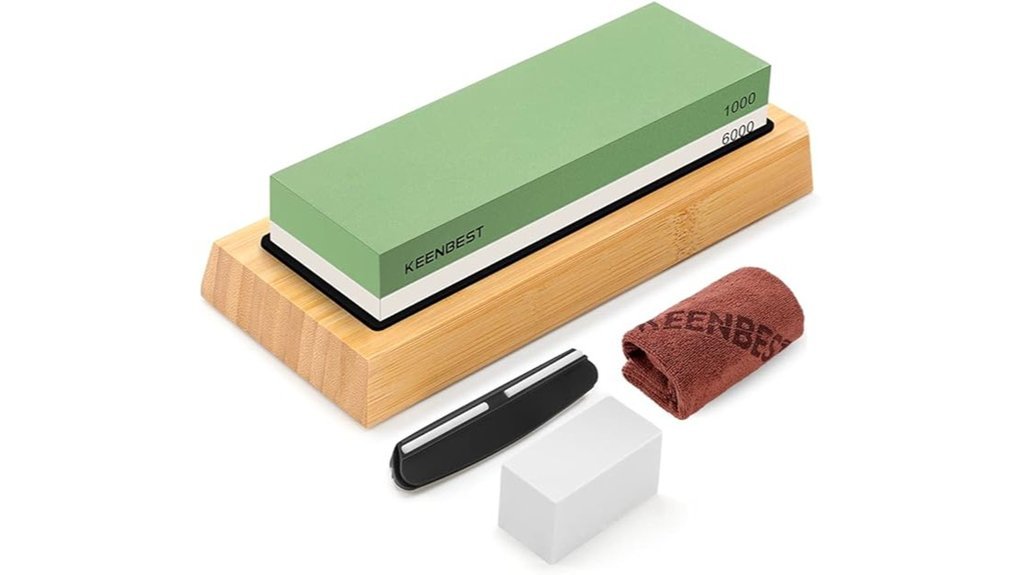
Beginners will click with the KEENBEST 1000 6000 *dual grit whetstone kit*. I’ve used it on dull chef knives and felt the grit bite then glide. It works like a two step tune up. The *1000 grit side* rebuilds a tired edge. The *6000 grit side* brings a smooth polish. You feel a soft slurry form under your fingers. The sound shifts from scratchy to silky. You keep a steady angle with the guide. The *anti slip base* grips the counter. The flattening stone keeps the surface true over time. White corundum feels dense and consistent. Soak it for 15 minutes. Add water as you go. Follow the guidebook and you’re off to the races.
Best For: Beginners and budget cooks who want a simple all in one sharpening kit for kitchen knives.
Pros:
- Dual 1000 and 6000 grit handles repair and polish
- Full kit with angle guide base flattening stone and towel
- White corundum feels durable and smooth with water use
Cons:
- Needs a soak and a short setup before use
- Angle guide feels rigid for advanced hands
- Suits light chips and routine edge care best
Quick Specs:
- Grits: 1000 and 6000
- Material: white corundum
- Use: water stone with soaking
- Extras: angle guide base flattening stone towel guidebook
Kota Japan 1000/6000 Grit Whetstone with Base
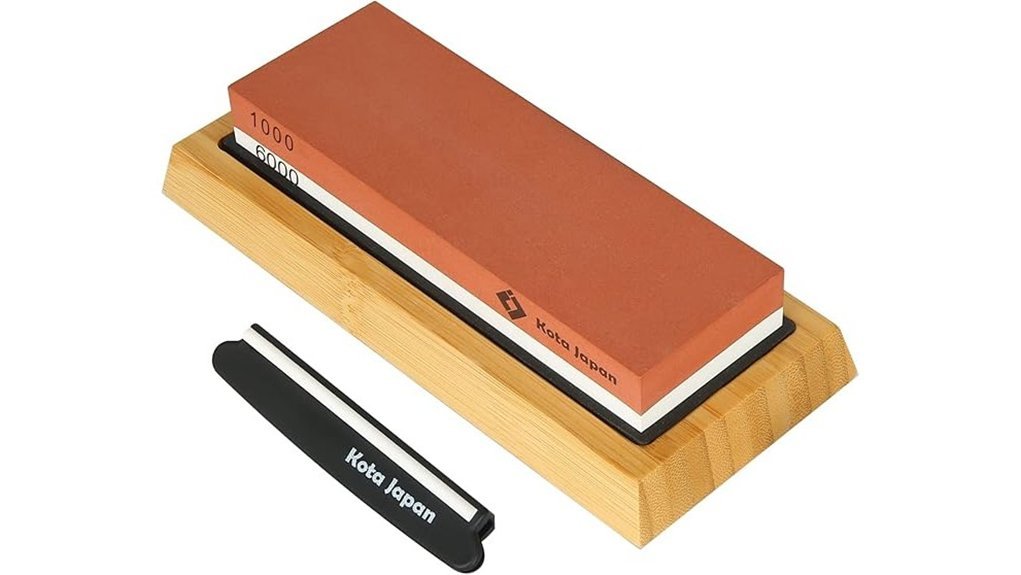
Dual grit makes this stone a workhorse you will reach for daily. I used the 1000 grit side to bring dull edges back to life. It bites with a soft hiss and gives clear feedback under your fingers. Then I flip to 6000 grit for a glassy polish that catches the light. Think of it as shifting from sandpaper to silk.
The aluminum oxide feels dense and smooth in hand. It holds shape well and keeps edges keen for longer sessions. You soak it and skip oil, which keeps cleanup simple. The bamboo base with silicone grip locks in place on the counter. It stays put while you focus on angle and pressure. Control feels steady like rails on a track.
I ran kitchen knives, chisels, and scissors across it. Each pass felt predictable and clean. The size fits a drawer yet gives room for full strokes on chef knives. Water beads on the surface and carries away swarf with a faint gritty sound. It’s a compact setup that punches above its weight.
Best For: You want one stone for sharpening and polishing at home or in a busy kitchen.
Pros:
- 1000 and 6000 grit cover repair and polish in one stone
- Aluminum oxide build stays flat and consistent
- Non slip bamboo base adds grip and safety
Cons:
- Soak step adds a few minutes before you start
- Smaller surface suits medium blades best
- New users need a few sessions to dial in angle and feel
Wucgea Knife Sharpening Whetstone Kit with Accessories
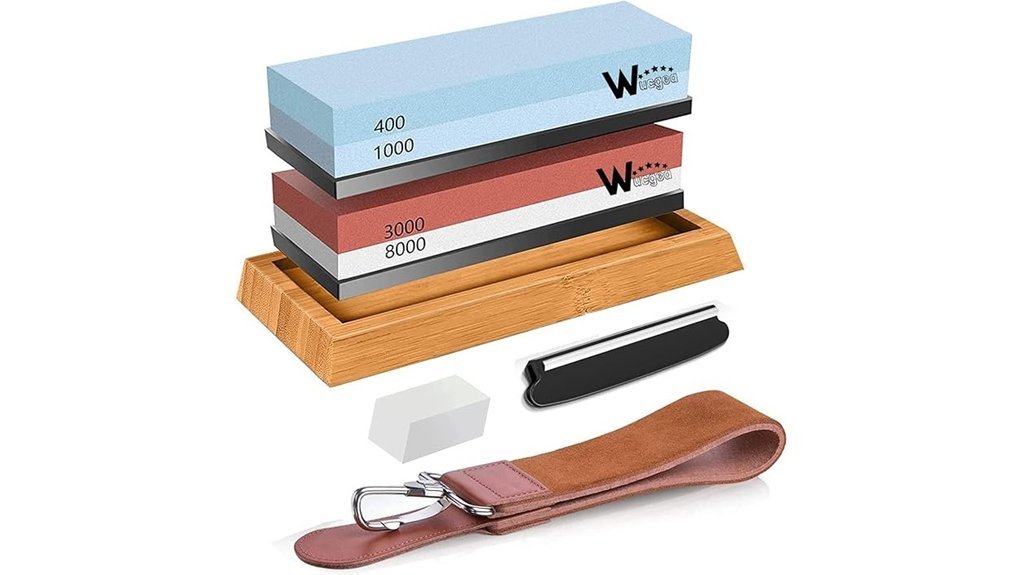
If you want a complete sharpening setup, this kit hits like a well tuned blade. I’ve used it on tired chef knives and it brought them back to life fast.
You get dual whetstones in 400, 1000, 3000, and 8000 grits. I start on 400 to fix chips, then move up step by step. The stone feels smooth yet gritty, like fine sand with purpose. Water beads on the surface and you hear a soft scratch as steel meets stone. That sound tells you it’s working.
The white corundum cuts clean and stays consistent. The angle guide helps you hold steady, though your hands learn the feel over time. Think of it like riding a bike, wobbly at first then smooth.
Setup stays simple. You soak the stones, then sharpen with water. No oil mess. The bamboo base grips the counter and feels solid in hand. Rubber holders keep everything planted so you can focus on your stroke.
I’ve sharpened kitchen knives, hunting blades, and chisels with it. Each edge came back crisp. Finish on the leather strop and the blade glides through paper like butter.
Best For:
Home cooks and DIY folks who want a full system with clear grit progression and easy workflow.
Pros:
- Full kit with stones, angle guide, flattening stone, and strop
- Works on knives, scissors, and woodworking tools
- Water sharpening keeps cleanup quick and simple
Cons:
- Soak time adds a short prep step
- Technique improves with practice
- Stones wear over time and need flattening
Why it stands out:
You get a *unique* mix of grits that covers repair to polish in one box. It feels like having a small sharpening bench at home, minus the clutter.
Factors to Consider When Choosing Japanese Whetstones
When I pick a Japanese whetstone, I start with grit level. It sets your result. Coarse grits bite fast and feel gritty under your fingers. Fine grits glide smooth and leave a mirror edge. Think of it like sandpaper for steel, rough first then silk.
Next I check stone material quality. You want even cutting and a clean feel. Good stones give a soft hiss as the blade moves. Poor ones feel scratchy and uneven. I’ve seen cheap binders crumble mid session, it’s a mess you don’t want.
Size matters more than you think. A longer stone gives you room for full strokes. Thickness adds life and keeps the base steady. I like a solid block that stays put, like a good cutting board on a busy night.
Soaking comes next. Some stones drink water and darken as they load up. Others are splash and go and stay firm. You should match this to your routine, quick touch ups or long sessions.
Extras help more than you expect. A rubber base grips the counter. A flattening plate keeps the surface true. Here’s what I look for in the box:
- Non slip base for stability
- Flattening stone for upkeep
- Storage case to keep dust off
Get these right and your edges will sing.
Grit Level Selection
Why grit level matters in a Japanese whetstone. I’ve tested many stones and the feel tells the story. Coarse grit bites hard and sounds gritty. Fine grit feels smooth like glass. Think of it as sandpaper for steel.
Start with purpose.
Grit controls how fast you remove metal. It also shapes edge polish. You want speed first then refinement. That flow saves time and steel.
Coarse grit below 1000.
This range fixes chips and resets a dull edge. It cuts fast and leaves deep scratches. I hear a rough scrape and feel heavy drag. Use it like a shovel that moves a lot of dirt fast.
Medium grit around 1000.
This is your daily driver. It sharpens kitchen knives with control. The feedback feels firm and even. I use it for most sessions. It hits the sweet spot.
Fine grit above 3000.
This stage smooths scratches and removes the burr. The blade starts to glide and reflect light. Edges feel crisp and clean. It’s the polish pass that brings the shine.
Simple progression that works.
I stick to a two stone setup for speed.
- 1000 grit for shaping and edge setting
- 3000 to 6000 grit for polish and bite
That combo gives you speed and a refined finish.
Match grit to steel and use.
Hard steel likes a lighter touch and higher grit. Soft steel responds well to medium grit. A sushi knife wants a finer finish. A camp knife prefers a toothy edge.
Quick take.
Choose grit with intent. Feel the stone and listen to the sound. Your edge will tell you when it’s right.
Stone Material Quality
Stone Material Quality
Grit sets the plan. The stone decides the result.
I’ve felt cheap stones drag and scratch. I’ve also felt premium stones glide like silk. You want corundum or aluminum oxide. They cut fast and stay true.
Japanese stones stand out. Their particles feel fine like soft sand. You get smoother passes and a cleaner edge. It’s like butter on warm toast.
Better stones wear slow. They keep a flat face and stay stable. You spend more time sharpening and less time fixing the stone.
Water matters. Good stones drink it fast and stay slick. You hear a soft hiss as steel meets grit. That sound tells you the surface stays alive.
Grit spread matters too. Even particles give even edges. You feel steady feedback in your hands. No guesswork. No surprises.
Here’s what I look for:
- Material: corundum or aluminum oxide
- Feel: smooth draw with light resistance
- Wear rate: slow and even
- Water response: quick soak and steady slurry
- Grit consistency: tight and uniform
Pick a solid stone and your results repeat every time. Same angle. Same pressure. Same clean edge. Like a well tuned instrument.
Size And Thickness
A bench stone that fits your knife makes every stroke count. I feel the difference the moment steel meets grit. It sounds like a soft hiss.
Most whetstones sit at 7 to 9 inches long. That length fits standard kitchen knives. You get smooth passes and better control. Longer blades need more runway. Pick a bigger stone so the edge glides like a train on rails.
Thickness sets the tone. A one inch stone feels solid in hand. It stays flat longer and keeps its grit bite. I spend less time flattening and more time sharpening. That saves effort and keeps results sharp.
Thin stones have their place. They slip into a bag with ease. Great for camp or travel kits. Think of them as a pocket tool that still pulls weight.
What to look for
- Length, 7 to 9 inches for most kitchen knives
- Thickness, about 1 inch for stability
- Surface feel, smooth glide with a soft scratch sound
- Portability, thinner stones pack fast
Match size to your blades. Match thickness to your workflow. You get steady contact and clean edges every time.
Soaking Requirements
Soaking Requirements
I’ve soaked a lot of stones, and this step sets the tone like a good warm up before a run. You feel the difference right away.
Start with clean water. Drop the stone in and watch the bubbles rise. That soft hiss tells you the pores are filling up.
Most Japanese whetstones need 5 to 15 minutes. I stick to the lower end for finer grit stones. Coarse stones enjoy a longer soak.
Touch the surface. It should feel slick and cool, almost like wet clay in your hands. That texture builds a light slurry, which is a thin mix of water and grit that boosts cutting speed.
Follow the maker’s guide. Each stone has its own personality. Treat it right and it pays you back with smooth feedback.
Keep the stone wet while you sharpen. I splash water often. The blade should glide with a soft whisper across the surface.
Here’s what I look for every time:
- Bubbles stop rising from the stone
- Surface feels evenly wet and smooth
- Slurry forms quickly with light passes
- Water stays on top instead of soaking in fast
Skip guesswork and trust your senses. A well soaked stone feels alive in your hands, like butter on warm toast.
Included Accessories
Once I soak the stone, the accessories take center stage. They feel like the secret sauce.
Angle guides lock in your edge. You feel the blade glide with a soft whisper. Your strokes stay steady.
Flattening stones keep the surface true. I hear a gritty rub as it levels high spots. A flat stone gives clean results every time.
Leather strops add the final polish. The leather smells warm and rich. Your edge comes out sharp and smooth like glass.
Non slip bases grip the counter. You feel solid contact under your hands. Each pass stays even and controlled.
Manuals give clear steps. They show soak times and care tips. You follow along and build skill fast.
Here is what I look for in a good kit:
- Angle guide for steady bevels
- Flattening stone for surface care
- Leather strop for final polish
- Rubber base for grip
- Clear guide for quick setup
These extras save time and boost consistency. I see better edges from the first session. It all works together like a well tuned band.
Skill Level Compatibility
Your skill level decides your stone. I’ve tested dozens on real blades. You feel the grit bite and hear that soft scratch. It tells you everything.
Beginners, start simple. Think training wheels for steel.
- Dual sided stones like *400 and 1000 grit* give fast results
- 400 grit repairs chips and dull edges
- 1000 grit builds a clean working edge
- An *angle guide* keeps you near 15 to 20 degrees
- Water stones feel smooth and cut fast
You’ll notice the slurry form under your fingers. It feels like wet clay. That feedback builds muscle memory fast.
As you improve, control matters more. You call the shots now.
- Single grit stones sharpen with precision
- 3000 grit refines the edge
- 8000 grit adds a mirror polish
- 10000 grit gives razor level sharpness
I like how higher grits whisper across the blade. The sound drops. The edge pops hair with ease.
Advanced users chase feel and durability. This is where oil stones step in.
- Oil stones last longer under pressure
- They cut slower but stay flat longer
- Oil adds a slick feel and a steady glide
They smell faintly of honing oil and steel. It’s old school in the best way. Like a well worn workshop bench.
Pick based on how you sharpen today. Your stone should match your pace.
Conclusion
You saw the stones. I’ve used each one on real blades. Steel sings on the surface. You feel the grit bite and glide.
Pick the right Japanese whetstone and you turn dull edges into clean cutters. I watch the burr form. I hear the soft scrape. That sound means progress.
Start with a coarse grit for chips. Move to a medium grit for shaping. Finish on a fine grit for polish. Simple path. Clear results.
*Sharp knives change how you cook.* Slices fall away with ease. Herbs release a fresh scent. Meat cuts stay smooth and clean. Like butter on a hot pan.
Ignore stone choice and your edge feels rough. Choose well and every cut feels light. I’ve seen cheap steel improve with the right stone. That’s the magic.
Quick guide to grit levels:
- Coarse 200 to 800, fixes damage fast
- Medium 800 to 2000, builds the edge
- Fine 3000 and up, adds polish and bite
Water beads on the surface. The stone feels cool and steady. Your hands learn the angle. Muscle memory kicks in.
*Think of it like tuning a guitar.* Each pass brings the edge closer to perfect pitch. You hear it. You feel it.
Use steady pressure. Keep the angle tight. Rinse and repeat. Your kitchen starts to feel like a pro station.