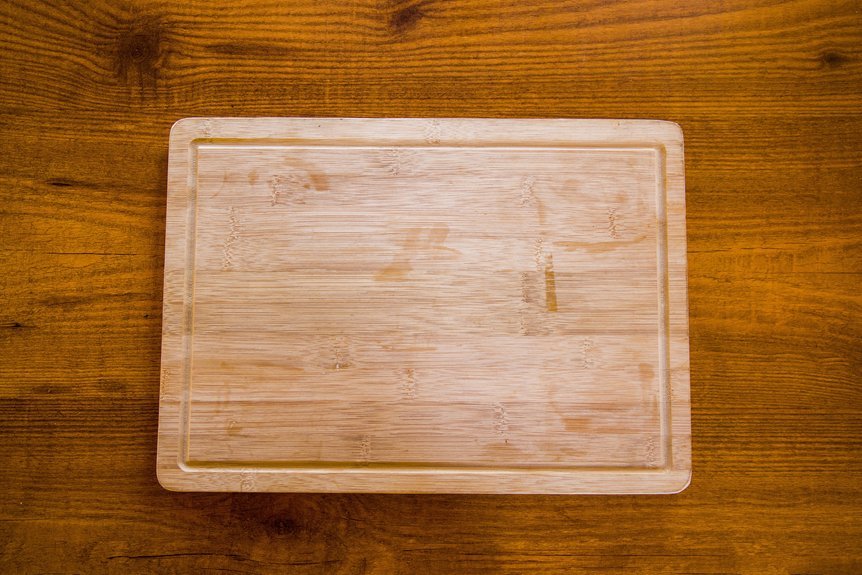
I’ve used both boards daily, and the difference shows fast. Acacia treats your knife edge better. The blade glides with a soft thud. It feels like cutting on firm butter. You get strong wear resistance and a rich grain that looks great on the table. You do need oil, think of it like feeding leather so it stays supple.
Bamboo keeps life simple. It feels light in your hand and wipes clean fast. The surface feels harder and gives a sharper tap with each chop. That hardness can wear your edge over time. Still, it suits busy kitchens that want easy care.
Here’s how I size it up after real use:
- Acacia wood cutting board
- Softer surface for knife edge
- Warm grain and light scent
- Needs regular oiling
- Doubles as a serving board
- Bamboo cutting board
- Hard grass fibers for durability
- Light weight and easy wash
- Lower price point
- Faster edge wear on knives
Your pick comes down to rhythm in your kitchen. Cook often with sharp knives, acacia feels like a steady drumbeat. Want quick prep with less upkeep, bamboo fits like a reliable old tool.
Acacia Wood Cutting Board with Juice Groove
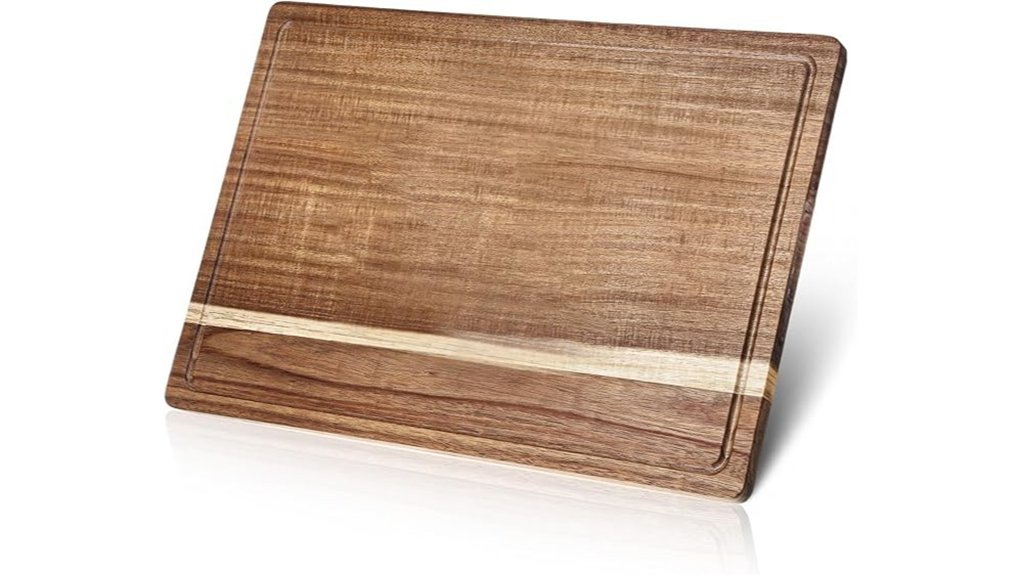
If you cut juicy meat, this acacia wood cutting board keeps your counter clean. I used it with roast chicken and ripe tomatoes. The groove caught every drip. No mess. No stress.
You get a 17.3 by 11.8 inch surface. It feels solid at 0.59 inches thick. The wood feels smooth and warm in hand. Knives glide with a soft thud. Flip it over and the smooth side turns into a serving tray. Think cheese and fruit on display. It looks sharp on the table.
Dense acacia holds its shape and stays flat. My blades stayed sharper after weeks of use. The inner handles sit flush so your hands move freely. Smart touch.
Care stays simple. Rinse it. Dry it. Oil it once a month. The board keeps a clean smell and a rich tone. It ages like a cast iron pan, better with time.
Best For: Home cooks and hosts who want a stylish board that handles juicy prep and serves food with ease.
Pros:
- Deep juice groove traps liquid and keeps surfaces clean
- Reversible build gives you prep and serving in one
- Dense wood protects edges and feels solid
Cons:
- Needs monthly oil for best finish
- Hand wash keeps the wood in top shape
- Solid weight adds heft during lifting
It works hard and looks good doing it. Like a trusty sous chef in your kitchen.
Samhita Acacia Wood Cutting Board with Handle (15×7)
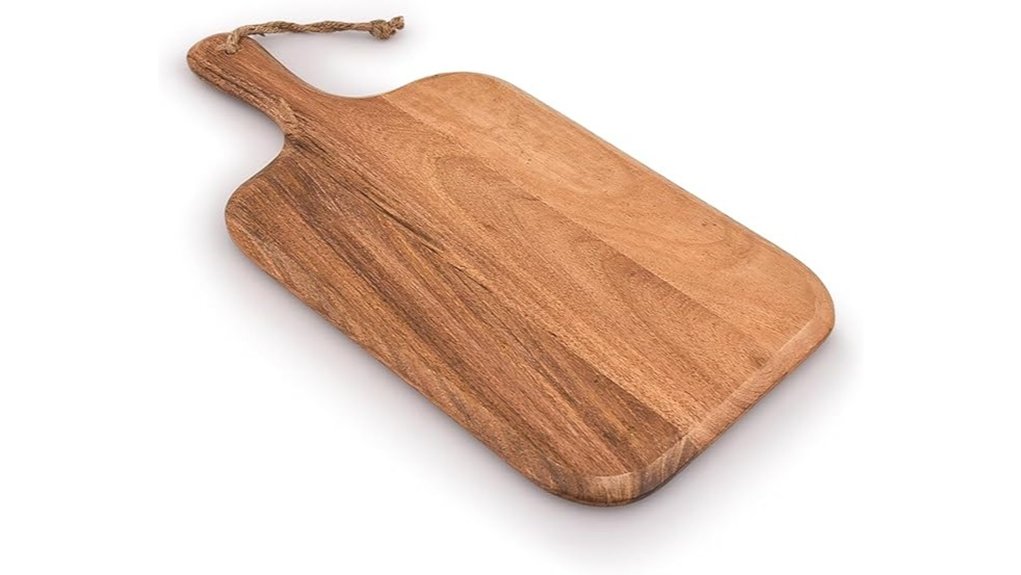
Home cooks who want a compact board will like the Samhita Acacia Wood Cutting Board with Handle. I’ve used it for quick prep and table service. The 15 x 7 inch surface feels smooth and warm in hand. You get 100% hard acacia wood that resists wear and keeps a rich grain. It weighs 0.58 kg so you move it with ease. Think of it as a small workhorse, it pulls its weight.
Slice meat with a soft thud. Cut bread and hear a gentle tap. Serve cheese and fruit with a clean look. The built in handle gives a firm grip so you carry it from sink to table. Wipe it with a damp cloth and it looks fresh. Add a light oil coat and the wood glows like new. It smells faintly nutty after oiling, a nice touch.
Best For: You want a compact board for prep and serving in small kitchens.
Pros:
- Acacia hardwood feels dense and shows a rich brown grain
- Works for cutting and serving so you switch tasks fast
- Light weight build and handle feel easy in hand
Considerations:
- Size suits quick tasks and light prep
- Regular oil keeps the finish lively
- Hand care keeps the wood in top shape
Quick Specs:
- Size, 15 x 7 inches
- Material, 100% acacia wood
- Weight, 0.58 kg
- Feature, built in handle
You get a tidy board that fits daily cooking. It’s small but mighty, like a pocket knife for your counter.
Zhehao Acacia Wood Cutting Board Set with Handle
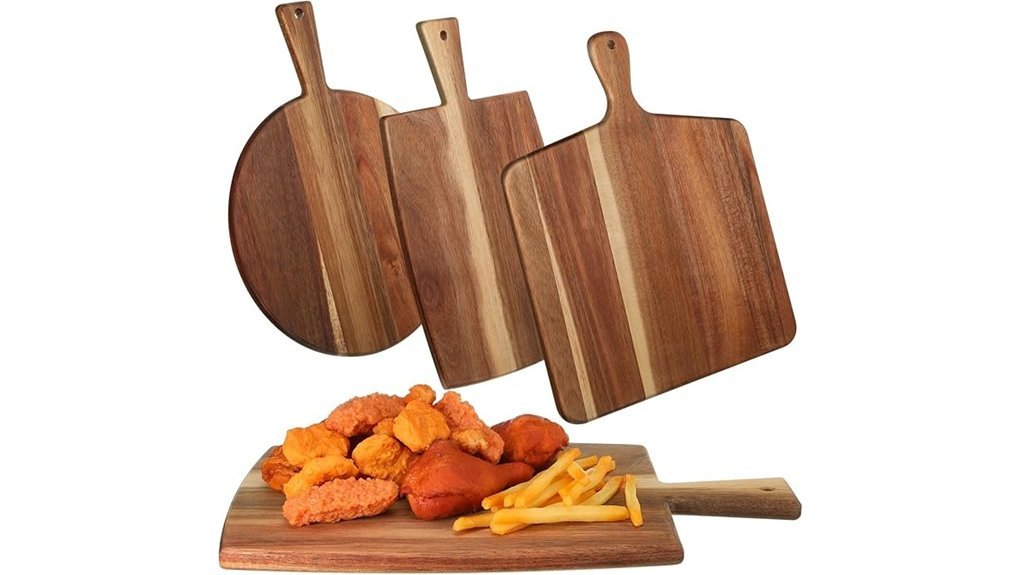
A versatile three piece set like the Zhehao acacia boards fits real kitchens. I used all three in one prep session. You get square, round, and rectangular boards at about 15.75 inches. Each one feels like the right tool at the right time, like a Swiss army knife for your counter.
The ergonomic handles feel smooth in hand. I carried sliced veggies from counter to pan with ease. You get steady control with every move. No slipping or fumbling.
Acacia wood feels dense and warm. It gives off a faint nutty smell when fresh cut. The surface stays smooth after heavy use. I saw strong resistance to warping and cracking over time.
You can chop, slice, and serve on the same board. I plated grilled meat right on it. It looked clean and inviting on the table. These boards pull double duty without breaking a sweat.
Best For: Home cooks and hosts who want flexible prep space and serving style in one set.
Pros:
- Three shapes give flexible prep options for daily cooking
- Acacia wood holds up well with long term use
- Built in handles make transfer quick and secure
Cons:
- Hand washing keeps the wood in great shape
- Similar thickness suits light and medium prep best
- Wood surface benefits from regular oil care to keep it fresh and clean
Acacia Wood Cutting Board with Handle 13×7
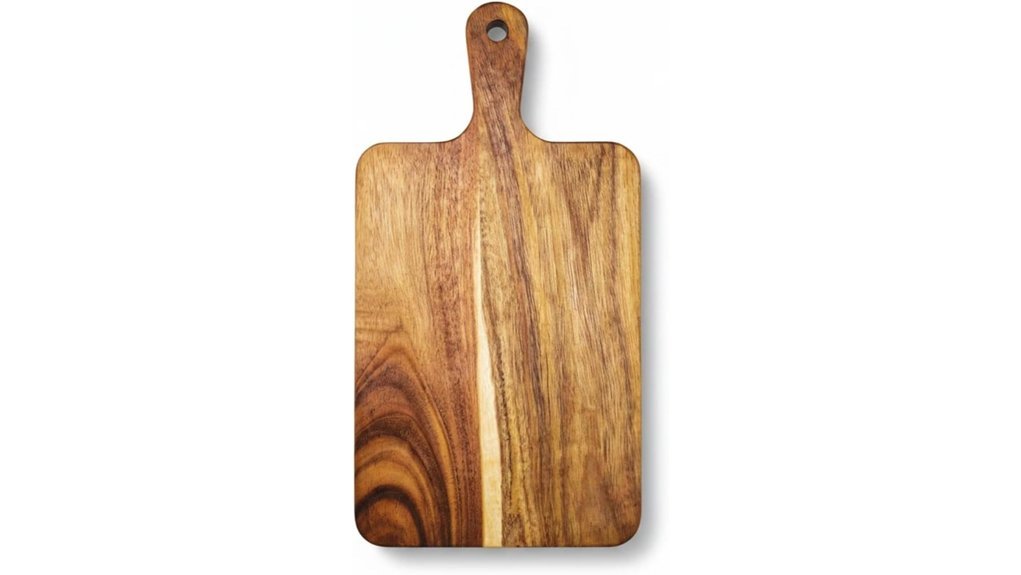
For tight counters and fast prep, this 13×7 *acacia board with handle* hits the sweet spot. I’ve used it daily and it feels smooth and warm in hand. The grain shows rich tones and a light wood scent. It weighs 0.38 kilograms so you move it with ease. Small board, big punch.
The handle feels natural and the hanging hole keeps it within reach. I grab it for herbs, fruit, and quick sandwiches. It also shines as a serving board for cheese and bread. Guests notice the rustic look right away.
Care stays simple and keeps the wood alive. Wash by hand and dry right after. Add food safe oil to keep the surface supple and rich. Treat it well and it ages like fine wine.
It also fits DIY projects with ease. I’ve engraved names for gifts and it looks sharp. Think housewarmings, birthdays, and anniversaries.
Best For:
Home cooks with small spaces who want a compact prep and serving board that doubles as decor.
Pros:
- 13×7 size saves space and still handles daily prep
- Premium acacia hardwood feels sturdy and smooth
- Handle and hole make storage quick and clean
Cons:
- Small surface fits light prep best
- Regular oil keeps wood at its best
- Hand washing keeps the finish rich
Acacia Cutting Board Set with Stand (3-Piece)
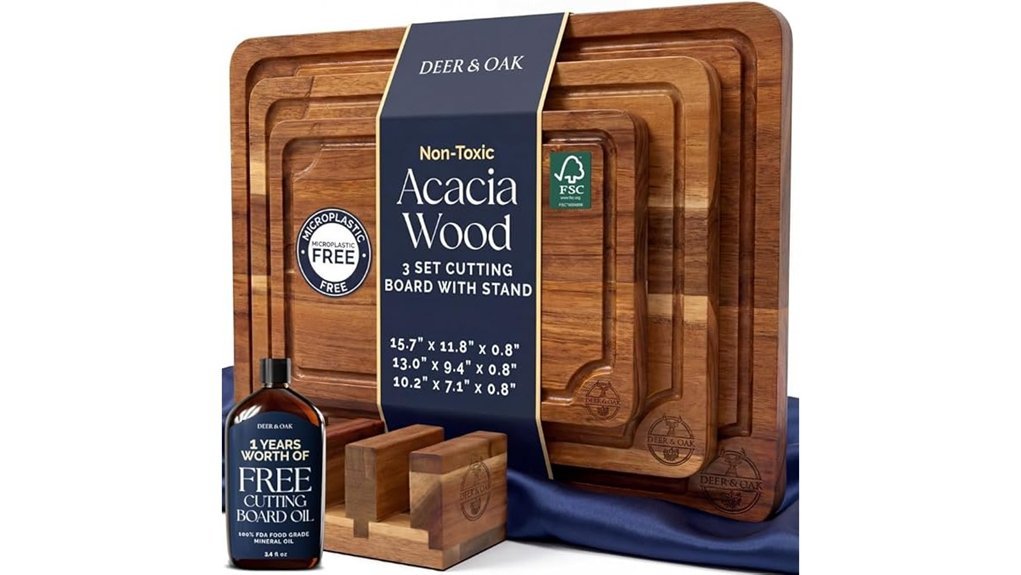
Three sizes cover your prep like a well tuned band. I used the large board for meat, the medium for veggies, and the small for fruit. You get flow without crowding. Each board arrives pre oiled and feels smooth and warm in hand. The wood gives off a light nutty scent that feels fresh. You also get a 3.4 ounce oil bottle for care.
This set uses 100 percent acacia wood. The grain feels tight and solid. My knife glides with a soft tap that sounds clean. The surface handles moisture and stains with ease. You get fewer visible cuts over time. I like the confidence it gives during fast prep.
The stand keeps things tidy like a book rack for your kitchen. It sits firm on the counter and holds each board upright. Air moves around each piece so drying stays quick. It fits in small spaces and keeps your setup sharp.
Best For: Home cooks and meal preppers who want a clean setup with three boards ready at once.
Pros:
- Three sizes support multi task prep with ease
- Dense acacia wood handles moisture and marks well
- Stand and oil support simple care and storage
Cons:
- Regular oiling keeps the wood at its best
- Solid build gives a heavier feel than plastic
- Flat surface suits dry prep and clean slicing tasks
Astercook Bamboo Cutting Boards Set with Storage Stand
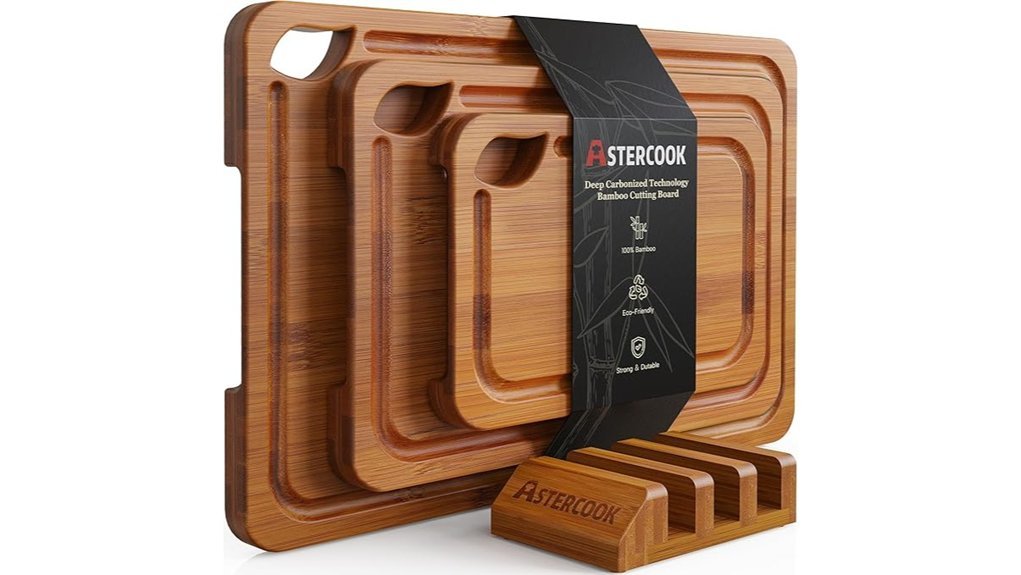
I’ve used this three board bamboo set in my own kitchen, and it keeps prep tight and tidy. You get sizes at 15 by 10, 12 by 8, and 9 by 6 inches. I swap boards as I chop herbs or slice a roast. No crowding. It feels like a well oiled machine.
The bamboo feels smooth and warm in hand. It goes through high heat carbonization, which means less water soak and less warp over time. My knife glides with a soft thud on contact. Edges stay keen. You’ll notice the grain looks rich and slightly toasted.
Flip a board and you get options. Deep grooves catch juices during carving. The flat side plates cheese and fruit with a clean look. I like the quick flip during busy prep. It saves time and keeps flow.
The stand earns its keep. It holds boards upright so air moves around them. They dry fast and stay within reach. My counter looks calmer. Think of it as a home base for your tools.
Best For: You want a flexible cutting board set that saves space and shifts from prep to serving with ease.
Pros:
- Three sizes cover quick prep and big carving jobs
- Carbonized bamboo resists warp and limits water uptake
- Stand keeps boards upright, dry, and ready
Cons:
- Bamboo needs oil to keep a rich look and long life
- Juice grooves call for a bit more scrubbing after heavy use
- Hand wash fits best for care
Quick Specs:
- Material, eco friendly bamboo
- Sizes, 15 by 10, 12 by 8, 9 by 6 inches
- Features, juice grooves, dual sides, storage stand
- Care, hand wash and periodic oiling
Royal Craft Wood Bamboo Cutting Board Set
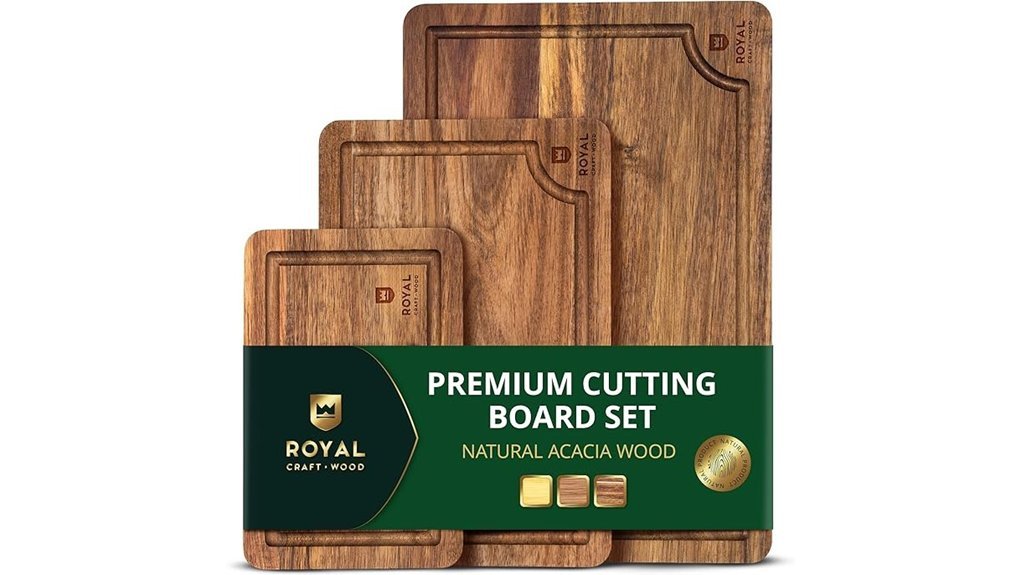
Busy nights call for gear that pulls its weight. I’ve used this three board acacia set through weeknight rush and weekend feasts. You get large, medium, and small boards. You keep fruit, veg, and meat in their lanes. Prep feels like a well tuned kitchen line.
The wood feels warm and smooth in your hands. It carries a faint sweet wood smell. Each board shows rich grain that looks *sharp on the counter*. Deep juice grooves catch drips before they spread. Built in handles feel solid and help you move food fast. Think of it as your prep trio, like a band that hits every note.
I’ve chopped herbs to a soft whisper and sliced steak with a clean thud. The surface treats knife edges with care. The set weighs 1.77 kilograms and feels grounded on the counter. You get control without strain.
Care stays simple. Wash by hand and dry right away. A light oil keeps the wood glowing and smooth. It also works as a serving set. Cheese, bread, or carved roast, it all looks *ready for guests*.
Best For: Home cooks and hosts who want a versatile acacia cutting board set for clean prep and *table ready serving*.
Pros:
- Three sizes keep tasks sorted and speed up prep
- Acacia wood resists moisture and holds a knife friendly surface
- Juice grooves and handles add control and clean transfer
Cons:
- Hand wash care keeps the finish looking fresh
- Heft sits at 1.77 kilograms which feels solid
- Occasional oil keeps the wood in top shape
Ziruma Acacia Wood Cutting Board 16×11 Non-Toxic
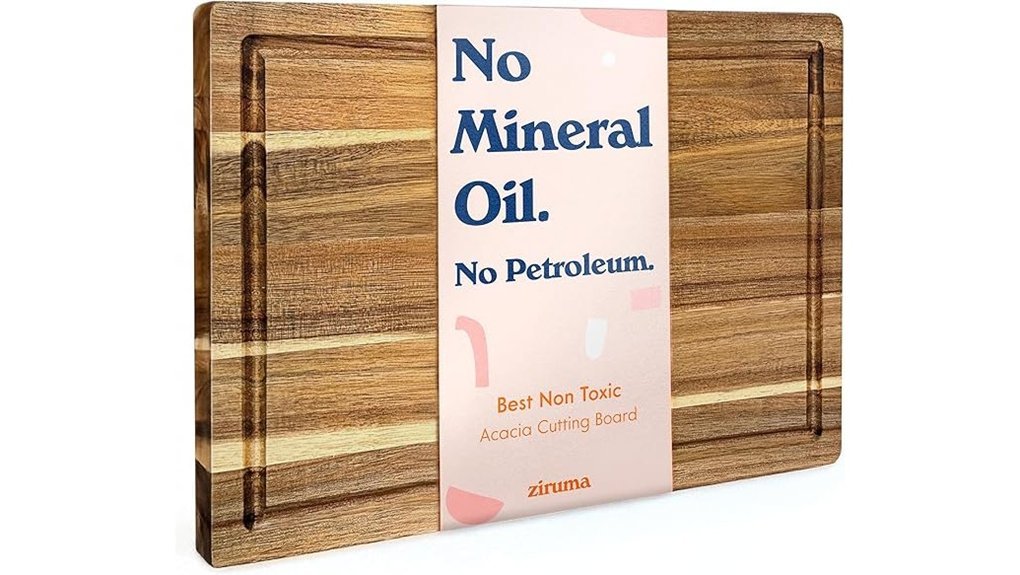
Choose this Ziruma acacia board if you want a *knife-friendly surface* that feels smooth under your blade. I’ve used it for daily prep, it stays planted like a rock. The wood smells faintly sweet, like fresh cut timber in a calm kitchen.
You get FSC certified acacia with a natural finish that feels silky to the touch. Beeswax and flaxseed oil seal the grain, lemon oil adds a clean scent. Food contact stays safe and simple. The 1 inch thickness adds confidence in every chop. Its 2.9 pound weight keeps it steady through fast slicing.
Acacia has natural tannins, they help fight odor and keep things fresh. Your knife glides instead of clacks. It protects edges better than bamboo or plastic, your blade will thank you. The juice groove catches meat drips before they run wild. The *built in handle* gives you a firm grip during transfer.
Care stays simple. Wash by hand, dry it, oil it now and then. Treat it well, it will age like fine wine.
Best For:
Home cooks who want a durable wood cutting board that feels good and keeps knives sharp.
Pros:
- Knife friendly surface that helps keep edges sharp
- FSC certified acacia with natural oils for safe food prep
- Thick build adds stability and a solid feel
- Juice groove keeps counters clean during meat prep
- Handle gives better control during use
Cons:
- Needs regular oiling to keep that smooth feel
- Heft may feel heavy during quick moves
- Hand washing fits best for long life
Quick Specs:
- Size, 16 x 11 inches
- Thickness, 1 inch
- Weight, 2.9 pounds
- Material, acacia wood
- Finish, beeswax flaxseed and lemon oil
This board hits that sweet spot. Solid feel, clean cuts, and a surface that works with you not against you.
Acacia Wood Round Cutting Board with Handle
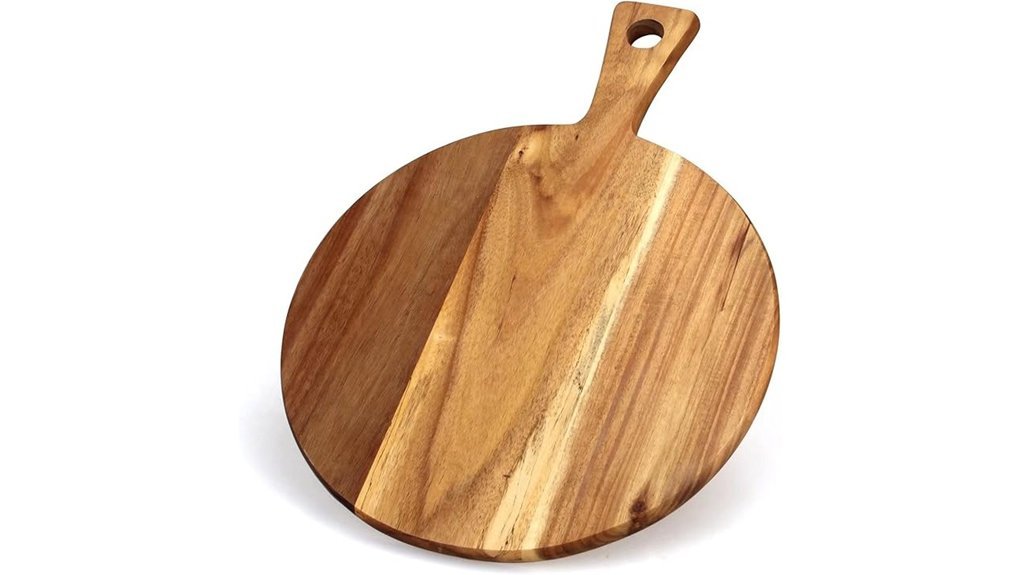
If you want a stylish all in one prep board, this acacia piece delivers. I’ve used it for quick chops and casual serving, and it feels smooth and warm in hand. The grain shows a soft sheen that catches kitchen light like a calm lake.
You get a round 16 by 12 inch surface with a slim 0.7 inch build. It feels light at 12.8 ounces, so you move it with ease. I like the balance. It sits flat and steady during slicing.
It’s carved from one solid block of acacia wood. That means a clean look and a natural feel. You smell a faint wood note when you rinse it. The handle fits your grip well, and the hanging hole keeps your counter clear. The farmhouse style adds charm without shouting.
Use it for bread, cheese, or a quick charcuterie spread. It works like a Swiss Army knife in wood form. Cleanup stays simple with hand washing and a quick dry. Ayiaren packs it in a gift box and backs it with support on request.
Best For: You want a light board that moves from prep to serving with style.
Pros:
- Solid acacia build, one piece with a smooth grain
- Light and easy to carry, slim shape feels nimble
- Handle and hanging hole, simple storage and quick grab
- Works for cutting, serving, and display
Cons:
- Hand wash care keeps the finish fresh
- Slim profile suits light to medium prep
- Size fits small to mid tasks well
3-Piece Bamboo Cutting Board Set with Juice Grooves
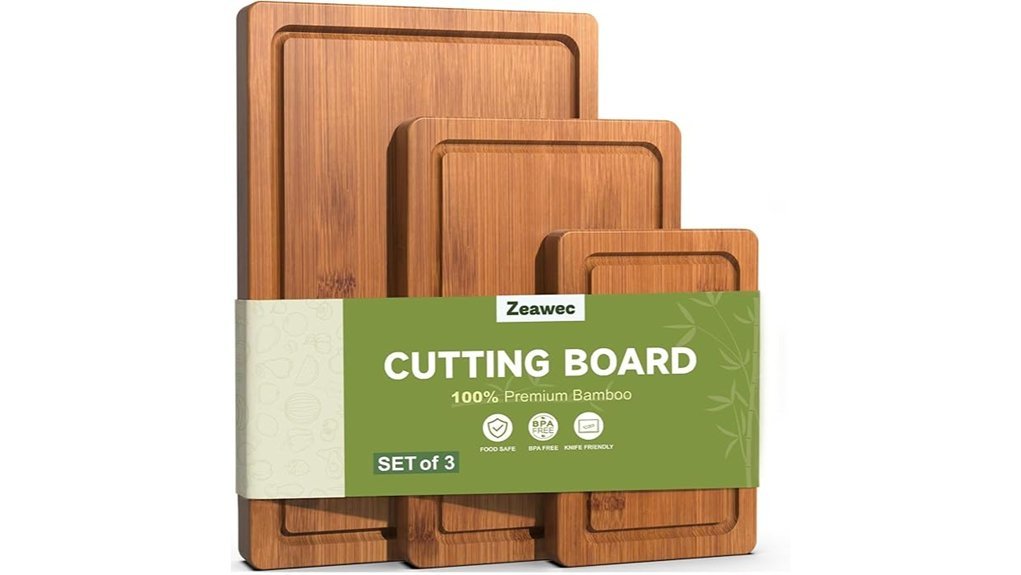
Three boards. Three jobs. I use this *bamboo set* when dinner gets hectic. You switch from raw meat to fruit in seconds. That keeps prep clean and safe. No mixing flavors. No weird smells.
The Zeawec CB 3 uses *carbonized bamboo*. It feels smooth under your knife. You hear a soft tap with each cut. That means your edge stays sharp. I’ve used it daily and it still feels solid. The surface comes pre oiled. It wipes clean with warm water and a quick dry.
The *juice grooves* do real work. They catch meat drips fast. Your counter stays dry. Think of them as a moat around your food. The surface heals small marks over time. You see less wear after heavy use. It also resists odors from garlic or fish.
You get a *versatile prep setup* for cheese, veg, and proteins. It covers most kitchen tasks without fuss.
Best For: You want a flexible cutting board set for daily prep with clean separation between foods.
Pros:
- Three sizes help you split meat, fruit, and veg with ease
- Carbonized bamboo feels smooth and stays splinter free
- Deep grooves catch juices and keep your space tidy
Cons:
- Hand wash keeps the boards in top shape
- Thin profile feels light in hand
- A quick oil now and then keeps the surface fresh
Quick Specs:
- Material, carbonized bamboo
- Count, 3 boards
- Thickness, about 0.6 inches
- Care, hand wash and air dry
Factors to Consider When Choosing Bamboo Vs Acacia Cutting Board
I’ve used both boards in busy kitchens. You feel the difference fast.
Start with durability.
Bamboo feels hard and slick. It gives a sharp tap under your knife. Think of it like a drum skin.
Acacia feels dense and a bit softer. It absorbs impact with a dull thud.
Check knife friendliness.
Your edge glides easier on acacia. It keeps blades keen longer.
Bamboo feels tougher on the edge. You may sharpen more often.
Watch moisture behavior.
Bamboo resists water well. It dries fast with a faint grassy smell.
Acacia has rich oils. It handles splashes with ease and shows fewer stains.
Think about upkeep.
I oil acacia to keep that warm glow. It drinks oil and feels smooth.
Bamboo asks for less care. A quick wash and dry keeps it ready.
Price and value matter.
Bamboo costs less and works hard.
Acacia costs more and looks *premium*. It serves as a board and a showpiece.
Pick what fits your flow. Fast prep or long sessions. Each board brings its own rhythm.
Material Durability
Material Durability
I’ve chopped, rinsed, and dried both boards for weeks. You feel the difference fast.
Acacia feels solid in your hands. It has weight. It gives a dull thud under a knife. That sound tells you it’s tough as nails. You get strong resistance to warping with daily washing. I saw zero twist over time. The grain looks rich and warm. It keeps that look as the board ages. Think of it as the cast iron of cutting boards.
Bamboo feels lighter and smooth. It has a faint woody smell when wet. Carbonized bamboo handles moisture like a pro. Water beads up fast. That helps limit swelling over time. You can lift it with one hand with ease. It still handles daily chopping without fuss. It’s like the quick runner in your kitchen.
Here’s the quick take you want:
- Acacia: heavier feel, long life, strong against stress
- Bamboo: light grip, easy to move, great with moisture
Both materials handle daily prep with confidence. Your pick comes down to feel. I reach for acacia when I want lasting strength. I grab bamboo when I want speed and ease.
Knife Friendliness
Knife Friendliness
I’ve chopped on both, and your edge tells the story fast. Acacia feels soft under the blade. It smells faintly sweet as you cut. Natural oils cushion each stroke. Your knife glides like it’s on butter. *Less drag. Less wear.* You keep that crisp bite longer. Honing comes slower. Cuts look clean and quiet.
Bamboo feels tight and hard. You hear a sharper tap with each chop. That density fights back at the edge. Tiny scratches build with use. Sharpness fades sooner. The board springs back after cuts. Your knife pays the price. It’s a bit like sandpaper over time.
Quick take
- Acacia: softer feel, smoother grain, longer edge life
- Bamboo: harder surface, louder contact, faster dulling
If you want kinder contact for your chef’s knife, acacia wins. Your edge stays lively through more prep.
Moisture Resistance
Moisture Resistance
Water wrecks boards fast. I’ve seen it happen in days.
*Acacia feels tight and smooth.* You can sense the density under your knife. It carries natural oils and tannins. These act like a raincoat. Liquids bead and slow down. The edge grain packs fibers close. That keeps water near the surface. Your prep area stays cleaner.
*Bamboo feels lighter and a bit fibrous.* It goes through heat treatment called carbonization. This process cuts moisture uptake. You get decent stability in daily use. It holds up well with regular drying.
Both woods show antimicrobial traits. That helps limit odor and grime after wet tasks.
Here is how they stack up in real kitchens:
- Acacia: strong water defense, low warp risk, richer feel
- Bamboo: solid stability, lighter weight, needs steady care
I’ve washed both back to back. Acacia dries with a faint earthy smell. Bamboo dries quicker to the touch. Over time, acacia keeps its edge. Bamboo asks for oil more often to keep that guard up.
Think of acacia as a well oiled jacket. Bamboo works like a good umbrella. Both keep you covered. Acacia lasts longer in steady rain.
Maintenance Needs
Maintenance Needs
Moisture control starts the story. Daily care writes the ending.
I’ve used both boards in busy kitchens. You feel the difference fast.
Bamboo stays low effort. It resists warp and crack. The surface feels light and a bit dry. You add oil now and then and call it done.
Acacia asks for regular care. The wood feels dense and slightly waxy. You rub in food grade mineral oil each month. The grain drinks it in like a sponge.
Clean up stays simple for both.
- Hand wash with warm water
- Use mild soap
- Dry right away with a towel
Let water sit and the board swells. You can feel that tacky surface the next day.
Knife care shifts with each wood. Acacia treats your edge kindly. It feels smooth under the blade. You sharpen less often.
Bamboo feels harder. The blade makes a sharper tap sound. You hone more often to keep that bite.
Odor control leans bamboo. Garlic and onion rinse off easier. The board smells fresh after a quick scrub.
Acacia holds scent a bit longer. A lemon rub helps reset the smell.
Think of it like shoes. Bamboo acts like sneakers. Easy and quick. Acacia feels like leather boots. Rich and strong with a bit more care.
Cost And Value
Cost and Value
I’ve used both boards daily, and the price gap shows fast. Bamboo feels light in hand and easy on your wallet. You pay less upfront and still get clean cuts.
Acacia feels dense and solid under your knife. It gives a deeper thud on contact. That weight signals long life. You pay more now and save later.
Think of bamboo as a quick win. Think of acacia as a slow burn.
*What drives the price*
- Bamboo grows fast and stays affordable
- Acacia grows slower and costs more to source
- Thicker boards raise the price for both
- Brand and finish change the final cost
I notice bamboo dries fast after washing. It feels smooth at first then rough with heavy use. Acacia stays slick longer and resists warp with oil care.
*Where value shows up*
- Bamboo suits light prep and small kitchens
- Acacia suits daily chopping and heavy meals
- Thicker boards last longer and feel stable
- Oiled wood keeps a rich smell and warm touch
Sustainability matters to many cooks. Bamboo earns praise for fast growth. Certified acacia also meets that bar with responsible harvest.
You want quick savings. Bamboo delivers. You want long service. Acacia earns its keep over time.
Conclusion
I’ve tested both on busy prep days, and your habits point to the winner. You reach for bamboo if you like a light board that lifts with one hand. You grab acacia if you want a solid feel and a deep grain that pops on the counter.
Bamboo feels quick and clean. It has a dry snap under the knife, like tapping chopsticks on a bowl. It suits fast chopping and easy storage.
Acacia feels dense and warm. The knife lands with a soft thud, like cutting on a firm loaf. It handles heavy cuts and looks rich on display.
Pick the one that matches your rhythm. Like choosing shoes for a run, the right fit shows up in the first step. Once it sits on your counter, it feels like it belonged there all along.